
Startup Financial Risk Planning: Anticipate and Mitigate for Growth
Anticipate financial risks in your startup with practical strategies to protect cash flow, manage debt, and build sustainable growth.
Most business owners focus on growing their company today without thinking about what happens when they step away. Succession planning for business owners isn’t something you handle at the last minute-it requires years of preparation to protect what you’ve built.
At Sager CPA, we’ve seen firsthand how the right plan keeps companies running smoothly while the wrong approach creates chaos. This guide walks you through the essential steps to secure your leadership transition and protect your company’s future.
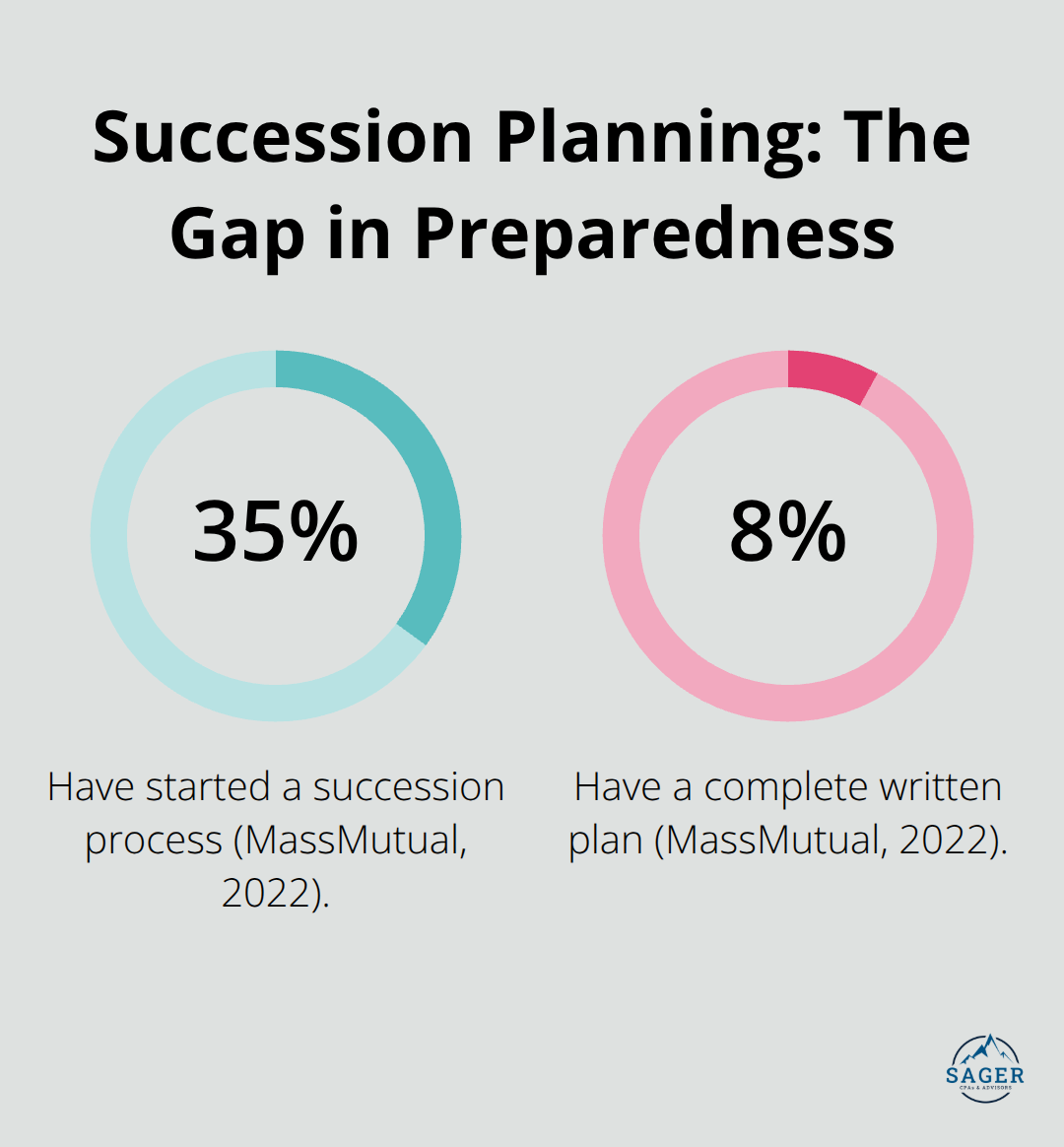
When a key leader leaves your business unexpectedly, the impact hits hard and fast. According to MassMutual’s 2022 research, only 35% of small- to mid-sized businesses have even started a succession process, and of those, just 8% have a complete written plan. This gap between intention and action costs business owners millions every year.
Without a clear succession strategy, companies face immediate operational disruption, loss of institutional knowledge, and customers questioning whether the business will survive the transition.
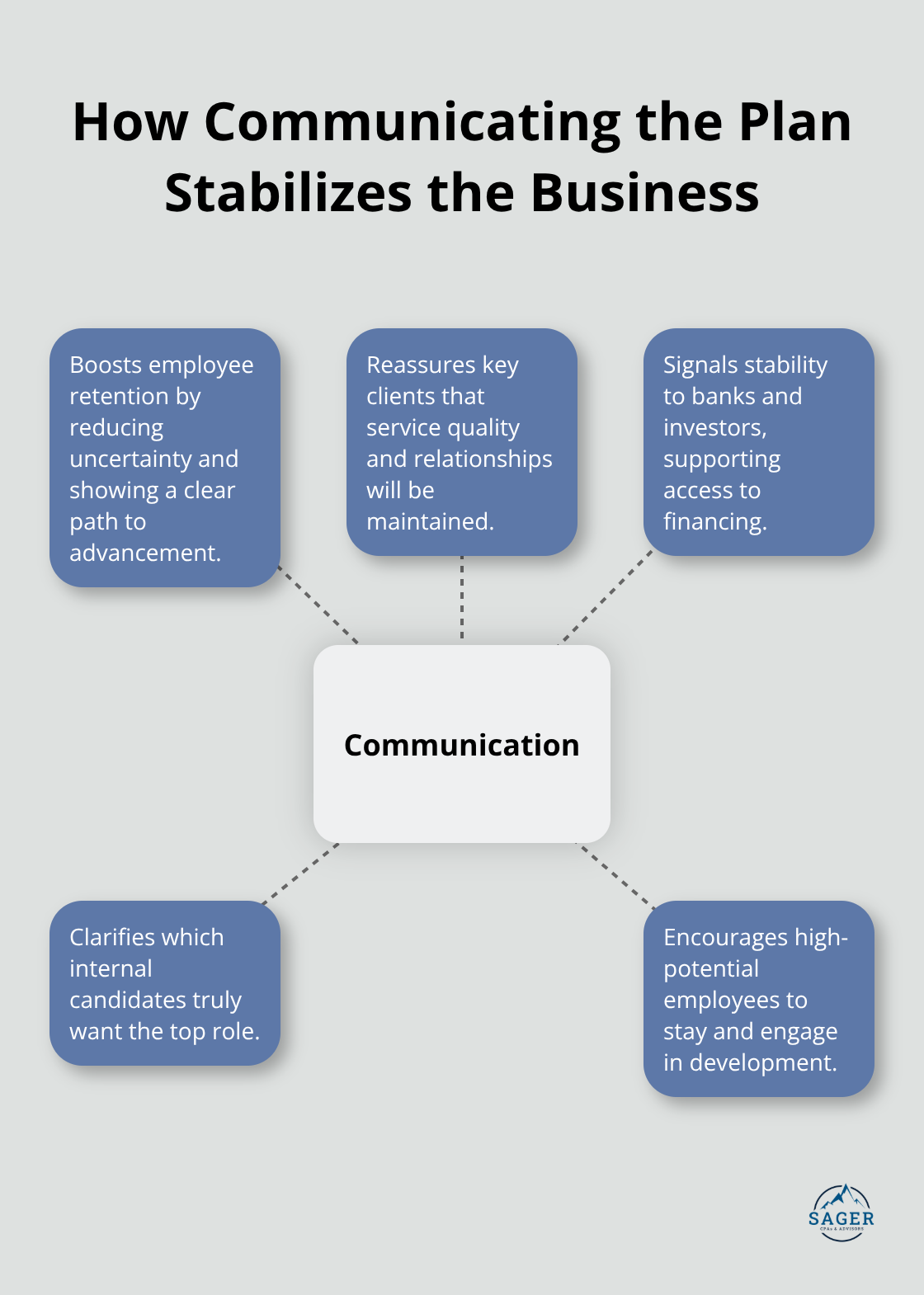
Your company’s value depends heavily on its leadership continuity. When ownership transfers without a documented plan, employee turnover typically spikes because staff members lack confidence in the new direction. Key clients worry about service quality and relationships changing. Banks and investors become hesitant about financing because they see instability. A structured succession plan addresses all these concerns simultaneously by creating confidence among employees, customers, and financial partners that the business will thrive under new leadership.
Succession planning that includes documented processes and knowledge transfer protects your company’s competitive advantages and operational efficiency. Tax planning integrated into your succession strategy can reduce the financial burden on your business and heirs significantly. The businesses that handle this well typically experience smoother transitions, faster revenue stabilization post-transition, and higher valuations when selling.
Starting this process early gives you years to refine the plan, develop your chosen successor, and make adjustments based on changing business realities rather than scrambling during a crisis. The businesses that avoid leadership gaps are the ones that planned ahead, often years before the actual transition occurred. This advance preparation transforms what could be a chaotic handoff into a controlled, strategic transition that protects everything you’ve built.
Most business owners underestimate how much work succession planning actually requires. It’s not a document you create once and file away-it’s an active process that demands attention across three interconnected areas: identifying who will lead next, capturing what makes your business work, and setting realistic timelines for the handoff.
Your successor doesn’t have to be your obvious choice. Internal candidates often emerge from unexpected places within your organization, and the best leaders aren’t always the ones with the longest tenure or highest titles. Look for candidates with competence and credibility to make strong decisions, team-building and coaching skills, and self-direction. This clarity prevents you from promoting someone based on loyalty or familiarity rather than actual capability.
Have direct conversations with high-potential employees about their career aspirations and whether they genuinely want the top role. Many talented people prefer specialized expertise over management responsibility, and forcing someone into leadership they don’t want creates a failed transition before it starts.
Knowledge transfer separates successful successions from disasters. Document your critical processes-how you acquire clients, manage cash flow, handle customer relationships, and make major decisions. This ensures operational continuity by establishing a structured plan to fill critical leadership and hard-to-replace positions. Too many owners carry this information only in their heads, which means it vanishes when they leave.
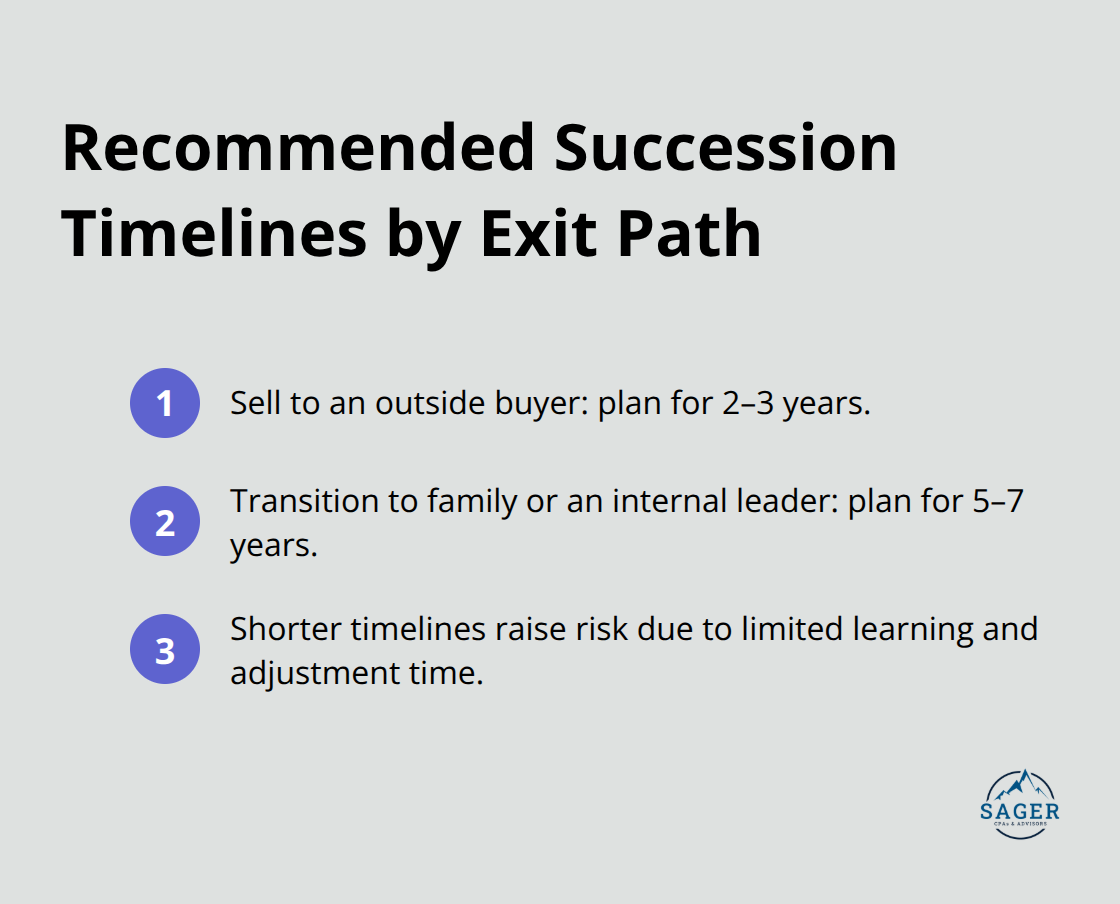
A transition timeline that fits your specific situation makes all the difference. If you’re planning to sell the business, the timeline might be two to three years. If you’re transitioning to a family member or internal candidate, you might need five to seven years to develop them fully. Shorter timelines increase risk significantly because your successor has less time to learn, make mistakes, and adjust under your guidance.
Establish clear milestones-when your successor takes on their first major responsibility, when they lead specific departments, when they make certain decisions independently. This gradual increase in responsibility builds confidence and reveals gaps before the full transition happens.
Document your exit strategy explicitly: Are you selling to an outside buyer, transitioning to family, facilitating an employee buyout, or some combination? This decision shapes everything else in your plan and affects tax outcomes substantially. Your choice here determines which financial strategies protect your wealth most effectively and which tax planning approaches make sense for your situation.
Integrating your succession strategy with your overall financial planning ensures the transition protects your wealth and minimizes unnecessary tax exposure while supporting your successor’s ability to operate successfully. This coordination between succession timing and financial strategy is where many owners miss critical opportunities to strengthen their transition.
The gap between knowing you need a succession plan and actually building one costs business owners dearly. Most delays don’t happen because owners lack motivation-they happen because owners misunderstand the timeline required, avoid difficult conversations, or overlook the financial complexity involved. MassMutual’s 2022 research reveals the stark reality: only 35% of small- to mid-sized businesses have started succession planning at all. Of those who started, just 8% have completed a written plan.
Waiting until retirement looms or health issues force your hand guarantees a compressed timeline that leaves your successor underprepared. 5-10 years is the recommended timeline for succession planning, yet many begin planning within twelve months of their intended exit. This compressed schedule forces rushed decisions about who leads next, incomplete knowledge transfer, and tax strategies that miss better options available with longer planning horizons.
The businesses that execute smooth transitions typically start planning a decade before the actual handoff occurs. Starting now, even if you don’t plan to leave for years, gives you flexibility to adjust your chosen successor, refine operational documentation, and coordinate tax strategies that protect your wealth. Waiting until urgency forces action removes your ability to make thoughtful choices and often results in promoting the wrong person or selling the business to an outside buyer when family succession could have worked.
Keeping your succession plan secret creates its own problems. Employees who don’t know whether the business has a clear direction after you leave start looking for jobs elsewhere, particularly your highest performers who have the most options. Key clients question whether their relationships will survive the transition when they sense uncertainty about leadership continuity. Banks and investors hesitate to finance a business that appears unstable during leadership transitions.
Communicating your succession plan to employees, major customers, and your management team builds confidence that the business will thrive under new leadership. This transparency also helps you identify which internal candidates actually want the top role versus those who prefer their current positions. Many owners fear that revealing succession plans will trigger departures, yet the opposite typically happens-high-potential employees stay longer when they see a clear path to advancement and understand the business has a thoughtful plan for continuity.
The tax and legal dimensions of succession planning get neglected more often than any other aspect, and this neglect proves expensive. Structuring the ownership transfer incorrectly can trigger unnecessary capital gains taxes, create complications with your estate, or leave your family dealing with unresolved legal questions after you’re gone. The exit strategy you choose (whether you’re selling to an outside buyer, transitioning to family, or facilitating an employee buyout) shapes which tax approaches actually work for your situation.
Integrating succession planning with your overall financial strategy from the beginning prevents costly mistakes. Your choice of exit strategy determines which financial strategies protect your wealth most effectively and which tax planning approaches make sense for your situation. Starting this coordination early gives you years to implement strategies that reduce your tax burden rather than scrambling to manage tax consequences after the transition happens.
Succession planning for business owners isn’t optional if you want to protect what you’ve built. The businesses that execute smooth transitions share one thing in common: they started years before the actual handoff occurred, documented their processes, identified capable successors, and coordinated their tax strategy with their exit plan. This approach transforms a potentially chaotic transition into a controlled, strategic process that preserves company value, maintains employee confidence, and protects your wealth. Only 35% of small- to mid-sized businesses have started succession planning, and just 8% have a complete written plan-a gap that explains why so many leadership transitions fail.
Without professional guidance, business owners miss critical tax opportunities, promote the wrong people, or sell their companies to outside buyers when better options existed. The financial and operational costs of these mistakes often exceed what proper planning would have cost. Whether you plan to transition to family, sell to an employee, or find an outside buyer, the tax implications differ significantly, and early planning gives you years to implement strategies that actually work for your situation.
If you’re ready to create a personalized financial strategy that addresses your specific goals and timeline, contact Sager CPA to develop a succession plan tailored to your business. The best time to start was years ago. The second best time is today.




Phone: (208) 939-6029
Email: info@sager.cpa
Privacy Policy | Terms and Conditions | Powered by Cajabra
At Sager CPAs & Advisors, we understand that you want a partner and an advocate who will provide you with proactive solutions and ideas.
The problem is you may feel uncertain, overwhelmed, or disorganized about the future of your business or wealth accumulation.
We believe that even the most successful business owners can benefit from professional financial advice and guidance, and everyone deserves to understand their financial situation.
Understanding finances and running a successful business takes time, education, and sometimes the help of professionals. It’s okay not to know everything from the start.
This is why we are passionate about taking time with our clients year round to listen, work through solutions, and provide proactive guidance so that you feel heard, valued, and understood by a team of experts who are invested in your success.
Here’s how we do it:
Schedule a consultation today. And, in the meantime, download our free guide, “5 Conversations You Should Be Having With Your CPA” to understand how tax planning and business strategy both save and make you money.