
Annual Financial Forecast: Planning for Growth Across the Year
Plan your annual financial forecast to drive sustainable growth and make confident business decisions throughout the year ahead.
Most business owners guess their way through the year instead of planning with actual numbers. An annual financial forecast changes that-it gives you a clear picture of where your money goes and where opportunities hide.
We at Sager CPA have seen firsthand how companies that forecast their finances make better decisions faster. This guide walks you through building a forecast that actually works, then adjusting it as reality unfolds.
Most business owners operate month-to-month without knowing what comes next. A forecast changes that entirely. When you project your finances across twelve months, patterns emerge that disappear in daily operations. You see which quarters drain cash and which ones generate surplus. You identify the exact month when inventory costs spike or when customer payments typically slow down. This isn’t pattern recognition based on your actual historical data.
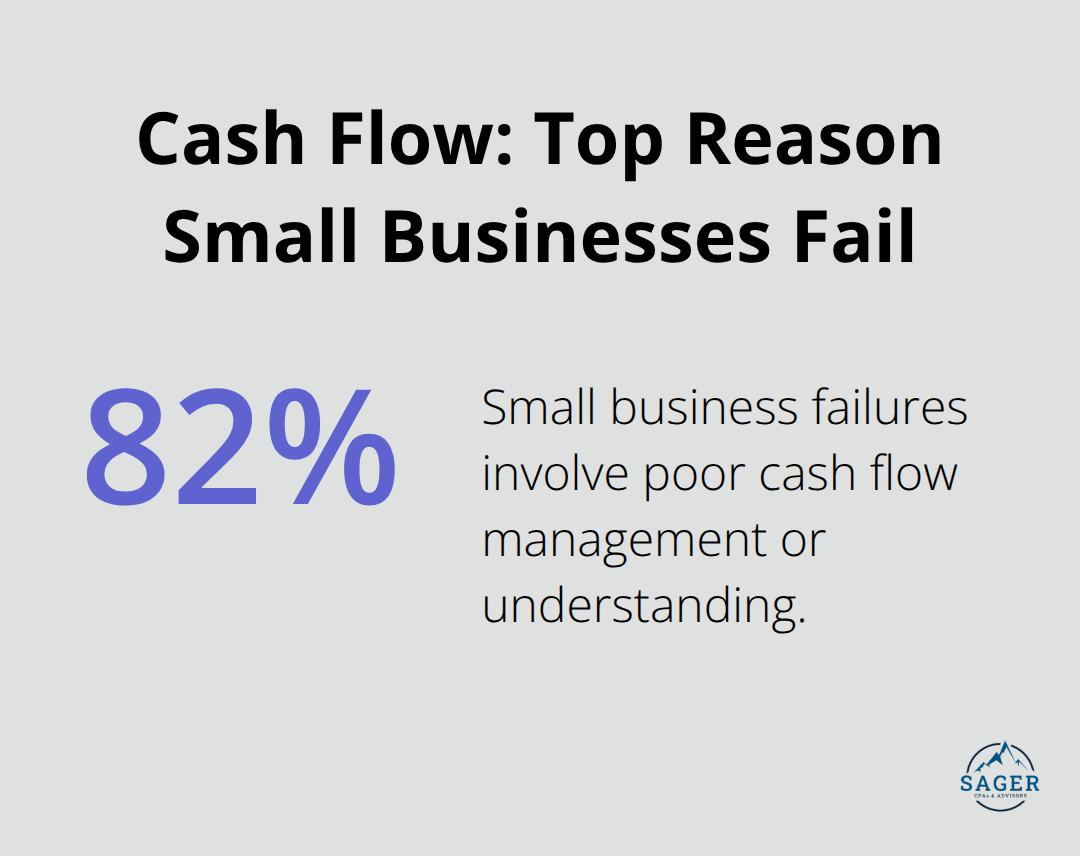
The real power shows up in three specific ways. First, you catch revenue opportunities before they pass. If your forecast shows quarterly revenue patterns, you plan marketing spend, staffing, and inventory accordingly instead of scrambling when demand hits. Second, you prevent cash flow disasters. According to research, 82% of the time, poor cash flow management or poor understanding of cash flow contributed to the failure of a small business. A forecast reveals months when payables exceed receivables, giving you time to arrange financing or adjust spending before the crisis arrives.
Third, your budget stops being arbitrary. Instead of allocating money based on what feels right, you tie every dollar to realistic projections. Your equipment purchase, hiring decision, or expansion plan now connects to actual numbers, not hope. This alignment between spending and projected revenue separates companies that grow sustainably from those that burn through cash and stall.
The forecast transforms your financial strategy from reactive scrambling into proactive planning. With this foundation in place, you’re ready to build a forecast that reflects your specific business.
Start with your actual financial records from the past two to three years. Pull your profit and loss statements, bank deposits, and expense reports month by month. This historical data forms your foundation, not your ceiling. Many business owners assume last year’s numbers simply repeat, but your forecast needs to account for what actually happened and why. Look at which months generated the highest revenue and which ones had the biggest expenses. If you sold 40% of your annual revenue in Q4 last year, that pattern likely repeats this year unless something fundamental changed in your market. Document seasonal spikes in your industry too. Retailers know November and December drive sales. Construction companies experience weather-dependent slowdowns. SaaS companies often see churn in January. Your specific numbers matter more than industry averages, but knowing your industry’s rhythm helps you spot when your business deviates from the norm.
Don’t forecast revenue based on optimism. Look at your average transaction value, customer acquisition costs, and repeat purchase rates. If your average customer spends $500 and you typically acquire 10 new customers monthly, your baseline revenue reaches $5,000 before accounting for growth or seasonal variation. Account for economic conditions affecting your specific customers too. If you sell to construction companies and commercial building permits dropped 15% in your region according to your local economic development office, adjust your forecast accordingly. Interest rate changes, inflation trends, and competitor activity all influence your numbers. Pull this data from public sources like the Federal Reserve Economic Data portal or your local chamber of commerce rather than guessing. Your forecast becomes credible only when it reflects these external forces alongside your internal performance.
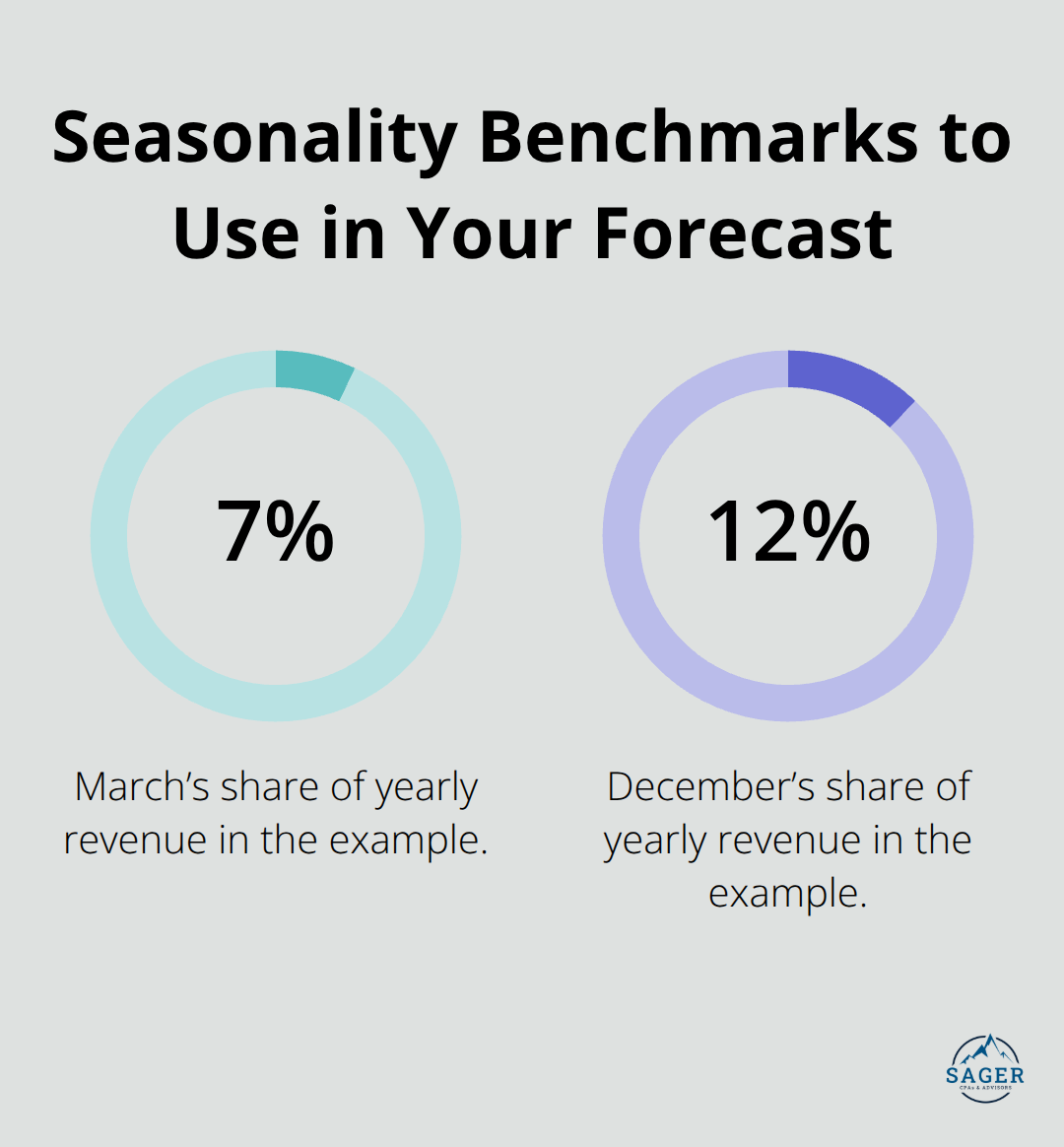
Many businesses skip this step and regret it immediately. Your January might look weak because customers spend budget in December, or strong because annual contracts renew. Your summer might show declining revenue while expenses stay high due to staffing commitments. Map out the last three years month by month and calculate the percentage each month represents of your annual total. If March historically accounts for 7% of your yearly revenue and December accounts for 12%, use those percentages for your forecast rather than dividing annual projections equally across twelve months.
This prevents the shock of discovering in November that you budgeted hiring for a slow month or planned equipment purchases when cash actually runs tight. Some businesses operate on quarters or half-years instead of calendar months. Construction companies forecast by project phase. Subscription businesses track annual renewal cycles. Match your forecast period to how your business actually operates. The forecast that doesn’t reflect your real rhythm becomes useless the moment the first discrepancy appears.
You now have the raw materials for a forecast that reflects your actual business. The next step involves testing this forecast against reality and adjusting it as conditions shift throughout the year.
A forecast sitting in a spreadsheet means nothing if you never look at it again. The real work starts the moment your first month of actual results arrive. Most business owners build a solid forecast, then ignore it for eleven months. Your forecast only works when you compare it monthly to what actually happened and adjust accordingly.
Pull your actual revenue, expenses, and cash position on the same day each month, then line them up against your projections. If you forecasted $50,000 in revenue but landed $45,000, that five-thousand-dollar gap matters. Small variances compound across the year. A consistent two-percent underperformance in Q1 signals a six-thousand-dollar problem by year-end if your annual revenue runs three hundred thousand dollars.
Track three numbers religiously: total revenue versus forecast, total expenses versus forecast, and cash balance versus forecast. These three metrics tell you whether your business tracks as expected or heads toward trouble. Most accounting software lets you build a forecast view alongside actual results, eliminating manual spreadsheet work.
QuickBooks Online, Xero, and Wave all offer built-in forecasting features that update automatically as you record transactions.
The variance itself matters less than understanding why it exists. A revenue miss in March could stem from slower customer acquisition, lower average transaction values, or seasonal timing shifting earlier or later than expected. Each cause demands a different response.
If customer acquisition slowed, your marketing strategy needs adjustment. If transaction values dropped, your pricing or product mix shifted. If seasonal timing moved, your forecast assumptions were simply wrong. Investigate the root cause before adjusting anything. This separates smart forecasting from reactive guessing.
Once you identify the reason, decide whether it’s temporary or permanent. A one-month revenue dip from a major client delay is temporary. A consistent decline in average transaction value across three months indicates a structural problem.
Temporary issues don’t necessarily require forecast revisions. Permanent changes absolutely do. If you discover in April that your Q2 revenue will run fifteen percent below forecast due to a lost contract, update your full-year forecast immediately. Inform anyone relying on your projections: lenders, investors, or your leadership team.
Updating forecasts mid-year isn’t failure. It’s the whole point. Economic conditions shift, competitors act, and customer behavior changes. Your forecast must evolve with your business reality. Try rebuilding your full-year forecast quarterly rather than annually. This keeps your projections sharp and prevents the shock of discovering in October that your year looks completely different from what you projected in January.
An annual financial forecast transforms how you make decisions throughout the year. Instead of reacting to surprises, you anticipate them. Instead of hoping your budget works, you know it does because it’s built on actual numbers and realistic projections. The businesses that thrive aren’t the ones that guess better-they’re the ones that plan with data and adjust when reality shifts.
The real power emerges when you treat your forecast as a living document. Monthly reviews against actual results keep your projections honest and your strategy aligned with what’s actually happening in your business. When variances appear, you investigate them immediately rather than discovering in December that your year went sideways. This discipline separates sustainable growth from the chaos of constant firefighting.
We at Sager CPA help businesses build forecasts that actually work and adjust them as conditions change. Our team combines your historical data with realistic market analysis to create projections you can trust. Schedule a consultation with Sager CPA to create a personalized financial strategy that drives your growth throughout the year.



Phone: (208) 939-6029
Email: info@sager.cpa
Privacy Policy | Terms and Conditions | Powered by Cajabra
At Sager CPAs & Advisors, we understand that you want a partner and an advocate who will provide you with proactive solutions and ideas.
The problem is you may feel uncertain, overwhelmed, or disorganized about the future of your business or wealth accumulation.
We believe that even the most successful business owners can benefit from professional financial advice and guidance, and everyone deserves to understand their financial situation.
Understanding finances and running a successful business takes time, education, and sometimes the help of professionals. It’s okay not to know everything from the start.
This is why we are passionate about taking time with our clients year round to listen, work through solutions, and provide proactive guidance so that you feel heard, valued, and understood by a team of experts who are invested in your success.
Here’s how we do it:
Schedule a consultation today. And, in the meantime, download our free guide, “5 Conversations You Should Be Having With Your CPA” to understand how tax planning and business strategy both save and make you money.