
Startup Funding Planning: Preparing for Capital and Growth
Plan your startup funding strategy with expert insights on capital raising, financial management, and sustainable growth techniques.
Startup funding planning is one of the biggest challenges early-stage founders face. Without a clear roadmap for capital needs and investor readiness, many startups miss opportunities or run out of cash before hitting key milestones.
At Sager CPA, we’ve worked with dozens of founders who thought they were ready to raise capital-only to discover gaps in their financial documentation or unclear spending patterns. This guide walks you through the exact steps to prepare your startup for funding success.
Most founders guess at their funding needs instead of calculating them. This mistake leads to raising too little and running out of cash mid-year, or raising too much and diluting equity unnecessarily. The first step is understanding your burn rate-the monthly amount you spend minus revenue you bring in. If you spend $50,000 monthly and generate $10,000 in revenue, your burn rate is $40,000 per month.
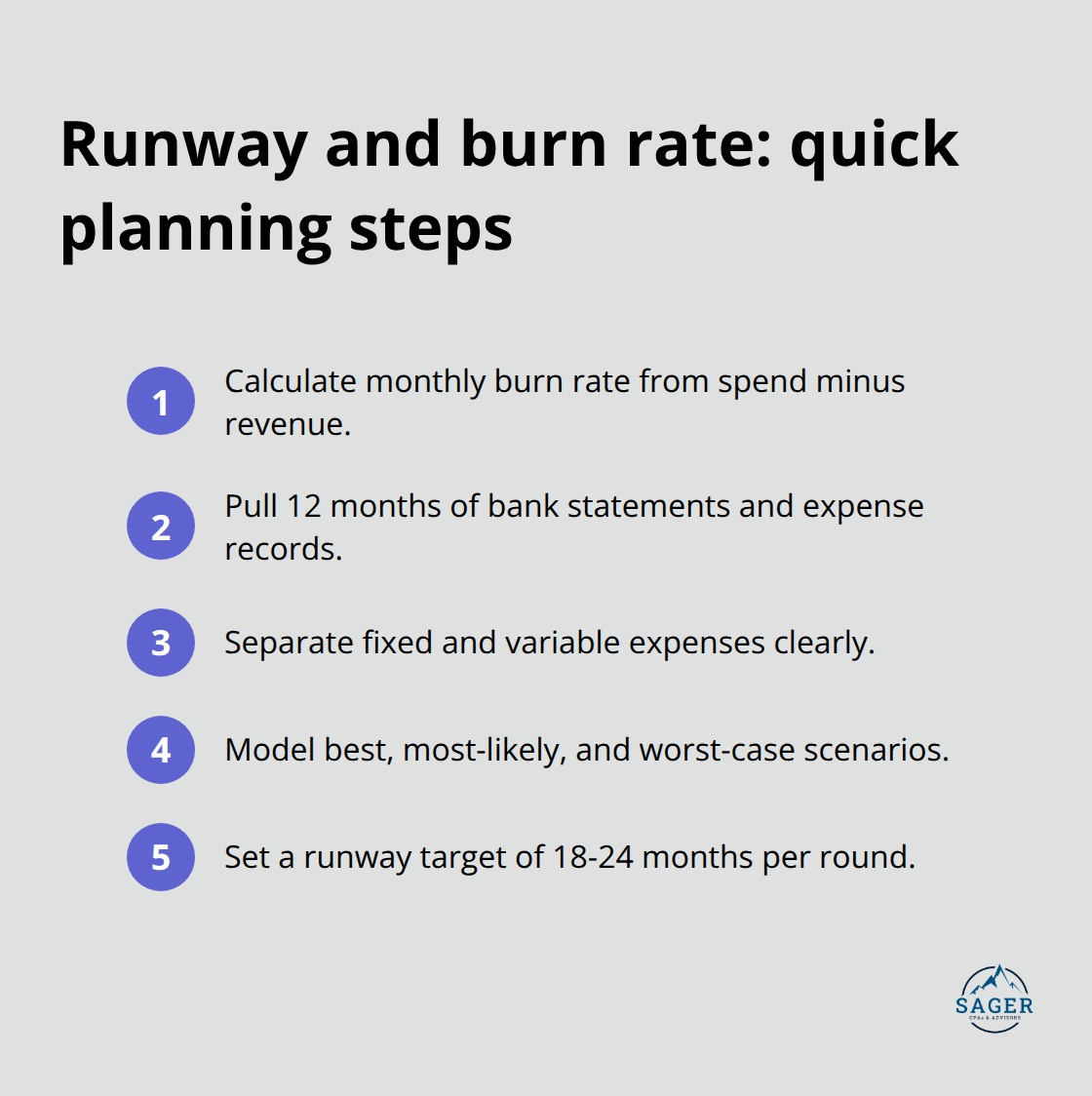
Runway tells you how many months you can operate at that burn rate before cash hits zero. With $200,000 in the bank and a $40,000 monthly burn, you have five months of runway. Start by pulling twelve months of bank statements and expense records. Separate every cost into fixed expenses (salaries, rent, software subscriptions) and variable expenses (payment processing fees, customer support hours, inventory). Fixed costs stay the same regardless of revenue; variable costs scale with growth.
Most founders underestimate variable costs by 20-30%, particularly payroll taxes, professional services, and infrastructure spending. Calculate your burn rate and runway using actual numbers, not estimates. Then model what happens if revenue grows by 25%, 50%, or stalls completely. The worst-case scenario should inform how much capital you raise.
Try for 18-24 months of runway per funding round to hit meaningful milestones without rushing the next raise. This buffer protects against slower customer acquisition, market shifts, or unexpected expenses. If you raise Series A, you need enough capital to reach Series B milestones with confidence, not to barely survive another year.
According to PitchBook data from H1 2026, median seed round sizes sit at $3 million, Series A at $20 million, and Series B at $40 million. These numbers mean nothing for your company if you haven’t calculated your specific needs. Growth stage determines which metrics investors scrutinize and how detailed your financial model must be.
Pre-seed companies typically need 6-12 months of runway and lighter financial documentation. Seed rounds demand 12-18 months of runway with validated revenue projections. Series A requires a full model with clear unit economics: customer acquisition cost (CAC), lifetime value (LTV), and gross margin.
A SaaS company might target 40% gross margins and a CAC payback period under twelve months. A marketplace needs to show unit economics per transaction. Series B and beyond demand departmental budgets, quarterly reforecasts, and proof that you can scale without proportional cost increases.
Vague funding needs signal you haven’t thought through your business model. Investors spot this immediately and move on to founders who can articulate exactly why they need capital and what milestones they’ll hit with it. Your financial documentation and cap table become the foundation for every conversation with potential investors, which is why the next section focuses on organizing these materials before you approach anyone.
Investors distrust founders who cannot produce clean financial records. The moment you walk into a meeting with messy bank statements, missing tax documents, or an unclear cap table, you lose credibility immediately. We have seen Series A due diligence processes drag on for months because founders buried revenue in multiple bank accounts or failed to reconcile their expense records.
Start by pulling twelve months of bank statements from every account your company uses. Categorize each transaction by expense type. Many founders mix personal and business spending, which creates confusion during tax filing and raises red flags with investors. Open a dedicated business bank account if you have not already and route all company transactions through it.
Next, gather your tax returns for the past two years, payroll records, contractor invoices, and sales receipts. If you have operated without formal bookkeeping, hire an accountant to reconcile your records and create a clean baseline. Clean, well-organized books demonstrate that you’re a responsible steward of capital and typically cost $1,500 to $5,000 depending on complexity but save you tens of thousands in legal fees during due diligence.
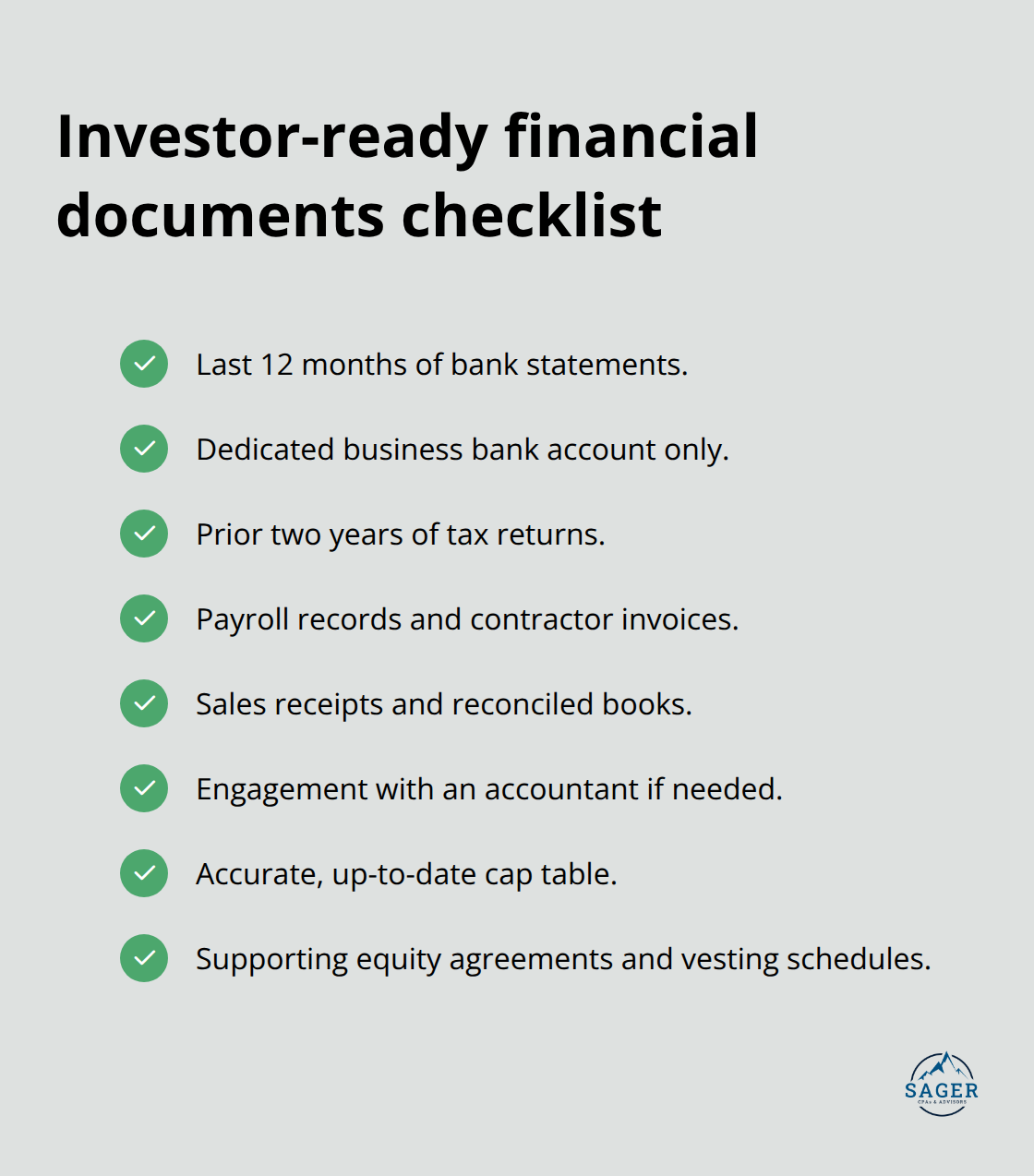
Your cap table shows who owns what percentage of your company, and it must be accurate before you raise capital. A messy cap table signals poor governance and creates legal liability. Cap tables kept in spreadsheets often accumulate errors, especially after multiple SAFEs, notes, or option grants. Investors expect accurate, real-time cap table management.
Document every founder share grant, every SAFE instrument, every option pool, and every equity award with exact dates and vesting schedules. If you have already issued shares informally or promised equity without documentation, fix it now by creating retroactive agreements. Professional equity management from day one prevents costly mistakes later.
Your financial projections must connect directly to your actual spending patterns and revenue history. Build your model in a spreadsheet or use templates from established sources, then merge your actual results from the past twelve months into the forecast so the first projected month aligns with reality. This eliminates the unrealistic jump that makes investors skeptical.
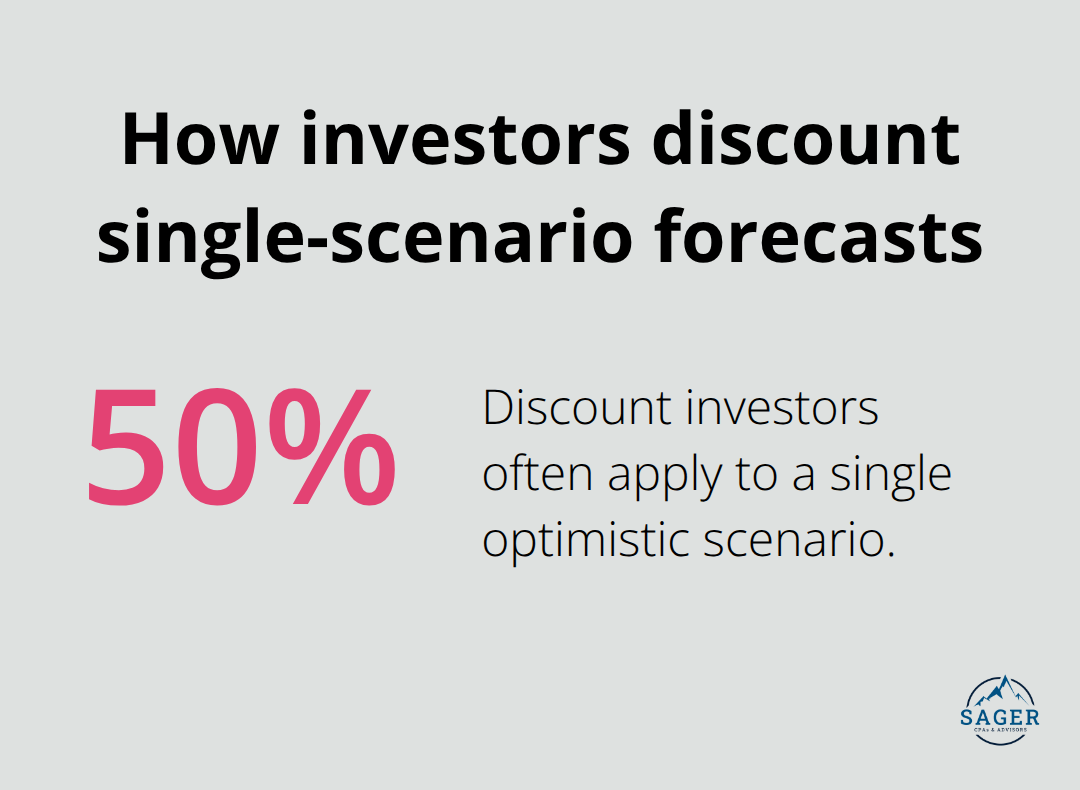
Include three scenarios: most likely case, best case if you hit all targets early, and worst case if customer acquisition slows by 30 percent. Most founders create only one optimistic scenario, which investors immediately discount by 50 percent anyway. Scenario modeling demonstrates financial maturity and proves you have thought through risks.
Tax returns and payroll records provide investors with a clear picture of your actual financial performance. Incomplete or inconsistent tax documentation raises questions about your accounting practices and can extend due diligence timelines significantly. Ensure your tax filings align with your financial statements and bank records.
With organized financial documentation in place, you now have the foundation to attract investors. The next step involves building the business plan and financial controls that convince potential investors you can execute on your vision and manage capital responsibly.
Investors fund founders who demonstrate financial discipline and market understanding. Your pitch deck matters far less than your ability to answer hard questions about unit economics, customer acquisition, and cash management. Most founders waste time polishing slides when they should prepare answers to the questions that actually determine funding outcomes.
Start with a clear explanation of why you need capital and what specific milestones you will hit with it. If you cannot explain this in two sentences, you are not ready to pitch. Vague funding needs signal that you have not thought through your business model, and investors spot this immediately.
Your business plan should connect revenue drivers directly to spending. For a SaaS company, this means mapping customer acquisition targets to sales headcount, retention rates to customer support costs, and growth assumptions to infrastructure spending. Investors scrutinize the relationship between your revenue forecast and your expense budget.
If you project 200% revenue growth but plan to hire only one additional salesperson, they will spot the disconnect immediately. Your financial model must prove that your business model works at scale, not just that it could work someday.
Build your model to show what happens if customer acquisition costs increase by 20% or if churn rises unexpectedly. Stress-test your assumptions rather than simply guessing at growth. This approach separates founders who understand their business from those who hope their projections will materialize.
Strong financial controls separate fundable companies from those that struggle through due diligence. Compare actual results against your projections each month and update your forecast when reality diverges. Investors want to see that you track performance religiously and adjust spending based on real data.
Set up a simple dashboard tracking burn rate, revenue, customer count, and gross margin updated monthly. This discipline signals maturity and prevents the scrambling that happens when founders realize halfway through the year that they are off track. Real-time visibility into your financial position gives you the confidence to make faster decisions and the data to back them up.
Relationships with investors matter more than your elevator pitch. Warm introductions from trusted advisors outperform cold outreach by a substantial margin, so spend time building relationships with angel investors, venture capitalists, and industry advisors long before you need capital. Attend startup events, join founder groups, and cultivate connections with people who invest in your space.
When you eventually pitch, you will have context and credibility rather than appearing as a stranger asking for money. Investors also value advisors who bring relevant expertise and networks. Adding a board member or advisor with deep experience in your market or previous startup exits signals that you understand what you do not know and have taken steps to fill knowledge gaps. This matters more than having impressive titles on your team.
Startup funding planning separates founders who raise capital efficiently from those who waste months in due diligence or miss opportunities entirely. The founders who succeed understand their numbers, organize their financial records, and build genuine relationships with investors before asking for money. Investors fund founders who demonstrate financial maturity and market understanding, not just those with polished pitch decks.
Pull your bank statements this week and reconcile your expense records. Build your three-scenario financial model and start tracking burn rate and runway monthly. Reach out to three advisors or investors in your network and schedule coffee conversations-not pitches, just conversations to build relationships before you need capital.
If your financial records are messy or you lack confidence in your projections, professional guidance accelerates the process significantly. We at Sager CPA help founders organize their finances, build accurate models, and prepare for investor conversations with confidence. Schedule a consultation with us to create a personalized financial strategy tailored to your stage and funding goals.




Privacy Policy | Terms and Conditions | Powered by Cajabra
At Sager CPAs & Advisors, we understand that you want a partner and an advocate who will provide you with proactive solutions and ideas.
The problem is you may feel uncertain, overwhelmed, or disorganized about the future of your business or wealth accumulation.
We believe that even the most successful business owners can benefit from professional financial advice and guidance, and everyone deserves to understand their financial situation.
Understanding finances and running a successful business takes time, education, and sometimes the help of professionals. It’s okay not to know everything from the start.
This is why we are passionate about taking time with our clients year round to listen, work through solutions, and provide proactive guidance so that you feel heard, valued, and understood by a team of experts who are invested in your success.
Here’s how we do it:
Schedule a consultation today. And, in the meantime, download our free guide, “5 Conversations You Should Be Having With Your CPA” to understand how tax planning and business strategy both save and make you money.