
Financial Clarity for Owners: Master Your Business Finances
Master financial clarity for owners with proven strategies to control cash flow, reduce taxes, and build sustainable business profitability.
Most business owners can’t answer a simple question: where does your money actually go each month? Without financial clarity for owners, you’re making decisions based on guesses instead of facts.
At Sager CPA, we’ve seen this problem destroy otherwise solid businesses. The good news is that financial clarity isn’t complicated-it just requires the right systems and habits.
Most business owners cannot answer a simple question: where does your money actually go each month? Without financial clarity, you make decisions based on guesses instead of facts. The problem isn’t that financial data doesn’t exist-it’s that your systems keep it hidden.
Most business owners operate with accounting systems that were never designed to communicate. Your invoicing software lives in one place, your bank feeds into another, and your payroll system exists in a third. You cannot access real financial data without manually pulling numbers from three different platforms and spending hours reconciling spreadsheets. This fragmentation creates a financial liability. When your systems don’t communicate, cash flow problems hide until they become crises.
A business might look profitable on paper while actually running short on cash because invoice data hasn’t synced with bank records. According to research from the U.S. Small Business Administration, cash flow problems occur even in profitable businesses when expenses are due before payments are received. This gap widens dramatically when financial data stays scattered across disconnected tools.
Most business owners wait until month-end to see their financial picture, which means decisions made during the month rest on incomplete information. If a supplier payment is due on the 15th but your accounting software doesn’t show updated receivables until the 28th, you operate blind. Real-time financial visibility provides businesses with a clear and accurate picture of their cash flow.
When your accounting software integrates with your bank, invoicing, and payroll systems, you see cash position updates daily or even hourly. This matters because timing gaps between cash inflows and outflows can kill otherwise healthy businesses. Owners who implement integrated accounting platforms catch issues like slow-paying customers or unexpected expenses within days instead of weeks, allowing them to adjust decisions before problems compound.
Operations and finance speak different languages in most businesses. The operations manager knows that production costs spiked last month, but this insight never reaches the person reviewing financial statements. Finance sees that gross margin dropped but doesn’t understand why. This communication gap transforms financial reports into historical records instead of strategic tools.
When operations teams lack visibility into how their decisions affect cash flow and profitability, they optimize for the wrong things. A manufacturing business might reduce waste in production without realizing it extends payment terms to suppliers, which actually worsens cash flow. Establishing monthly financial reviews where operations and finance sit together with actual data (not assumptions) forces alignment and surfaces issues that isolated departments would never catch.
These disconnected systems and communication breakdowns create the foundation for the financial mistakes that follow-mistakes that compound when owners lack the systems to catch them early.
The fix starts with selecting accounting software that connects your entire business instead of fragmenting it further. Xero, QuickBooks Online, and Zoho Books all integrate with your bank feeds, invoicing platforms, and payroll systems, eliminating the manual reconciliation work that consumes hours every month. When your bank account syncs automatically with your accounting software, you see cash position updates in real time instead of waiting for month-end closes.
Timing gaps between cash inflows and outflows destroy otherwise profitable businesses. A business invoices a customer on day one but receives payment 45 days later while supplier invoices are due on day 30. Without real-time visibility, you make payroll decisions on outdated information. The software you choose should connect to your existing tools within two weeks of implementation, not two months. Avoid platforms that require extensive customization before they become useful.
Monthly financial reviews transform data into decisions. Schedule these reviews on the same day each month with operations leaders, finance staff, and anyone making spending decisions. Bring actual numbers, not estimates. Compare your gross profit margin against the previous month and the same month last year to spot trends early.
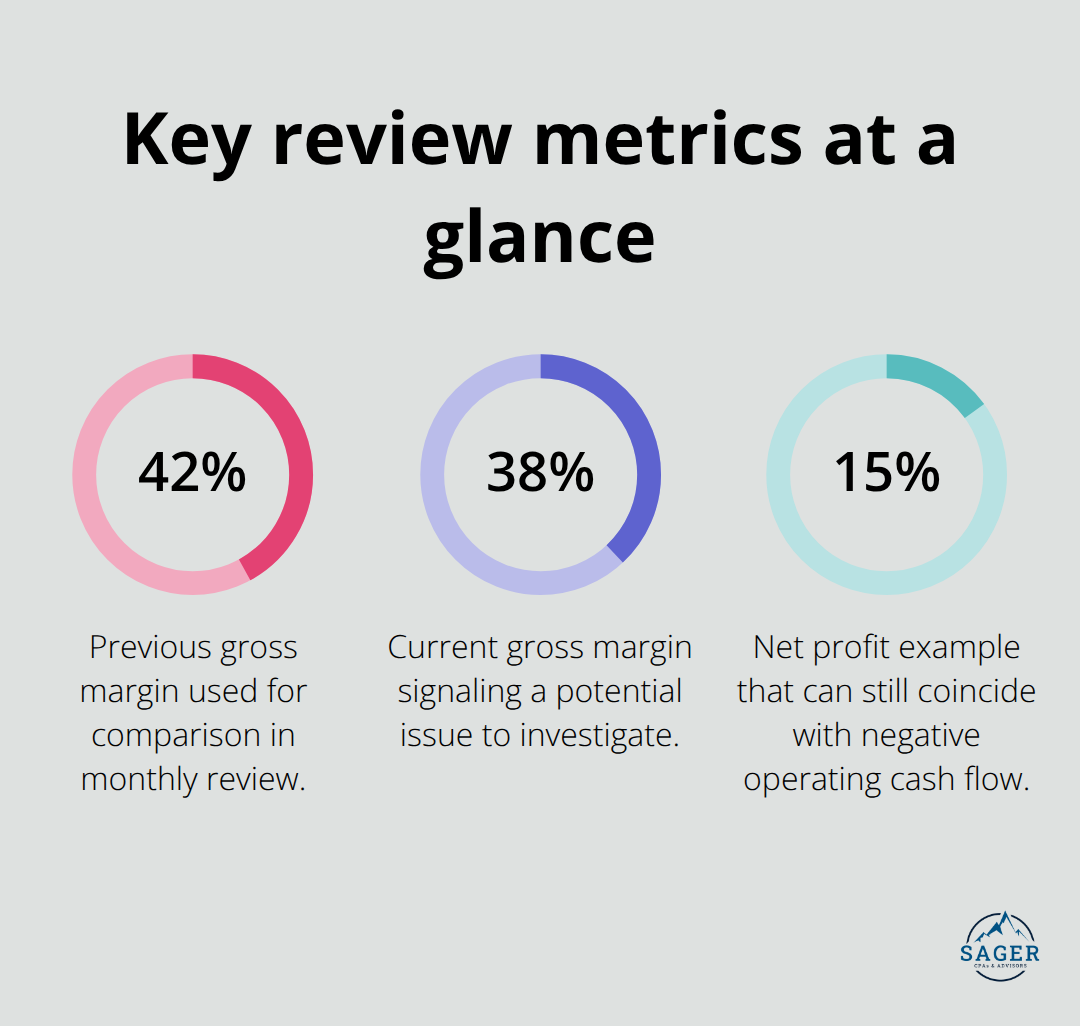
If your gross margin dropped from 42% to 38%, you need to know whether suppliers raised prices, production efficiency declined, or customer mix shifted. Operating cash flow matters more than net profit at this stage. A business generating 15% net profit but negative operating cash flow will run out of money. Review accounts receivable aging reports to identify slow-paying customers before they become collection problems. Clear financial reporting prevents cash flow crunches by giving you visibility into what’s actually happening.
Most business owners skip this step because they think it takes too long. It takes 60 minutes if you have integrated systems.
An advisory team catches issues before they compound and translates financial statements into strategic guidance that operations teams can act on immediately. Hire a CPA or accountant who understands your specific industry and ask them to attend quarterly reviews. The advisor’s role involves reviewing your actual financial data and creating customized action plans that rest on facts rather than assumptions.
This partnership transforms how you respond to financial challenges. Your advisor identifies patterns in cash flow, profitability, and spending that isolated departments would never catch. They provide the external perspective that owners lose when they’re too close to daily operations. With integrated systems and regular advisory guidance, you move from reactive firefighting to proactive financial management-the foundation for the mistakes you’ll learn to avoid in the next section.
Most business owners operate with a dangerous blind spot: they never separate personal finances from business finances. A business owner writes a check from the business account to pay their mortgage, then uses the same account to purchase inventory. Six months later, they cannot tell whether the business actually made money or whether they simply moved personal funds around. This mixing of accounts destroys your ability to see which parts of your business generate profit and which parts drain cash.
When you mix personal and business finances, accounting becomes difficult and inaccurate. Open a dedicated business checking account immediately if you haven’t already. Keep a separate business savings account for cash reserves and tax payments. Stop using your business account as a personal piggy bank. Your accountant spends hours trying to untangle transactions instead of analyzing actual business performance. This costs you money in accounting fees and delays the financial clarity you need to make decisions.
The second mistake compounds the first: owners ignore cash flow until it becomes a crisis. A business can show 20% net profit on paper while running out of cash because customers pay 60 days late and suppliers demand payment in 30 days. The timing gap kills the business, not lack of profitability. Cash flow problems occur even in profitable businesses when late receivables, weak billing systems, tax surprises, debt payments, and overspending create cash shortages.
Monitor your accounts receivable aging report every single month and identify which customers pay late consistently. Call customers with invoices over 30 days old within 48 hours of the due date, not 60 days later. If a customer habitually pays 45 days late, adjust your pricing to compensate for the financing cost you’re providing them. Operating cash flow matters more than net profit. A business generating 15% net profit but negative operating cash flow will run out of money.
The third mistake involves tax planning that happens in December instead of January through November. Most owners wait until year-end to think about tax liability, then panic when they owe a massive bill they cannot pay. Quarterly tax planning prevents this disaster. Work with a CPA to estimate your tax liability every quarter and set aside funds before you spend them on operations.
If you operate as an S-corp or LLC, quarterly estimated tax payments keep you compliant and prevent penalties. A business owner who plans taxes monthly instead of annually reduces their tax liability through legitimate deductions and strategic timing of income and expenses. Schedule quarterly financial and tax reviews with your accountant starting in January, not October. This proactive approach transforms tax season from a stressful scramble into a manageable process with no surprises.
Financial clarity for owners transforms how you operate your business. When you know where your money actually goes each month, you stop guessing and start leading with confidence. The businesses that survive and grow are the ones where owners see real numbers, understand cash flow timing, and catch problems before they become crises.
Start with one system-pick accounting software that connects your bank, invoicing, and payroll, then implement it fully before adding complexity. Run your first monthly financial review with actual data, not estimates, and identify one cash flow problem to fix. These single steps compound into the financial clarity that separates owners who react from owners who lead.
Schedule a consultation with Sager CPA to create a personalized financial strategy tailored to your business. We work with you to build the systems and partnerships that give you the clarity to make faster decisions and catch problems weeks earlier. Stop operating on incomplete information and start building the foundation that transforms how you lead.




Phone: (208) 939-6029
Email: info@sager.cpa
Privacy Policy | Terms and Conditions | Powered by Cajabra
At Sager CPAs & Advisors, we understand that you want a partner and an advocate who will provide you with proactive solutions and ideas.
The problem is you may feel uncertain, overwhelmed, or disorganized about the future of your business or wealth accumulation.
We believe that even the most successful business owners can benefit from professional financial advice and guidance, and everyone deserves to understand their financial situation.
Understanding finances and running a successful business takes time, education, and sometimes the help of professionals. It’s okay not to know everything from the start.
This is why we are passionate about taking time with our clients year round to listen, work through solutions, and provide proactive guidance so that you feel heard, valued, and understood by a team of experts who are invested in your success.
Here’s how we do it:
Schedule a consultation today. And, in the meantime, download our free guide, “5 Conversations You Should Be Having With Your CPA” to understand how tax planning and business strategy both save and make you money.