
Cash Flow Management for Startups: From Burn Rate to Break-Even
Master cash flow management for startups with proven strategies to reduce burn rate and reach profitability faster.
Most small business owners focus on profit, but small business cash flow is what keeps the lights on. We at Sager CPA see this mistake constantly-companies with strong sales still fail because they run out of cash.
The good news is that forecasting your cash flow isn’t complicated. With the right approach, you can spot problems months in advance and make decisions that protect your business.
A company posting $500,000 in annual profit can still run out of cash and close its doors. This happens more often than most business owners realize. Profit measures what you earned, but cash flow measures what you actually have in the bank. A manufacturer might book a $100,000 sale in January but not receive payment until April. On paper, January looks profitable. In reality, the business needs cash to pay employees and suppliers before that payment arrives. This timing gap destroys more small businesses than poor sales ever do.
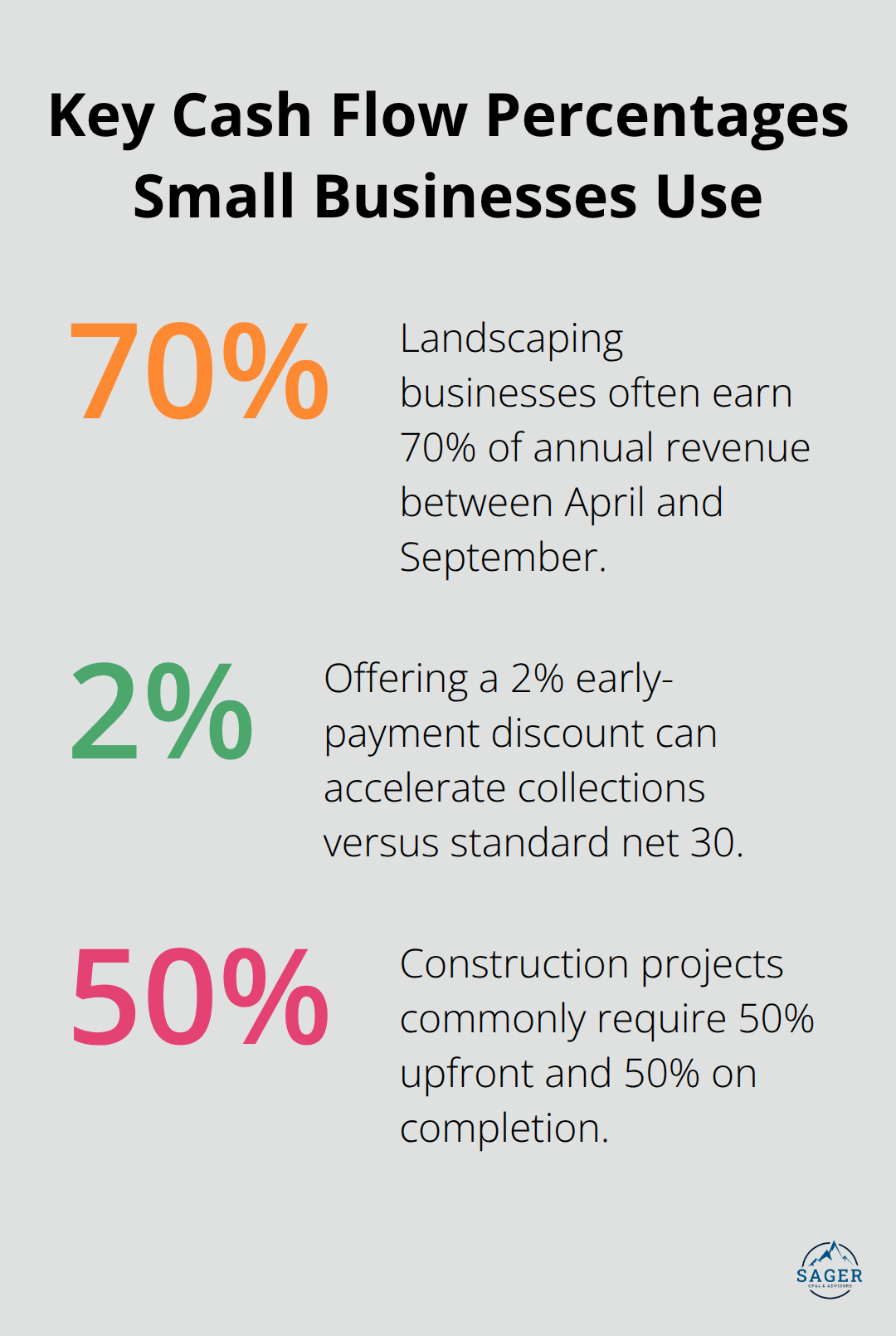
Small businesses face specific cash flow challenges that larger companies with credit lines can absorb. According to the U.S. Chamber of Commerce, cash flow issues can result from a lack of funding, poor budgeting, or inventory management issues. Seasonal businesses get hit hardest. A landscaping company might generate 70% of annual revenue between April and September, leaving nine months with minimal income. Retail shops experience similar patterns around the holiday season.
Without forecasting, owners make desperate decisions like taking on expensive short-term loans or delaying payroll. A three-month cash projection prevents these situations entirely. Forecasting doesn’t predict the future perfectly, but it shows you exactly when cash runs tight so you can act before crisis hits.
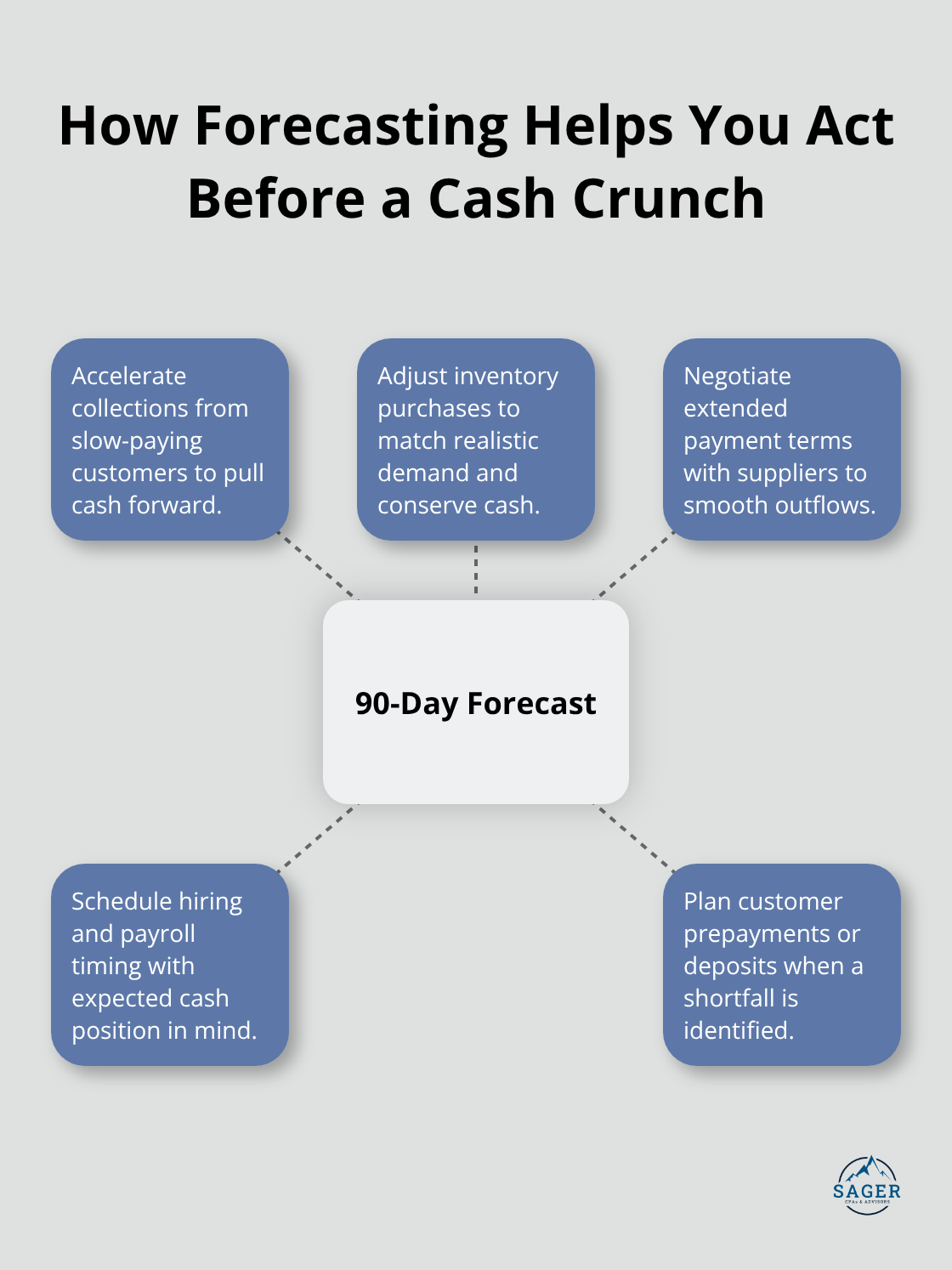
A cash flow forecast works like an early warning system. When you project your cash position 90 days ahead, you spot shortfalls with time to respond. You might accelerate collections from slow-paying customers, adjust inventory purchases, or negotiate extended payment terms with suppliers.
A small manufacturing business discovered through forecasting that February would bring a $40,000 cash shortage. Rather than panic, they contacted their largest customer and arranged a partial prepayment for an upcoming order. The customer agreed because they valued the relationship. The business avoided expensive financing and maintained stability. Without that forecast, February would have arrived as a crisis requiring emergency borrowing at punishing rates.
Forecasting transforms cash management from reactive firefighting into proactive strategy. The real question isn’t whether you need a forecast-it’s how you’ll build one that actually works for your business. The next section walks you through the specific steps to create a forecast that catches problems before they become emergencies.
Start with your actual bank statements and accounting records from the past 12 to 24 months. Pull transaction data from your business checking account, credit card statements, and accounting software like QuickBooks or FreshBooks. This historical data forms the foundation for everything that follows. Most small business owners skip this step and rely on memory, which leads to wildly inaccurate forecasts. You need concrete numbers: how much money actually came in each month, when payments arrived from customers, and exactly when you paid suppliers and employees. If your accounting records are incomplete, organize them now. Spending a full week reconstructing the past year produces far better results than relying on incomplete data, because accurate forecasts require accurate inputs.
Look for patterns in your sales data rather than assuming growth stays flat or increases predictably. A construction company generates strong revenue in spring and summer but nearly zero in winter months. A software company with annual contracts receives large payments in specific months, not evenly throughout the year. Map out your actual revenue by month for the past 12 months, then identify which months are strongest and which are weakest. If you sell seasonal products, your forecast must reflect this reality. Calculate the percentage of annual revenue that arrives in each month, then apply those percentages to your projected annual revenue for the forecast period. For example, if landscaping historically generates 15% of annual revenue in May, assume the same percentage for next May. This approach beats generic growth assumptions because it anchors projections to your actual business rhythm. Account for known changes too-if you add a new product line or lose a major customer, adjust your projections accordingly rather than blindly applying historical percentages.
Your fixed costs stay the same regardless of sales volume, but variable costs fluctuate with business activity. List every expense you pay monthly: payroll, rent, insurance, utilities, software subscriptions, and loan payments. These fixed expenses don’t change when sales drop. Then identify variable expenses like materials, shipping costs, or contractor fees that scale with revenue. Most owners forecast expenses as a flat monthly average, which causes them to miss seasonal cash crunches. A retail business spending $8,000 monthly on inventory in November and December but only $3,000 monthly in January through September needs a month-by-month expense forecast, not an average. Build your forecast with actual monthly expense amounts based on your historical patterns. Include timing differences-if you pay suppliers net 30 days, money leaves your account the month after you receive the invoice. Payroll timing matters too. If you pay employees on the 15th and last day of each month, those cash outflows hit your account on specific dates, not spread evenly across 30 days.
Once you gather your historical data and identify your patterns, you’re ready to build the actual forecast. The next section shows you specific tools and strategies that transform raw numbers into a working cash flow management system.
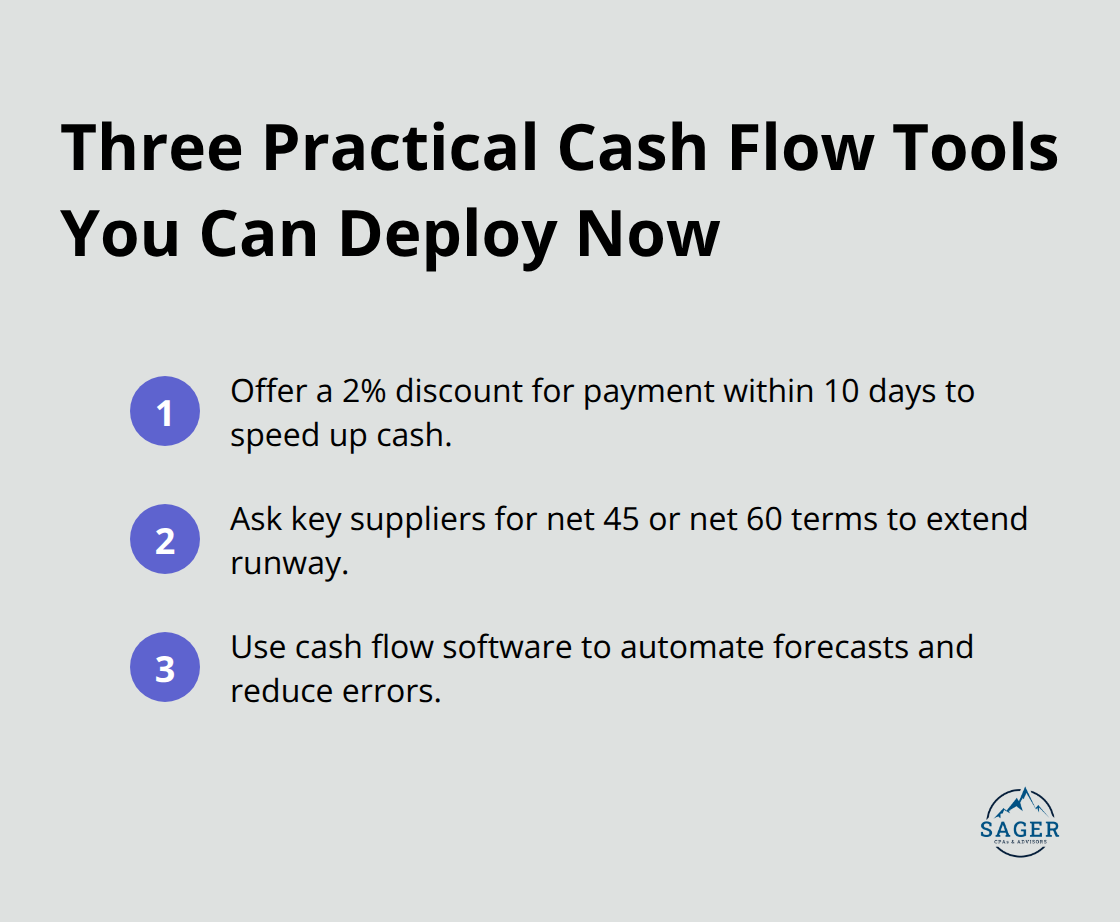
The gap between when you invoice a customer and when money hits your account destroys cash flow. Businesses that book strong sales still hemorrhage cash because customers pay slowly. Offering a 2% discount for payment within 10 days instead of the standard net 30 terms cuts your collection period dramatically. A business with $100,000 in monthly invoices might collect $60,000 within 10 days under this structure, versus waiting 30+ days for most payments. The 2% discount costs $1,200 monthly but frees up $40,000 in immediate cash. That trade-off makes sense for almost every small business.
You can implement this through your invoicing software or simply add a line to your invoice stating the discount terms. Track which customers take the discount and which ignore it. The ones who ignore it are your slow-payers, and you should flag them for tighter collection efforts.
Another tactic involves requiring deposits from new customers or for large orders. Construction companies routinely collect 50% upfront and 50% on completion. This approach isn’t just reasonable-customers expect it in certain industries. Service businesses can require 25-50% deposits for projects lasting more than a month. If a customer refuses a deposit, they’re signaling payment risk. Tighten your terms or pass on the work.
Most small business owners accept whatever payment terms suppliers offer without pushing back. Standard net 30 terms mean you pay 30 days after receiving an invoice. Ask for net 45 or net 60 instead, especially if you’ve paid reliably for over a year. Suppliers care about consistency far more than most owners realize. If you’ve paid on time for 24 months, a supplier would rather extend your terms than lose you as a customer.
Start with your largest suppliers where extended terms create the biggest cash impact. A $30,000 monthly supplier payment delayed from net 30 to net 60 terms gives you an extra $30,000 in working capital immediately. That’s real money you can deploy elsewhere in the business. Approach the conversation professionally-explain that you’re optimizing cash management and would appreciate discussing extended terms. Most suppliers say yes.
If they decline, ask if they’d offer a discount for paying within 10 days instead. That reverses the equation and costs you less than the deposit discount you’re offering customers.
Cash flow software like QuickBooks Online or Adaptive Insights automates your forecast and updates it as actual transactions post to your accounts. These tools pull live data from your bank accounts and generate projections automatically instead of forcing you to manually update spreadsheets monthly. The time savings alone justifies the software cost, but the real benefit is accuracy. Manual forecasts contain errors that automated systems catch instantly.
You spend 30 minutes setting up your forecast parameters, then the software does the heavy lifting. Most small business owners who claim forecasting is too complicated simply haven’t tried modern software. It’s genuinely easier than maintaining a spreadsheet.
Small business cash flow improves the moment you stop guessing and start forecasting. The difference between a business that survives and one that thrives often comes down to this single practice. You spot seasonal shortfalls before they arrive, negotiate from strength with customers and suppliers, and make decisions based on facts rather than hope.
The tactics for improving cash flow work immediately. Early payment discounts accelerate money into your account, extended supplier terms free up working capital without borrowing, and automation software eliminates manual errors while saving hours monthly. These aren’t theoretical suggestions-they’re proven methods that small business owners implement successfully every month (and the results speak for themselves).
We at Sager CPA help business owners build financial strategies that work. If you want personalized guidance on cash flow management and tax planning tailored to your specific situation, schedule a consultation to create a strategy that fits your business.




Privacy Policy | Terms and Conditions | Powered by Cajabra
At Sager CPAs & Advisors, we understand that you want a partner and an advocate who will provide you with proactive solutions and ideas.
The problem is you may feel uncertain, overwhelmed, or disorganized about the future of your business or wealth accumulation.
We believe that even the most successful business owners can benefit from professional financial advice and guidance, and everyone deserves to understand their financial situation.
Understanding finances and running a successful business takes time, education, and sometimes the help of professionals. It’s okay not to know everything from the start.
This is why we are passionate about taking time with our clients year round to listen, work through solutions, and provide proactive guidance so that you feel heard, valued, and understood by a team of experts who are invested in your success.
Here’s how we do it:
Schedule a consultation today. And, in the meantime, download our free guide, “5 Conversations You Should Be Having With Your CPA” to understand how tax planning and business strategy both save and make you money.