
Startup Financial Risk Planning: Anticipate and Mitigate for Growth
Anticipate financial risks in your startup with practical strategies to protect cash flow, manage debt, and build sustainable growth.
Most people wait until tax season arrives to think about their taxes. That’s a mistake that costs money.
We at Sager CPA know that an early tax planning guide makes the difference between a stressful April and a smooth filing season. Starting now gives you time to adjust withholdings, maximize retirement contributions, and catch deductions you’d otherwise miss.
Your filing status and income sources form the bedrock of early tax planning. The IRS taxes different filing statuses at different rates, and choosing the wrong one costs real money. Single filers face higher tax rates than married filing jointly filers at nearly every income level. If you’ve experienced a major life change-marriage, divorce, or a child’s birth-your status likely changed for this year, and waiting to address this decision means missing opportunities to adjust withholdings or claim credits you’re entitled to.
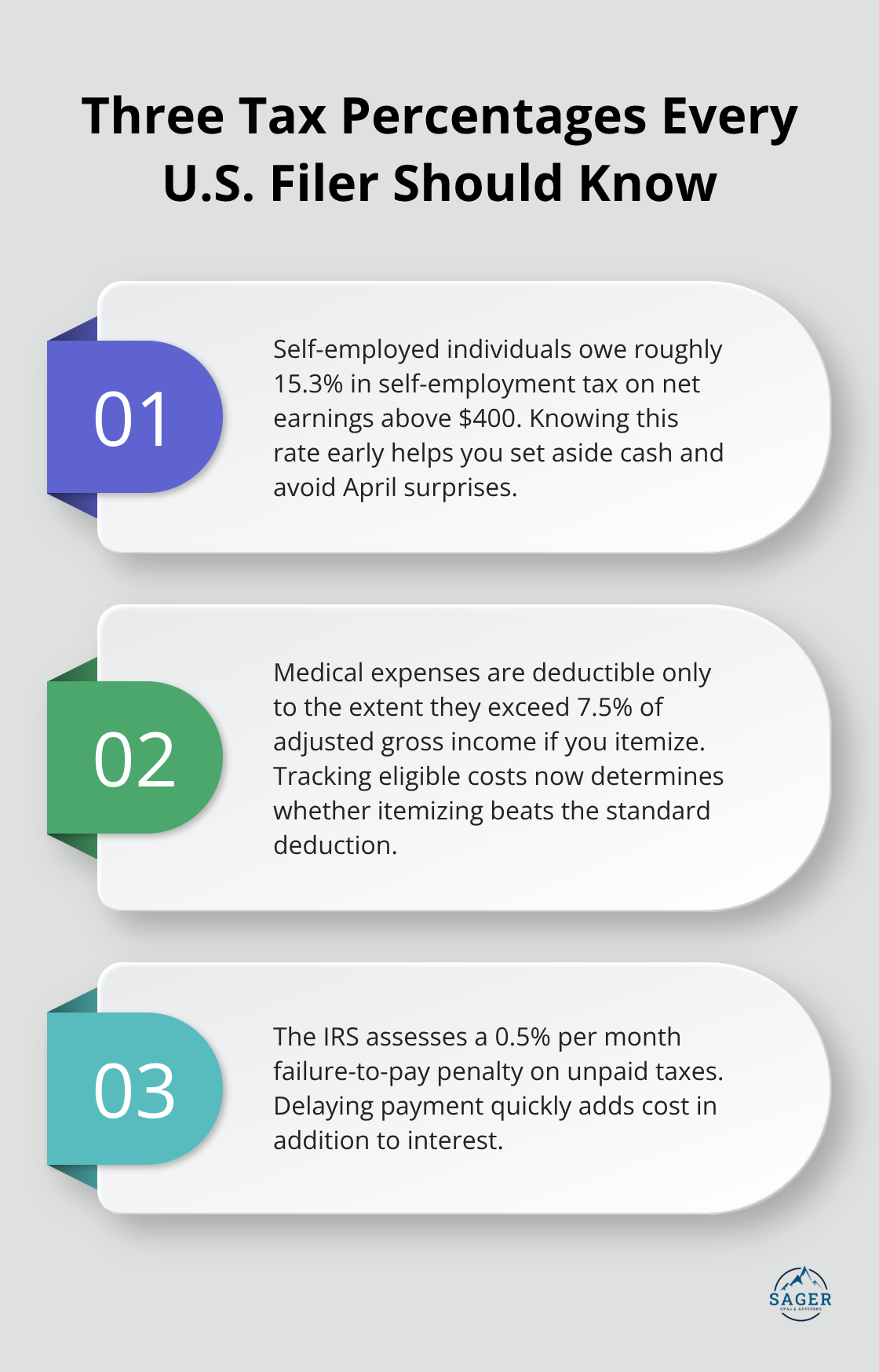
Income sources matter equally. W-2 wages, self-employment income, rental income, and investment gains all trigger different tax treatments. Self-employed individuals owe both income tax and self-employment tax totaling roughly 15.3% on net earnings above $400, which means early planning prevents surprise liability in April. If you receive income from multiple sources, you need to identify each one now because withholding rules differ dramatically between them.
Deductions and tax credits separate people who pay what they owe from people who pay far more than they should. The standard deduction for 2026 is $14,600 for single filers and $32,200 for married filing jointly, but many taxpayers qualify for itemized deductions that exceed these amounts if you know your rights and track expenses properly. Medical expenses exceeding 7.5% of adjusted gross income, state and local taxes capped at $10,000, mortgage interest, and charitable contributions all qualify, but you must document everything now before the year ends.
Tax credits directly reduce your tax bill dollar-for-dollar, unlike deductions which only reduce taxable income. The Child Tax Credit worth $2,000 per qualifying child, the Earned Income Tax Credit reaching up to $3,733 for eligible low-income workers, and education credits like the American Opportunity Credit worth up to $2,500 represent massive savings you might miss without early review.
Conducting a thorough audit of your filing status, income sources, potential deductions, and eligible credits before September ends matters more than most people realize. This three-month window gives you time to make strategic moves that actually impact your bottom line. With your foundation solid, you can now focus on the specific moves that maximize your tax position for the remainder of the year.
The foundation you’ve built matters only if you act on it before the year ends. September through December is your window to make moves that stick. If you’re self-employed or have side income, you can still open and fund a Solo 401(k) for 2026 if you establish it by December 31, though contributions must be made by your tax filing deadline. For traditional IRAs and Roth IRAs, the contribution deadline is actually April 15, 2027, but funding early means your money compounds longer and you lock in your strategy while the year is still fresh.
Employees should review their W-4 withholding now because if you’re getting a large refund each year, you’re giving the government an interest-free loan. The IRS Tax Withholding Estimator shows exactly how to adjust your withholdings based on your actual tax situation, not a generic estimate. If you got married, had a child, or took a second job this year, your withholding is almost certainly wrong and needs adjustment immediately.
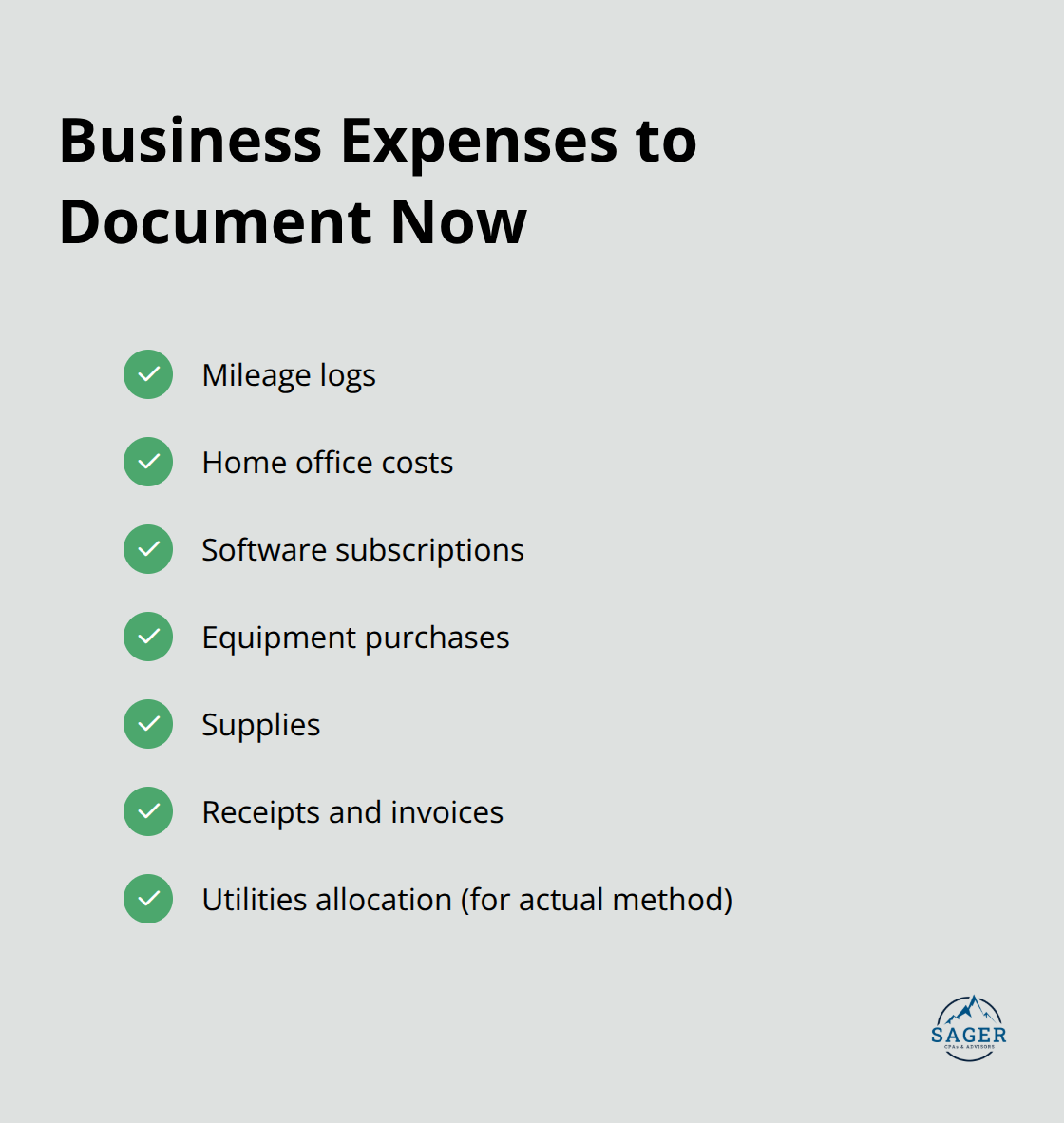
Business owners and freelancers must treat expense documentation like a daily habit, not an April scramble. Tracking mileage, home office costs, software subscriptions, equipment purchases, and supplies now prevents the nightmare of reconstructing records six months later when memory fades. The IRS allows home office deductions of either $300 per month using the simplified method or actual expenses if you calculate square footage and utilities precisely. Every receipt, invoice, and mileage log you capture today strengthens your tax position and reduces audit risk substantially.
Starting these moves now transforms tax season from reactive scrambling into confident execution. The decisions you make in the next few months determine whether you pay thousands more than necessary or position yourself for genuine tax savings. With your retirement contributions funded, withholding adjusted, and expenses documented, you’ve eliminated the guesswork that trips up most taxpayers. The remaining step involves identifying the specific mistakes that derail early-year planning and how to sidestep them entirely.
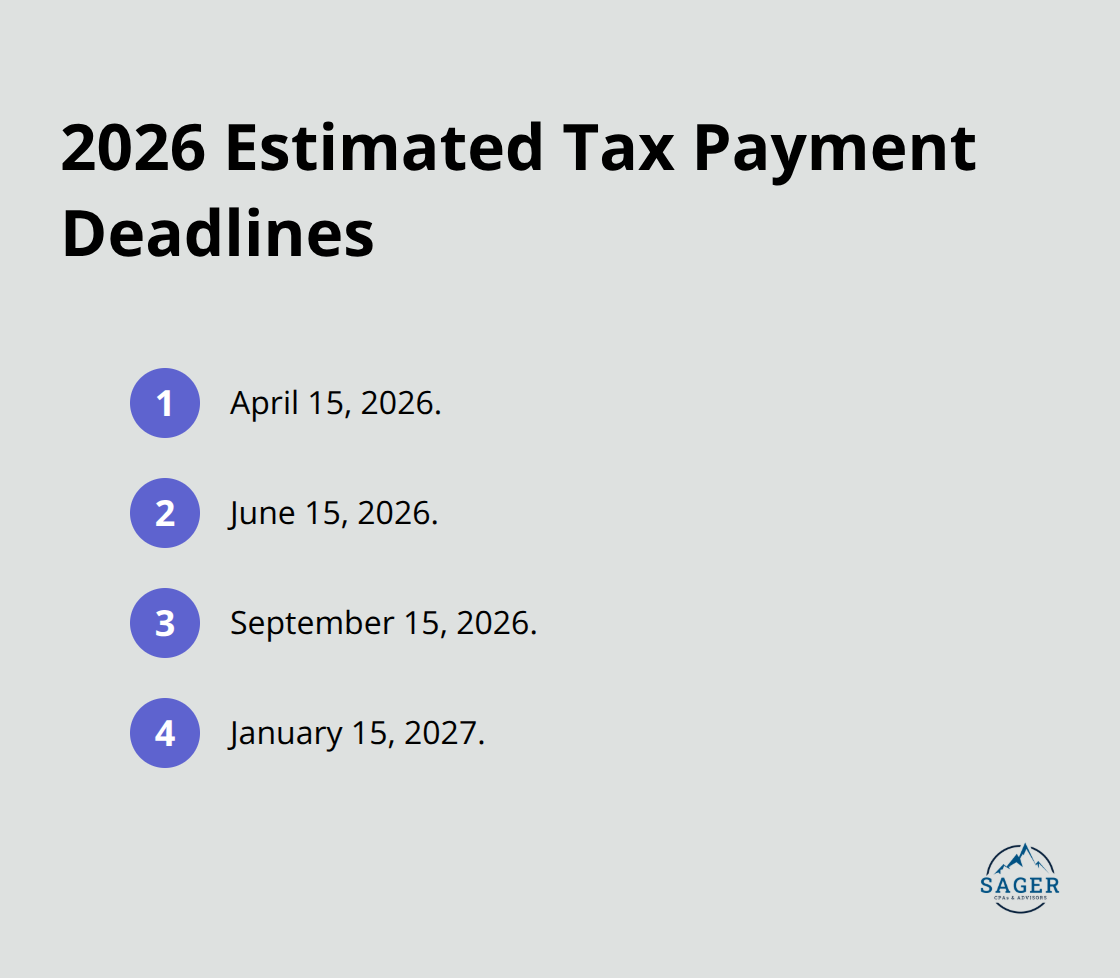
Self-employed workers and freelancers face a brutal reality: skip quarterly estimated tax payments and you’ll owe penalties on top of your actual tax bill. The IRS charges interest plus a failure-to-pay penalty of 0.5% per month on unpaid taxes, which means waiting until April 15, 2027 to settle a $10,000 tax bill costs you roughly $250 in penalties alone, not counting interest that accrues daily. Quarterly estimated payments are due on April 15, June 15, September 15, and January 15 of the following year, and missing even one deadline triggers penalties regardless of whether you ultimately owe taxes.
Business owners often assume they’ll pay everything in one lump sum when they file, then face shock at the penalty bill. The solution requires discipline now. Calculate your expected 2026 income, estimate your tax liability, divide by four, and set up automatic payments through the IRS Direct Pay system or your bank before September 15 passes. If your income fluctuates, adjust payments quarterly based on actual earnings rather than guessing at year start.
Your W-4 form isn’t a set-it-and-forget-it document, yet most employees treat it exactly that way. Marriage, divorce, a new child, a second job, or a major income change all require immediate W-4 adjustments, but millions of taxpayers never update their forms after life events occur. If you’re married and both spouses work, your combined withholding often falls short unless you specifically account for dual-income households on your W-4, which means you’ll owe money in April instead of receiving a refund.
The same problem hits people who take side gigs or freelance work without adjusting their primary job’s withholding to account for additional income that won’t have taxes withheld. A second income stream changes your tax picture dramatically, yet most employees fail to notify their employer’s payroll department. This oversight transforms what should be a modest refund into an unexpected tax bill that strains cash flow when you least expect it.
Missing tax-advantaged contribution deadlines represents a costly mistake, particularly for Solo 401(k) plans and SEP IRAs. Solo 401(k)s must be established by December 31 to be valid for the current tax year, though you have until your tax filing deadline to actually contribute funds. SEP IRAs also require establishment by December 31, with contribution deadlines matching your tax filing date.
Many self-employed individuals discover in February that they’ve missed the December 31 establishment deadline and lost the entire year’s contribution opportunity. This oversight eliminates thousands in potential tax savings and retirement security that you can never recover. The window closes permanently on December 31, and no extension exists for this particular deadline, making early action non-negotiable if you want to fund retirement accounts for 2026.
Early tax planning transforms how you approach your finances, and the moves you make between now and December 31 determine whether you pay thousands more than necessary or position yourself strategically for genuine savings. Your filing status, deductions, and credits form the foundation, while retirement contributions, withholding adjustments, and expense documentation build on that foundation. Avoiding quarterly payment penalties, W-4 oversights, and contribution deadline misses protects what you’ve already earned.
This early tax planning guide works because it shifts your mindset from April scrambling to September action. Most taxpayers react to tax season rather than prepare for it, which costs them money every single year. Self-employment tax penalties accumulate quickly, life changes demand immediate W-4 updates, and Solo 401(k) deadlines vanish on December 31 with no exceptions.
You have roughly four months left in 2026 to execute the strategy outlined in this guide, and that window closes fast. We at Sager CPA specialize in transforming tax planning from stressful to strategic, and our team provides expert financial management and comprehensive tax planning designed to reduce your liabilities while building long-term financial stability. Schedule a consultation with Sager CPA to build your personalized tax strategy and start your year strong.




Phone: (208) 939-6029
Email: info@sager.cpa
Privacy Policy | Terms and Conditions | Powered by Cajabra
At Sager CPAs & Advisors, we understand that you want a partner and an advocate who will provide you with proactive solutions and ideas.
The problem is you may feel uncertain, overwhelmed, or disorganized about the future of your business or wealth accumulation.
We believe that even the most successful business owners can benefit from professional financial advice and guidance, and everyone deserves to understand their financial situation.
Understanding finances and running a successful business takes time, education, and sometimes the help of professionals. It’s okay not to know everything from the start.
This is why we are passionate about taking time with our clients year round to listen, work through solutions, and provide proactive guidance so that you feel heard, valued, and understood by a team of experts who are invested in your success.
Here’s how we do it:
Schedule a consultation today. And, in the meantime, download our free guide, “5 Conversations You Should Be Having With Your CPA” to understand how tax planning and business strategy both save and make you money.