
Startup Financial Risk Planning: Anticipate and Mitigate for Growth
Anticipate financial risks in your startup with practical strategies to protect cash flow, manage debt, and build sustainable growth.
Most small and medium-sized enterprises operate without a clear financial roadmap. This uncertainty costs them money through missed tax savings, poor cash flow management, and decisions made without solid data.
At Sager CPA, we’ve seen how SMEs financial planning services transform businesses by replacing guesswork with strategy. The right financial guidance gives you the visibility and confidence to grow intentionally.
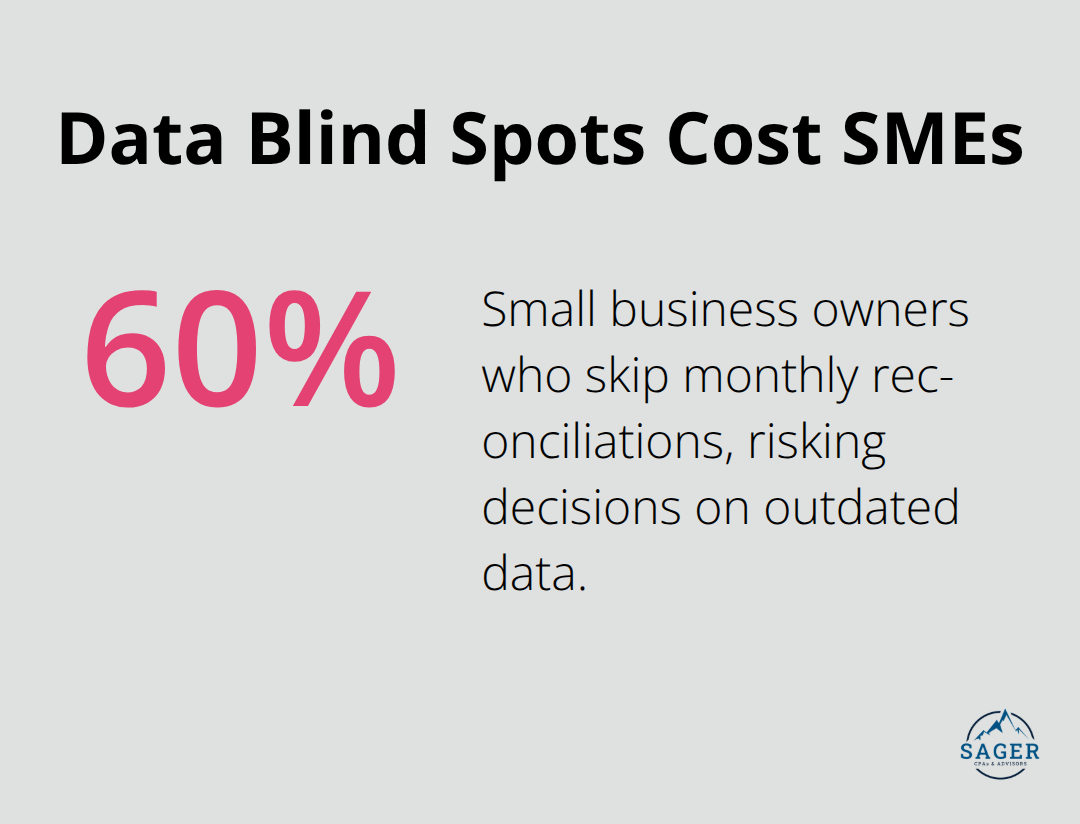
Most SME owners operate month to month without knowing their actual financial position. A survey by the National Small Business Association found that 60% of small business owners don’t reconcile their accounts monthly, meaning they make decisions based on incomplete or outdated information. This lack of visibility creates three immediate problems that directly impact profitability and growth.
Cash flow problems surface too late when you lack structured financial planning. An SME might show profit on paper but run out of cash because invoices aren’t collected on time or seasonal expenses aren’t anticipated. This forces expensive short-term borrowing or delays in paying vendors, damaging relationships and credit ratings.
Many SMEs don’t realize that improving collection cycles can free up thousands in working capital. Forecasting tools and regular cash flow reviews identify these gaps months in advance, giving you time to adjust. The difference between a business that survives and one that thrives often comes down to this single factor: knowing where your cash actually sits at any given moment.
The IRS allows hundreds of deductions and credits that SMEs simply miss because they haven’t tracked spending strategically throughout the year. SMEs typically pay more in taxes than necessary because they haven’t optimized their business structure, timing of expenses, or retirement contributions (all of which are within your control).
A business owner who takes quarterly tax planning seriously can redirect that money toward hiring, equipment, or debt reduction instead of handing it to the IRS. This isn’t about aggressive tactics-it’s about systematic planning that captures what the tax code already permits. Most SMEs leave money on the table simply because nobody sits down to look for it.
You might avoid hiring a talented employee or pass on a client opportunity because you’re uncertain about your financial capacity, when the numbers would actually support the investment. Without clear financial visibility, you make conservative decisions that protect you from risk but also prevent you from capturing growth opportunities. The cost of this caution compounds over years.
Strategic financial planning reveals your true capacity for growth and shows which investments actually make sense for your business. This clarity transforms how you approach expansion, hiring, and new opportunities. With this foundation in place, you’re ready to explore what professional financial planning services actually deliver.
Financial planning services built for SMEs operate differently than generic accounting. Professional advisors focus on forward-looking strategies that address the specific cash flow and growth challenges SME owners face. The real value emerges when these services move beyond historical reporting to create actionable financial intelligence that shapes decisions today.
Customized cash flow forecasting maps your actual revenue patterns, seasonal fluctuations, and expense timing across the next 12 months. This isn’t theoretical-it’s built on your historical data combined with upcoming contracts, known expenses, and realistic growth assumptions. An SME that implements monthly cash flow forecasting identifies cash shortfalls 60 to 90 days in advance, giving time to arrange financing or adjust spending rather than facing emergency borrowing at unfavorable rates.
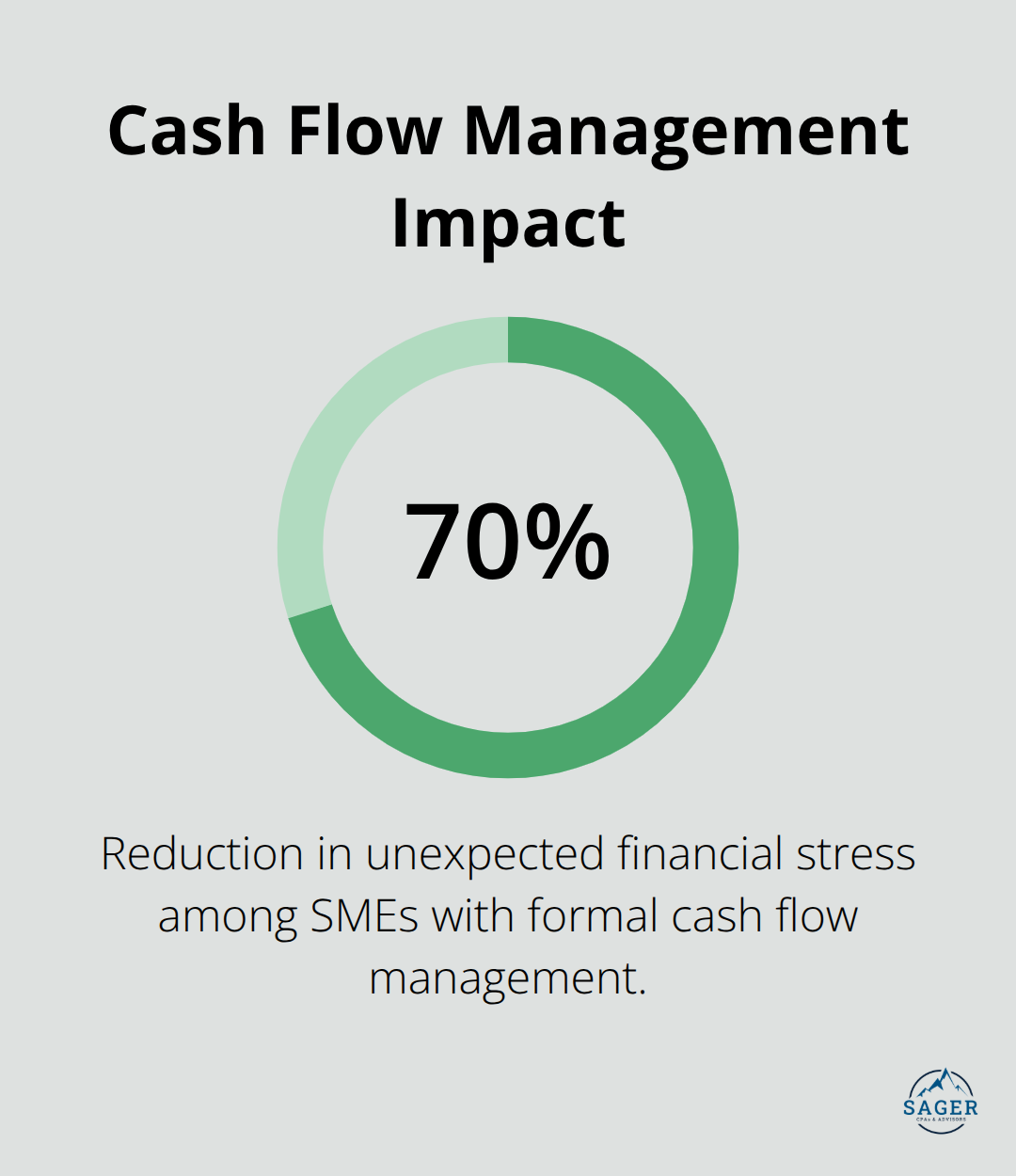
The American Institute of CPAs reports that SMEs with formal cash flow management reduce unexpected financial stress by 70 percent. Forecasting also reveals which months generate surplus cash, allowing you to plan investments in equipment, inventory, or staff without disrupting operations. Most SME owners discover they have more financial flexibility than they realized once they see the actual timing of cash movements across the year.
Tax reduction happens through deliberate planning, not last-minute scrambling at year-end. Professional financial planning identifies specific opportunities tied to your business structure, industry, and revenue timing. If you operate as a sole proprietor, switching to an S-corp structure can save 15 percent or more in self-employment taxes on net income above $60,000 annually-a concrete move that requires advance planning.
Quarterly tax reviews allow your advisory partner to recommend timing strategies for large purchases, retirement contributions, or income deferral that actually align with your financial position. The IRS allows research and development credits, equipment depreciation strategies, and qualified business income deductions that require documentation throughout the year, not retroactive calculations. An SME that coordinates with its CPA on these items typically recaptures 10 to 20 percent of what it would otherwise pay in federal and state taxes. This recovered cash flows directly to operations, payroll, or debt reduction instead of the government.
Strategic expansion planning starts with understanding your actual capacity to support growth. Financial planning reveals your sustainable growth rate based on current profitability, working capital requirements, and debt capacity. If you’re considering hiring two new employees or entering a new market, the financial model shows whether your cash flow supports this investment or whether you need phased implementation.
Professional advisors build customized action plans that show SME owners exactly which growth investments make financial sense and which ones create unnecessary risk. Access to this clarity removes emotion from expansion decisions and replaces it with data-driven confidence. Once you understand what your business can actually support, the question shifts from whether you can grow to how you should structure that growth-and that’s where selecting the right financial planning partner becomes the deciding factor.
The financial advisor you select will shape your business decisions for years to come, so this choice matters far more than finding the cheapest option. Many SME owners default to whoever prepared their last tax return or whoever offers the lowest hourly rate, but this approach consistently backfires. You need an advisor who understands your specific industry, has successfully worked with businesses at your revenue level, and communicates proactively rather than waiting for you to ask questions.
Industry expertise separates advisors who understand your actual financial challenges from those who apply generic strategies across all clients. An advisor experienced with manufacturing businesses knows about inventory valuation and capital equipment timing in ways that don’t apply to service firms. A healthcare practice advisor understands reimbursement timing and regulatory cost structures that a general tax preparer will miss. When you evaluate potential advisors, ask directly about their experience with your industry type and request references from current clients in similar fields. If an advisor deflects or claims they handle all industries equally well, that’s a clear signal they lack the specialized knowledge your business needs.
Your advisor’s track record with businesses at your size matters significantly because the financial challenges of a $2 million revenue company differ fundamentally from those of a $50 million operation. An advisor accustomed to working with much larger enterprises may overcomplicate your financial structure with unnecessary complexity, while one focused exclusively on solo practitioners might not understand the scaling challenges you face. Request specific examples of how your potential advisor has helped other SMEs at your approximate revenue level address cash flow problems or fund growth.
Ask how many clients they currently serve in your revenue range and whether they have capacity to give your business appropriate attention. The right advisor maintains a manageable client base rather than managing hundreds of relationships where yours becomes just a number. This capacity directly affects the quality of service you receive and the attention your financial strategy receives throughout the year.
Communication style and proactive engagement determine whether financial planning actually influences your decisions or becomes a once-yearly tax filing exercise. Meet with potential advisors before engaging them and observe whether they ask questions about your business goals or simply gather information to prepare returns. The best advisors initiate quarterly reviews, flag opportunities without waiting to be asked, and explain recommendations in language you actually understand rather than accounting jargon.
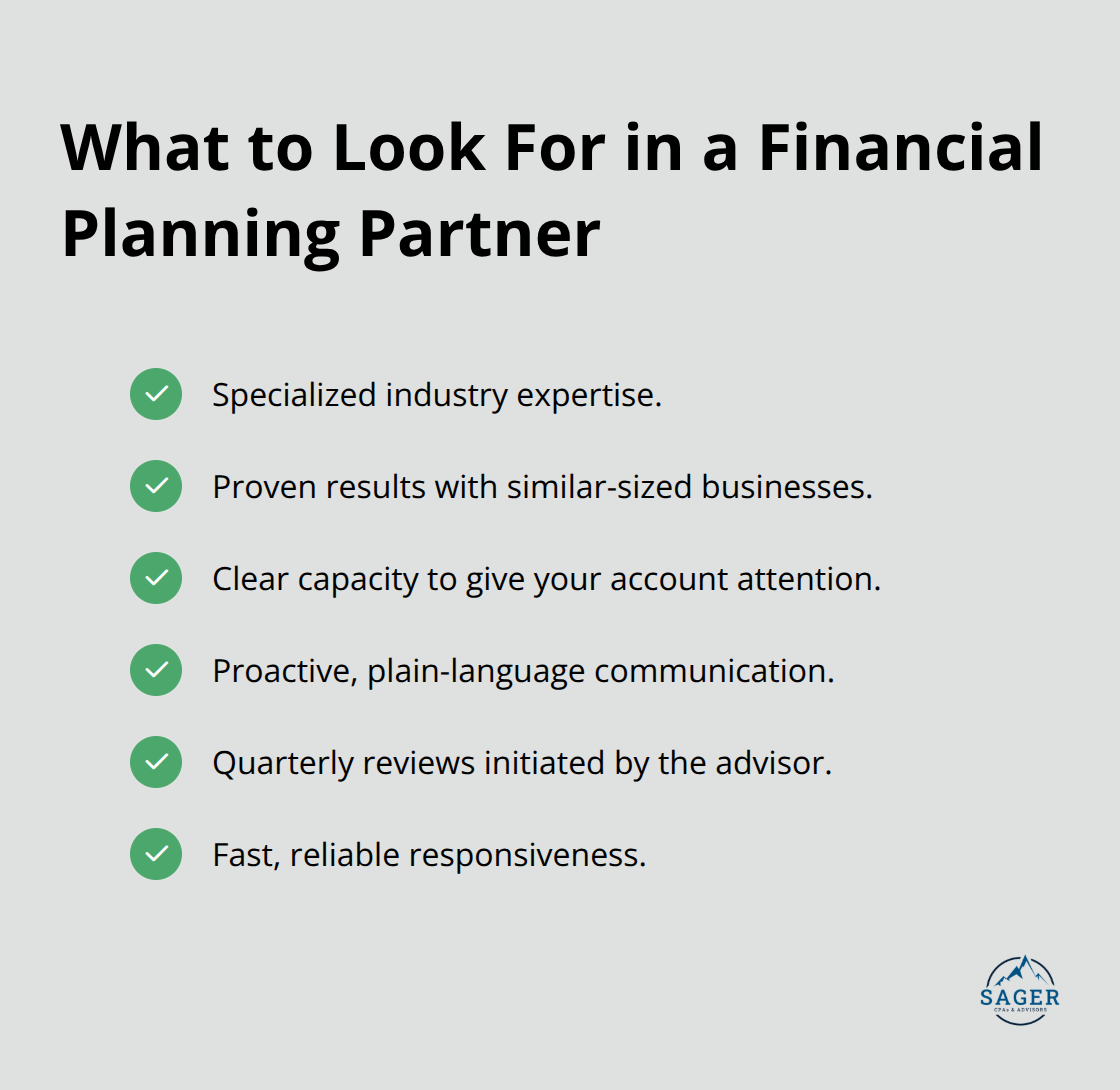
Test their responsiveness by seeing how quickly they return calls or emails during your evaluation period. If an advisor takes weeks to respond to simple questions, that pattern will continue once they’re handling your financial planning. The right partnership means your advisor understands your growth ambitions and proactively identifies strategies aligned with those goals, not just reacting to problems after they surface.
Financial planning removes the uncertainty that holds most SMEs back. When you have clear visibility into your cash position, understand your tax obligations months in advance, and know exactly what growth your business can support, decisions become straightforward. The difference between an SME that survives and one that accelerates comes down to this single factor: having a financial strategy built specifically for your situation.
Taking action with the right advisory partner transforms how you operate. Your advisor should understand your industry, communicate proactively, and explain recommendations in plain language. They should initiate quarterly reviews without waiting for you to ask, flag opportunities aligned with your growth goals, and respond quickly when you need guidance. This level of engagement means SMEs financial planning services actually influence your decisions rather than becoming a once-yearly tax filing exercise.
Building long-term financial stability requires systematic planning that captures tax savings, optimizes cash flow timing, and aligns growth investments with your actual financial capacity. Schedule a consultation with us to create a personalized financial strategy that supports your growth and builds the stability your business deserves.




Phone: (208) 939-6029
Email: info@sager.cpa
Privacy Policy | Terms and Conditions | Powered by Cajabra
At Sager CPAs & Advisors, we understand that you want a partner and an advocate who will provide you with proactive solutions and ideas.
The problem is you may feel uncertain, overwhelmed, or disorganized about the future of your business or wealth accumulation.
We believe that even the most successful business owners can benefit from professional financial advice and guidance, and everyone deserves to understand their financial situation.
Understanding finances and running a successful business takes time, education, and sometimes the help of professionals. It’s okay not to know everything from the start.
This is why we are passionate about taking time with our clients year round to listen, work through solutions, and provide proactive guidance so that you feel heard, valued, and understood by a team of experts who are invested in your success.
Here’s how we do it:
Schedule a consultation today. And, in the meantime, download our free guide, “5 Conversations You Should Be Having With Your CPA” to understand how tax planning and business strategy both save and make you money.