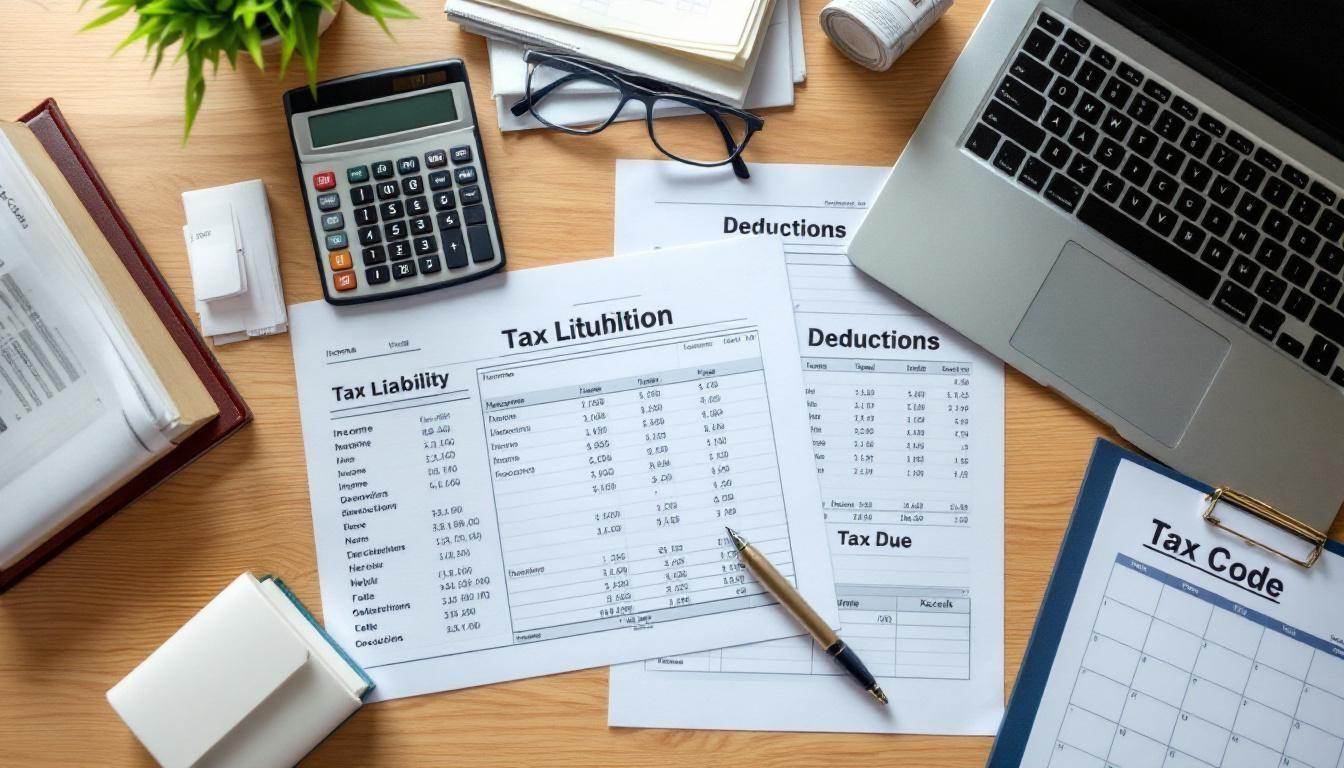
How to Reduce Your Tax Liability Legally
Reduce your tax liability legally with proven strategies. Discover deductions, credits, and planning techniques to lower your tax bill.
Most business owners wait until tax season to think about their taxes, missing opportunities to save thousands of dollars throughout the year.
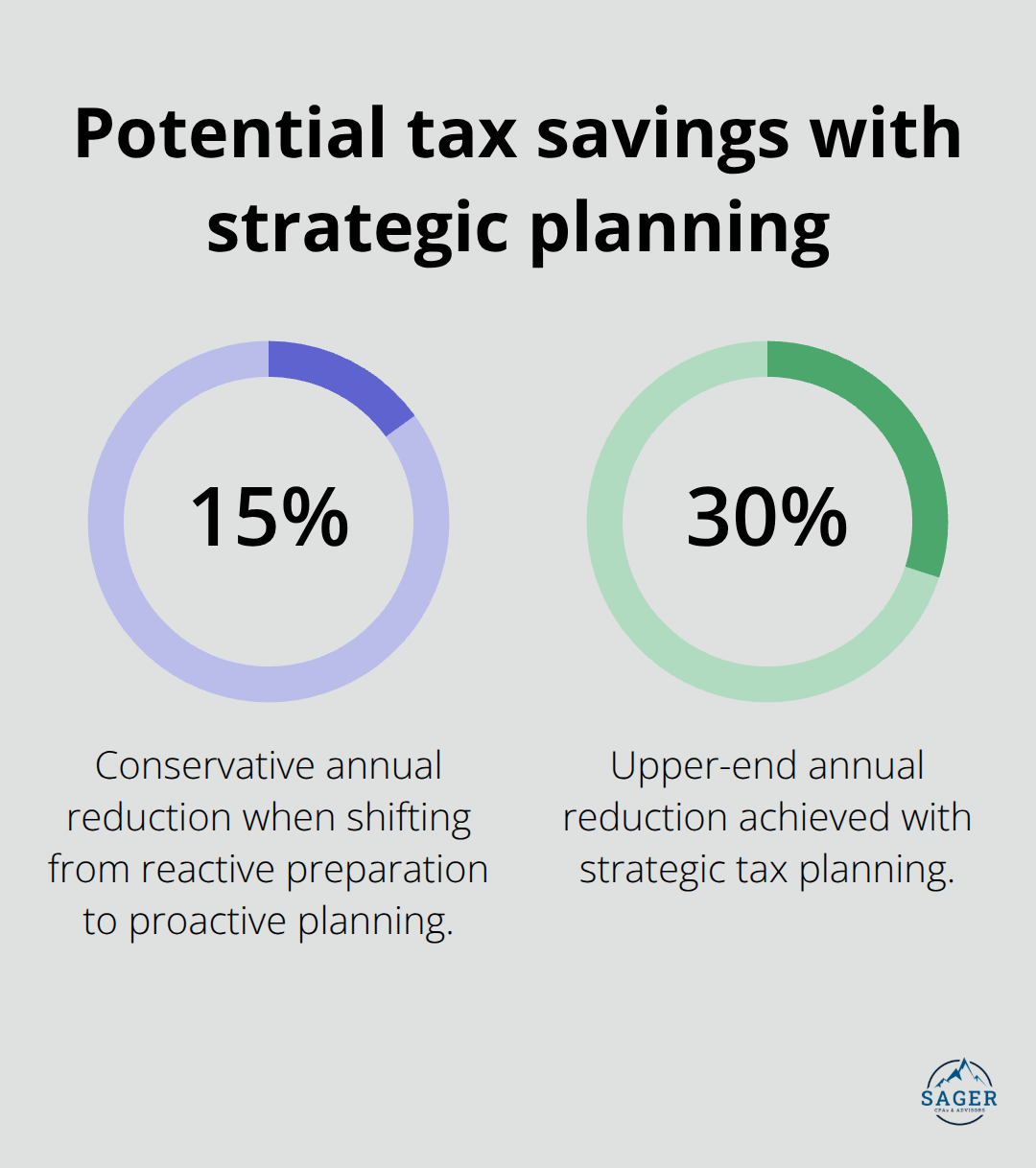
A skilled tax planning CPA works with you year-round to minimize your tax burden through strategic planning and proactive advice. We at Sager CPA see clients reduce their tax liability by 15-30% when they switch from reactive tax preparation to strategic tax planning.
The right CPA partnership transforms your tax strategy from a yearly headache into a competitive business advantage.
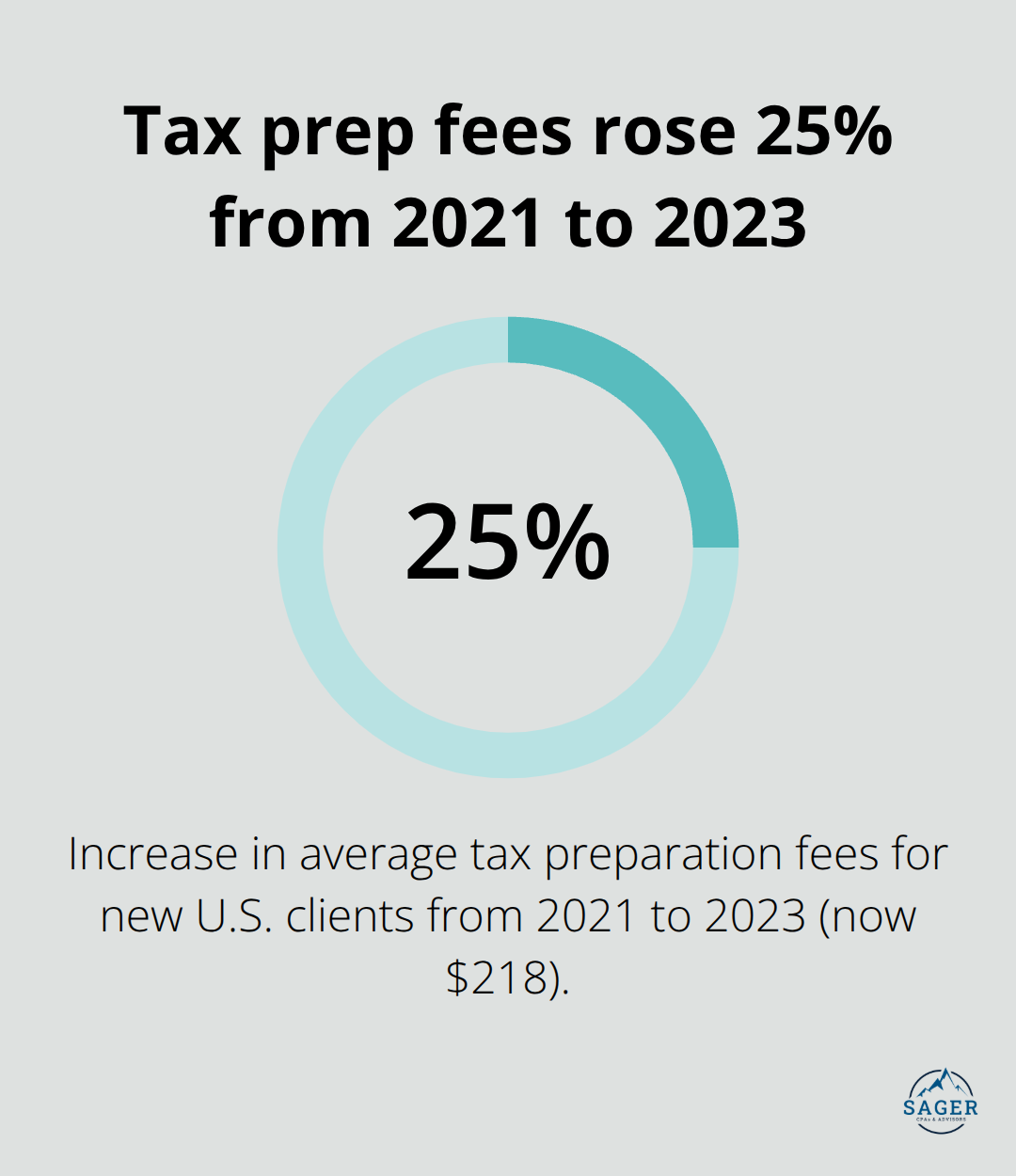
Tax preparation focuses on last year’s completed transactions, while tax planning actively influences your current financial decisions to reduce future tax liabilities. Professional tax services have become increasingly valuable as tax prep fees jumped to an average of $218 for new clients in 2023, representing a 25% increase from 2021.
Tax preparation takes a reactive approach – you report what already happened. Tax planning takes a proactive stance – you structure transactions and time decisions to optimize tax outcomes before they occur. This fundamental difference separates businesses that pay minimum taxes from those that overpay year after year.
Tax planning CPAs analyze your financial situation quarterly rather than annually. They review income timing, expense acceleration, retirement contributions, and business structure changes to reduce your overall tax burden throughout the year.
The IRS produces studies that provide statistics on income, deductions, taxes, credits, and more reported by businesses. Strategic planning includes estimated tax payments, cash flow management, and multi-year tax projections that prevent surprises and penalties (particularly important for growing businesses).
Experienced CPAs use income shifting between tax years, accelerated depreciation schedules, and strategic business entity elections to minimize taxes. They implement cost segregation studies for real estate investors, section 199A deductions for pass-through entities, and retirement plan optimization strategies.
Tax planning also involves state tax considerations – CPAs help businesses choose optimal locations and structures to reduce multi-state tax exposure. These strategies require continuous monitoring and adjustment based on tax law changes and business circumstances (which change frequently in today’s regulatory environment).
The complexity of these advanced strategies leads many business owners to seek qualified professionals who can implement them effectively, making CPA selection a critical business decision.
The National Association of State Boards of Accountancy reported over 653,000 CPAs in the U.S. as of 2025, yet CPAs, enrolled agents, and attorneys have unlimited representation rights before the IRS during audits and disputes. This representation right separates CPAs from regular tax preparers who hold only a Preparer Tax Identification Number (PTIN). CPAs complete 150 hours of education, pass the rigorous Uniform CPA Exam, and maintain their license through annual education requirements.
CPAs must meet stringent education and examination standards before they can practice. They hold bachelor’s degrees and complete additional coursework beyond standard accounting programs. The Uniform CPA Exam tests knowledge across auditing, financial accounting, regulation, and business environment concepts. State boards require CPAs to complete continuing education annually to maintain their licenses and stay current with tax law changes.
Verify your CPA’s active license status through your state board of accountancy website. Check for disciplinary actions that could indicate professional problems or ethical violations.
CPAs with specific industry experience identify deductions and strategies that generalists miss. Real estate investors need CPAs familiar with cost segregation studies and 1031 exchanges. Restaurant owners require expertise in tip reporting and equipment depreciation schedules. Manufacturing businesses benefit from CPAs who understand section 199A deductions and research and development credits.
The complexity of industry-specific tax codes means a CPA without relevant experience costs you money through missed opportunities and inefficient structures. Ask potential CPAs about their client base and experience with businesses similar to yours.
Tax planning requires ongoing dialogue throughout the year, not seasonal conversations. The best CPAs initiate quarterly reviews, send proactive tax law updates, and respond to questions within 24 hours during non-peak periods. They explain complex strategies in plain language and provide written summaries of recommended actions with implementation deadlines.
CPAs who only surface during tax season practice preparation, not planning. Interview potential CPAs about their communication frequency and preferred methods. The right questions will help you evaluate whether each candidate can provide the strategic guidance you need year-round.
Ask potential CPAs how they structure their tax planning process throughout the year. The right CPA schedules quarterly reviews, tracks business changes monthly, and initiates contact before major financial decisions. They should describe specific strategies like income timing, expense acceleration, and retirement plan optimization without prompting. Weak CPAs focus on compliance and historical reporting rather than proactive planning.
Request examples of tax strategies they implemented for clients in your industry within the past year. Strong candidates provide concrete examples like cost segregation studies that captured over $1.5 million in depreciation deductions or entity restructuring that reduced self-employment taxes. Avoid CPAs who speak in generalities or theoretical concepts without real-world applications.
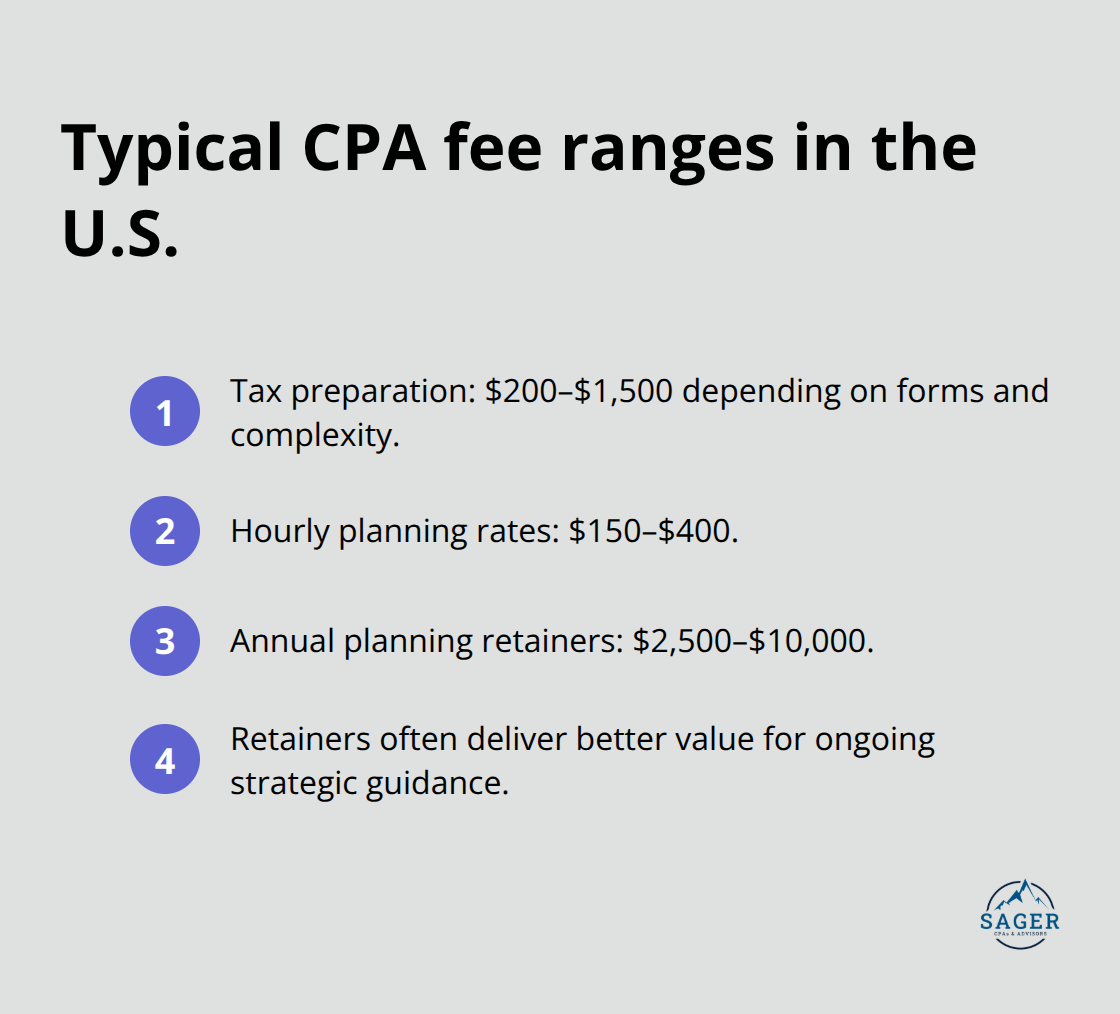
Demand upfront clarity on all fees before you sign any engagement letter. Tax preparation services range from $200-$1,500, with costs varying by form and complexity, but planning services vary significantly. Some CPAs charge hourly rates between $150-$400, while others offer annual retainers from $2,500-$10,000 for comprehensive planning services. Retainer arrangements often provide better value for businesses that require ongoing strategic guidance.
Ask specifically about additional charges for phone consultations, document reviews, and amendment preparation. The best CPAs include reasonable consultation time in their base fees and clearly define what constitutes additional billable work. Avoid CPAs who cannot provide written fee estimates or who hedge on pricing discussions.
Request contact information for three current clients with similar business structures and revenue levels. Professional CPAs maintain client confidentiality but can connect you with clients who agreed to serve as references. Speak directly with these references about response times, proactive communication, and measurable tax savings achieved through the CPA relationship.
Ask references specific questions about their CPA experience: How quickly does the CPA respond to urgent questions? What tax strategies has the CPA implemented? How much money have they saved through proactive planning? References who cannot provide concrete examples or measurable results indicate mediocre service quality that will cost you money long-term (particularly when tax laws change frequently).
You must evaluate three essential factors when you select the right tax planning CPA: professional credentials with active licenses, industry-specific experience that matches your business needs, and proactive communication throughout the year. The difference between reactive tax preparation and strategic tax planning can reduce your tax liability by 15-30% annually. Professional tax planning partnerships provide year-round financial guidance, quarterly strategy reviews, and proactive implementation of advanced tax strategies.
CPAs with proper qualifications identify deductions and opportunities that generalists miss while they maintain compliance with complex tax regulations. Start your CPA search during summer or fall when professionals have more availability for consultations. Verify credentials through state boards, request client references, and demand transparent fee structures before you make your selection.
We at Sager CPA offer comprehensive tax planning services with customized strategies that reduce liabilities and enhance financial clarity through regular communication and supportive partnerships. The right tax planning CPA transforms your tax strategy from a yearly burden into a competitive business advantage. Professional guidance helps you navigate complex tax situations while you focus on what matters most (growing your business).




Phone: (208) 939-6029
Email: info@sager.cpa
Privacy Policy | Terms and Conditions | Powered by Cajabra
At Sager CPAs & Advisors, we understand that you want a partner and an advocate who will provide you with proactive solutions and ideas.
The problem is you may feel uncertain, overwhelmed, or disorganized about the future of your business or wealth accumulation.
We believe that even the most successful business owners can benefit from professional financial advice and guidance, and everyone deserves to understand their financial situation.
Understanding finances and running a successful business takes time, education, and sometimes the help of professionals. It’s okay not to know everything from the start.
This is why we are passionate about taking time with our clients year round to listen, work through solutions, and provide proactive guidance so that you feel heard, valued, and understood by a team of experts who are invested in your success.
Here’s how we do it:
Schedule a consultation today. And, in the meantime, download our free guide, “5 Conversations You Should Be Having With Your CPA” to understand how tax planning and business strategy both save and make you money.