
Startup Funding Planning: Secure Capital and Scale
Plan your startup funding strategy with proven tactics to secure capital, avoid common pitfalls, and scale faster than competitors.
Most small business owners operate without a clear picture of their finances. You’re making decisions based on incomplete information, guessing at profitability, and hoping cash flow stays positive.
Financial clarity for SMBs changes that. At Sager CPA, we’ve seen firsthand how businesses transform when they understand their numbers. This guide shows you exactly how to build that foundation and use it to make smarter decisions.
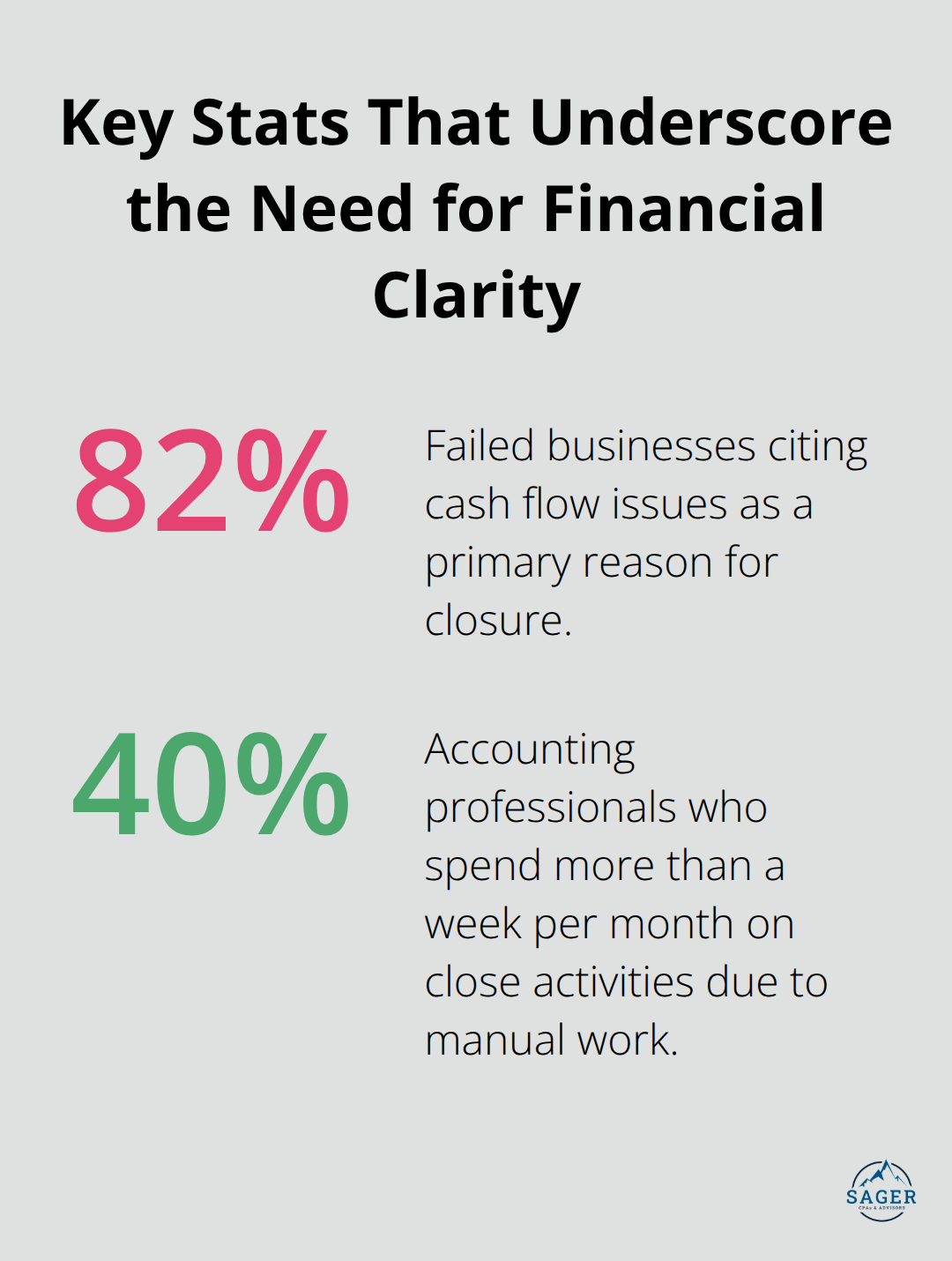
Cash flow problems cause small business failure more than any other factor. 82 percent of failed businesses cite cash flow issues as a primary reason for closure. Yet most owners don’t realize they’re in trouble until it’s too late because they lack visibility into their financial position. The core problem isn’t incompetence-it’s a gap between when transactions happen and when you actually see the data.
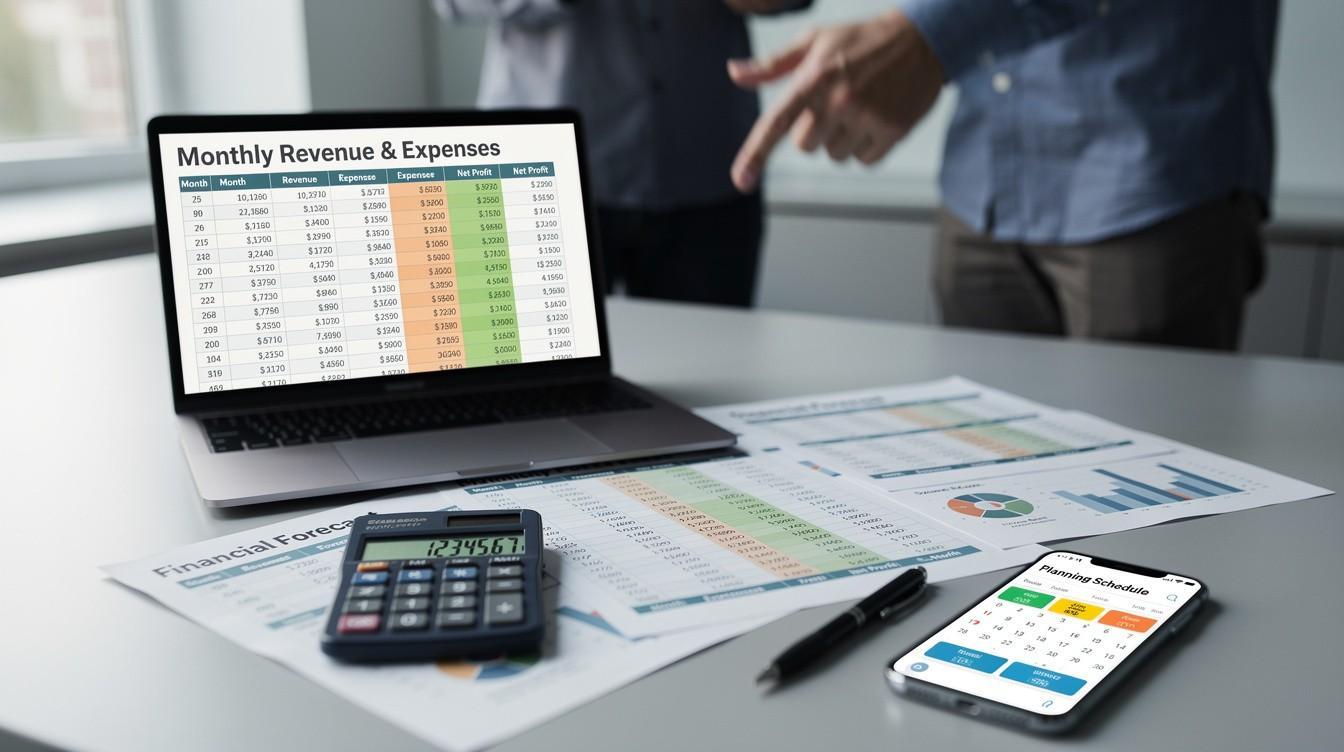
If you rely on bank statements that post days after transactions clear, or wait until your accountant delivers year-end statements, you operate blind. Real-time financial data provides valuable insights into cash flow management and financial performance, helping you make informed decisions. Cloud-based accounting platforms like QuickBooks Online and Xero automatically import bank transactions and update your books daily. Many SMBs still operate with manual spreadsheets or outdated desktop software instead. This delay costs you directly. You can’t spot a cash shortage until it becomes critical. You can’t identify a profitable customer until months have passed. You can’t adjust pricing or cut costs fast enough because the data arrives too slowly to matter.
Most SMBs inherit accounting processes designed for a different era. Manual data entry, disconnected systems, and month-end scrambles waste time and introduce errors. The FloQast survey found that 40 percent of accounting professionals spend more than a week per month on close activities due to manual reconciliation and data entry. That’s wasted capacity that could go toward analysis instead of busywork.
Without a properly structured Chart of Accounts and automation rules, expenses get miscategorized. A marketing cost lands in office supplies. Contractor fees blur into salaries. You lose the ability to track what actually drives your business. Cloud integration with your bank, credit cards, and payroll solves this problem. Automation rules catch miscategorizations before they happen. The result is faster, more accurate financial reporting that gives you the clarity you need to make decisions.
The second barrier is expertise. Most SMB owners wear too many hats to develop deep accounting knowledge. You understand your market and your operations, but financial statements feel foreign. Without someone who speaks both business and accounting, you can’t translate raw numbers into decisions. A CPA or bookkeeping professional bridges that gap and transforms how you read your financial position.
This expertise matters most when you face critical decisions. Should you hire that new salesperson? Can you afford to expand into a new market? Which product line actually generates profit? These questions require more than raw data-they require someone who understands both your numbers and your business. The gap between having data and understanding it determines whether you move forward with confidence or hesitation.
The gap between having financial data and actually using it to run your business comes down to three things: the systems you choose, the metrics you track, and how often you review them. Start with your accounting system. Cloud-based platforms like QuickBooks Online and Xero save roughly 11 hours per month on bookkeeping tasks compared to manual methods, according to Intuit. That time savings matters less than what it enables: automatic bank feeds, real-time expense categorization, and instant access to your numbers from any device.
Set up a Chart of Accounts that mirrors how your business actually operates, not some generic template. If you’re in construction, separate labor costs from materials. If you run a service business, break out billable versus non-billable time. This structure becomes the backbone for every decision you make later. Connect your bank account, credit cards, and payroll system to your accounting software immediately. Manual data entry is where errors hide and time gets wasted.
Define the financial metrics that matter for your specific business. Most SMBs track too many numbers and understand none of them. Focus on five core metrics: revenue, gross profit margin, operating cash flow, accounts receivable aging, and cash runway.
Revenue tells you if your top line is growing. Gross profit margin, calculated as revenue minus cost of goods sold divided by revenue, shows whether your core operations are actually profitable. Operating cash flow reveals whether you generate cash or just record sales on paper. Accounts receivable aging shows how long it takes customers to pay you, which directly impacts whether you run out of cash. Cash runway tells you how many months you can operate with current spending levels and cash on hand.
Track these metrics monthly, not annually. A monthly cadence lets you spot trends early and adjust before small problems become crises. Set specific targets for each metric based on your industry and business model, then review actual performance against those targets every month. The variance between budget and actual spending, calculated as actual divided by forecast minus one times 100, reveals where you overspend or underperform.
Schedule a formal review meeting on the same day each month where you sit down with your financial data, your team, and someone who understands accounting. This consistency transforms numbers from abstract data into actionable intelligence. The person leading this review should understand both your numbers and your business operations, translating raw data into decisions you can act on immediately.
This monthly rhythm creates accountability and forces you to confront reality before problems spiral. You spot a cash shortage two months out instead of two weeks out. You identify which customer segments actually generate profit instead of guessing. You catch overspending in specific departments while you still have time to adjust. The difference between businesses that survive and those that fail often comes down to this single habit: regular, disciplined review of financial performance against clear targets.
With these systems and metrics in place, you’re ready to use financial clarity to drive better decisions about which products and services actually move the needle for your business.
Your financial data only becomes valuable when you act on it. With real-time metrics and monthly reviews in place, you now have the raw material to make decisions that shift your business trajectory.
The first move is identifying which products, services, and customer segments actually generate profit. Most business owners operate on assumptions built from years of habit rather than actual financial performance. You think your premium service line is your profit engine, but your data might reveal that your high-volume, lower-margin offering generates more total profit. You assume certain customers are valuable because they’ve been with you longest, but their payment terms and service demands might make them unprofitable.
Start by running a profitability analysis on each product line and customer segment using your Chart of Accounts data. Calculate gross margin for each offering by dividing revenue minus cost of goods sold by revenue. If your overall gross margin sits at 60 percent but one product line runs at 35 percent, that’s a decision point. You either improve the economics of that offering, raise prices to match the margin target for your industry, or redirect resources toward higher-margin work.
A construction company that separated labor costs from materials discovered that their custom renovation work ran at 45 percent gross margin while their standardized builds hit 62 percent. The data forced a conversation about where to focus sales efforts and how to price future jobs. Without that breakdown in the Chart of Accounts, they would have continued treating all work as equally valuable.
Pricing decisions flow directly from this clarity. Many SMBs underprice because they lack confidence in their numbers. You don’t know your true cost structure, so you match competitor pricing or add a standard markup and hope it works. With accurate profitability data, you can price based on value and cost, not guesswork.
If your gross margin needs to hit 55 percent to cover overhead and generate profit, you know exactly what price floor each offering requires. This confidence transforms negotiations. You stop apologizing for your rates and start defending them with data.
The same principle applies to investment decisions about hiring, equipment, or expansion. The question shifts from “can we afford this” to “will this generate sufficient return.” If hiring a salesperson costs 80,000 dollars annually and your average customer lifetime value is 25,000 dollars, that salesperson needs to land at least four customers per year to break even, more to justify the expense. When you know these numbers, you make hiring decisions with confidence instead of hoping the new person drives enough revenue.
Growth planning becomes concrete rather than aspirational. A 13-week rolling cash flow forecast, updated weekly or monthly, shows you exactly when you’ll need working capital for expansion. You see that ramping up production requires 50,000 dollars in inventory investment six weeks before you collect payment from new customers. That visibility lets you secure a line of credit now rather than scramble for emergency financing later.
The forecast also reveals which growth scenarios actually work financially. Opening a second location might look attractive until you model the cash impact of carrying inventory, staffing, and customer acquisition in a new market simultaneously. That same data might show that expanding your existing location or launching a new service line to your current customer base generates better returns with lower risk. Financial clarity doesn’t eliminate business risk, but it transforms decisions from bets into informed choices grounded in your actual numbers.
Financial clarity for SMBs isn’t a one-time project-it’s a system you build and maintain over time. Connect your bank account to cloud accounting software this week, define your five core metrics next week, and schedule your first monthly review for the following month. That foundation transforms how you see your business and the decisions you make within it.
The businesses that thrive act on what their numbers reveal. When you know your gross margin by product line, you stop guessing about pricing. When you track cash runway weekly, you secure financing before crisis hits. When you review accounts receivable aging monthly, you catch payment problems before they damage cash flow. These habits compound into genuine financial clarity that shapes every strategic choice you make.
We at Sager CPA help SMBs build this foundation and turn financial data into strategic action. Schedule a consultation to create a personalized financial strategy tailored to your business and start seeing your numbers with clarity.



Phone: (208) 939-6029
Email: info@sager.cpa
Privacy Policy | Terms and Conditions | Powered by Cajabra
At Sager CPAs & Advisors, we understand that you want a partner and an advocate who will provide you with proactive solutions and ideas.
The problem is you may feel uncertain, overwhelmed, or disorganized about the future of your business or wealth accumulation.
We believe that even the most successful business owners can benefit from professional financial advice and guidance, and everyone deserves to understand their financial situation.
Understanding finances and running a successful business takes time, education, and sometimes the help of professionals. It’s okay not to know everything from the start.
This is why we are passionate about taking time with our clients year round to listen, work through solutions, and provide proactive guidance so that you feel heard, valued, and understood by a team of experts who are invested in your success.
Here’s how we do it:
Schedule a consultation today. And, in the meantime, download our free guide, “5 Conversations You Should Be Having With Your CPA” to understand how tax planning and business strategy both save and make you money.