
Tax Planning Efficiency: Streamline Your Tax Strategy for Better Outcomes
Streamline your tax strategy with proven planning efficiency methods. Reduce tax liability and optimize deductions for better financial outcomes.
Most business owners leave thousands of dollars on the table each year by making preventable tax mistakes. The difference between a reactive approach and strategic tax planning efficiency often comes down to timing, organization, and expert guidance.
At Sager CPA, we’ve seen firsthand how small planning decisions made throughout the year compound into significant tax savings. This guide walks you through the mistakes to avoid and the strategies that actually work.
Most business owners operate in crisis mode when tax season arrives. They scramble to gather receipts, estimate what they owe, and hope they haven’t missed anything. This reactive approach leaves money on the table because tax planning isn’t something you do in March or April-it’s something you do every single month.
The first mistake is waiting until year-end to think about taxes. When you delay planning until December or January, you’ve already lost the ability to make strategic decisions about income timing, expense acceleration, or retirement contributions that could have saved thousands. A business owner who realizes in November that they’re looking at a six-figure tax bill has zero flexibility. They can’t go back and adjust their quarterly estimated payments, they can’t retroactively max out a SEP-IRA, and they can’t time a major expense strategically.
IRS data shows that businesses making quarterly adjustments during the year must figure their expected adjusted gross income, taxable income, taxes, deductions, and credits for the year. The window to act closes fast once the calendar year ends.
Self-employed individuals and business owners must pay taxes throughout the year, not just once. The IRS requires quarterly payments on April 15, June 15, September 15, and January 15. Missing these deadlines or underpaying triggers penalties and interest that compound quickly.
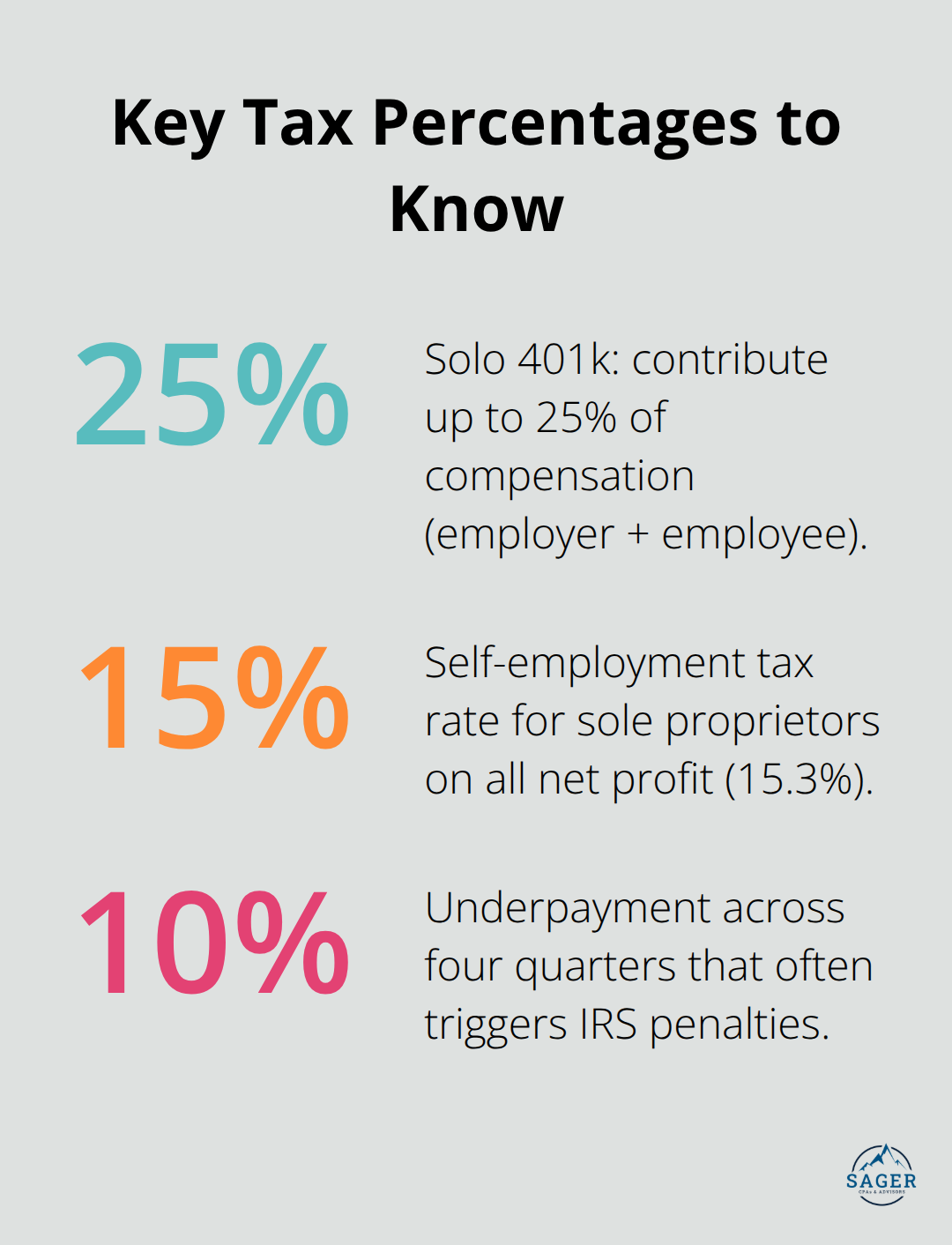
A business owner underpaying by just 10 percent across four quarters faces penalty assessments exceeding $2,000 when the year closes. These penalties add up fast, and the IRS doesn’t offer much flexibility once you miss a deadline. Treating quarterly payments as optional costs you real money.
Many business owners keep scattered records-some in email, some in a shoebox, some only in their memory. When tax time arrives, they either miss legitimate deductions or can’t substantiate what they claim. Businesses without organized expense tracking systems miss eligible deductions. That translates to thousands of dollars in unnecessary tax liability.
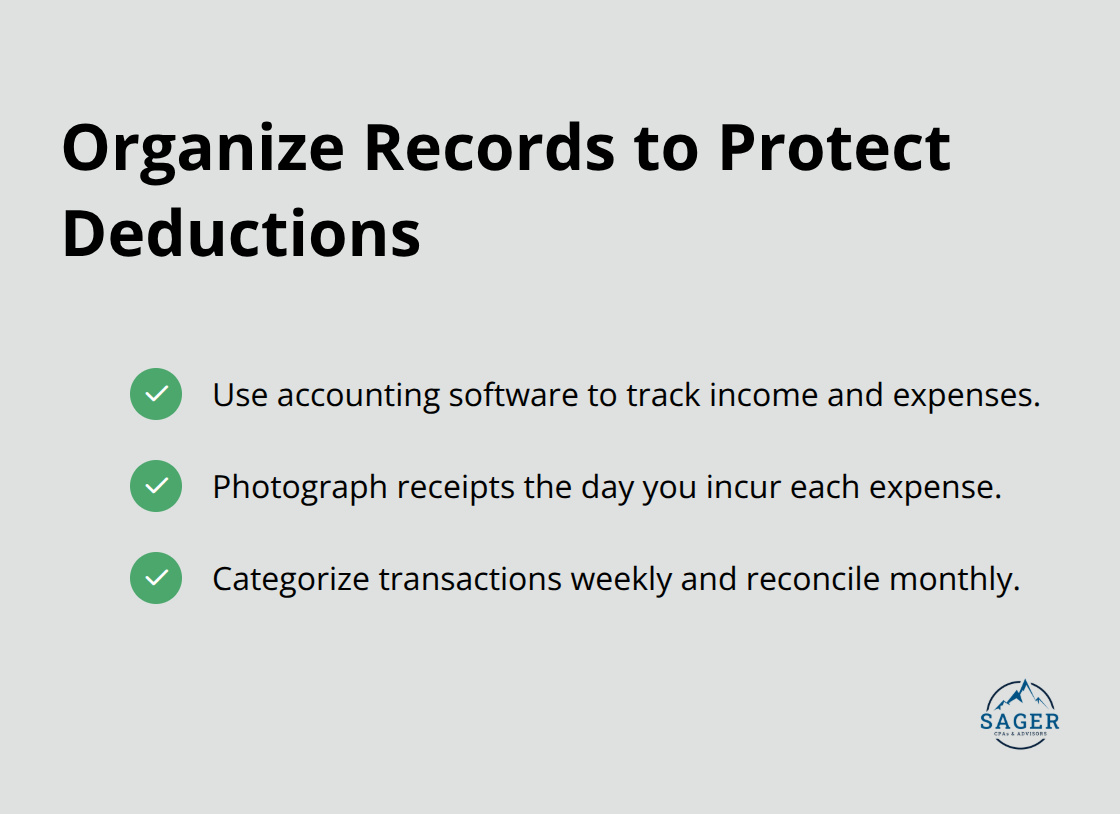
Implement a simple system immediately: use accounting software like QuickBooks or Wave, photograph receipts on the day you incur the expense, and categorize everything weekly rather than waiting until year-end. This discipline pays off directly on your tax bill.
These three errors-delayed planning, missed quarterly payments, and poor expense tracking-aren’t about complexity. They’re about discipline and timing. Each mistake compounds the others, turning what could have been manageable tax planning into a scramble that costs thousands. The good news is that fixing these patterns doesn’t require sophisticated strategies or complex structures. It requires consistency and attention to detail throughout the year.
Understanding what not to do is half the battle. The other half involves knowing which strategies actually reduce your tax liability when you implement them correctly.
Reducing your tax liability doesn’t require exotic strategies or aggressive positions that invite audit risk. Straightforward approaches work because they align with how the IRS actually taxes business income. The three most effective strategies involve retirement contributions, your business structure, and deliberate timing of income and expenses throughout the year.
Self-employed individuals can contribute significantly more to retirement accounts than W-2 employees. A solo 401k allows you to contribute up to 25% of compensation as defined by the plan as both employer and employee, while a SEP-IRA caps at 69,000 dollars annually. These contributions reduce your taxable income dollar-for-dollar. A business owner earning 150,000 dollars in net profit who contributes to a solo 401k reduces their taxable income substantially, saving roughly 18,000 dollars in federal and self-employment taxes combined at current rates. Self-employed individuals who establish solo 401ks reduce their effective tax rate substantially compared to those using SEP-IRAs alone. The critical action: establish your account before December 31 and fund it by your tax filing deadline the following April. Too many business owners wait until March, missing the window entirely.
Your entity type determines how much you pay in self-employment taxes. A sole proprietor pays 15.3 percent self-employment tax on all net profit. An S-Corporation election lets you pay yourself a reasonable salary and take the remaining profit as a distribution, avoiding self-employment tax on that distribution portion. A business owner with 120,000 dollars in net profit who elects S-Corp status and pays themselves 75,000 dollars in salary avoids roughly 6,500 dollars in self-employment taxes on the remaining 45,000 dollars. This strategy works best for businesses generating consistent profits above 60,000 dollars annually. Below that threshold, the administrative burden and accounting costs outweigh the savings. This decision should happen when you start your business, not five years in.
If you know you’ll purchase equipment or make significant business improvements, timing matters enormously. Purchasing 25,000 dollars in equipment in December versus January shifts that deduction to the current year instead of next year, potentially dropping you into a lower tax bracket.
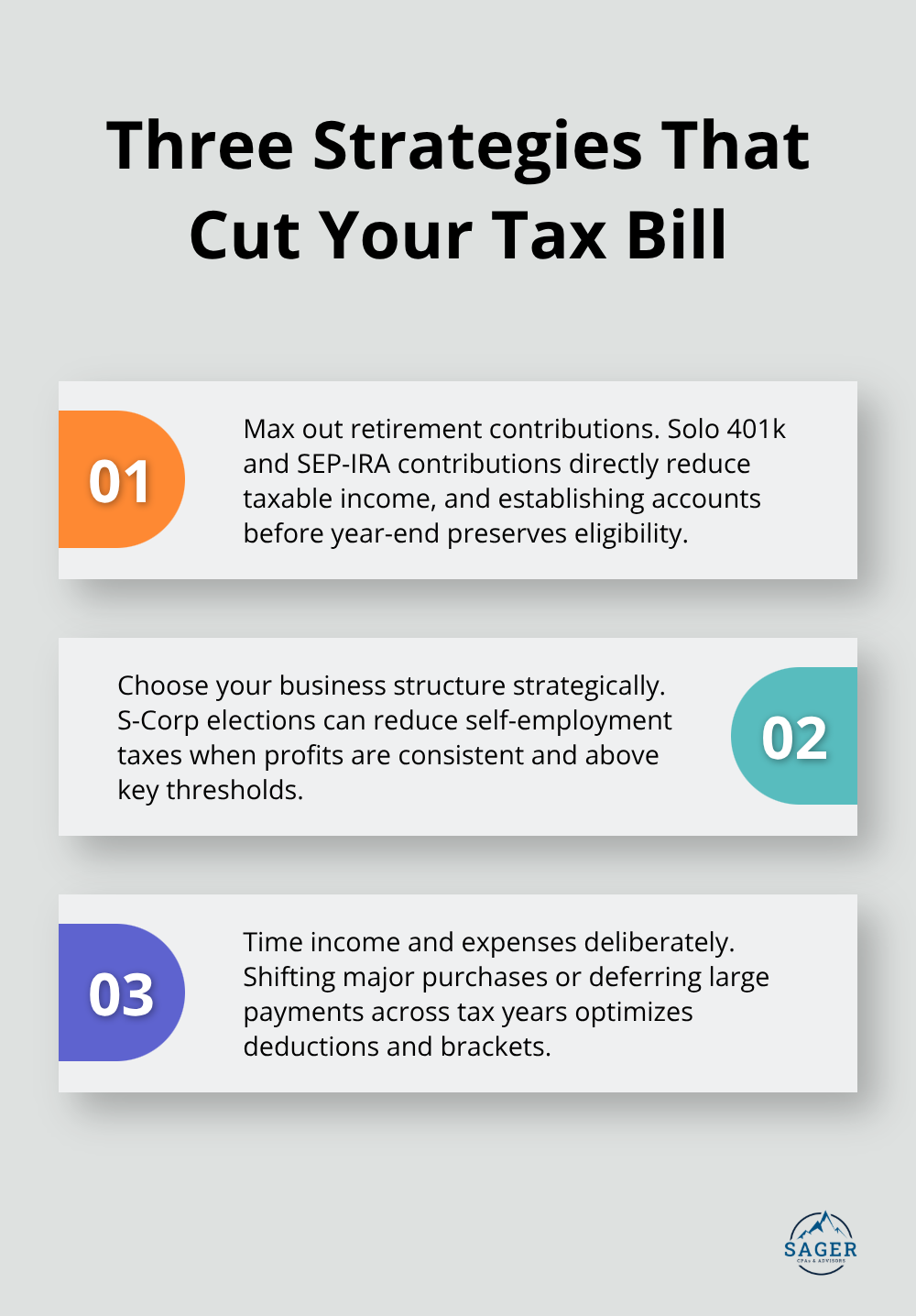
Section 179 expensing allows immediate deduction of up to $2,560,000 in qualifying property purchased in 2026, making large purchases especially valuable when timed correctly. Income timing works similarly-if you’re expecting a large contract payment, negotiating delivery in January instead of December spreads the income across two tax years. Clients who review their projected income and expenses quarterly with their accountant catch these opportunities. Those who operate without visibility into their year-end tax position miss them entirely.
These three strategies form the foundation of effective tax planning, but they only work when you implement them with precision and timing. The difference between a business owner who saves thousands and one who doesn’t often comes down to whether they act on these opportunities before the year closes. The next section shows how professional guidance transforms these strategies from theory into real tax savings on your actual return.
Most business owners treat tax planning as something their accountant handles in April. That approach guarantees you’ll miss opportunities that existed months earlier. Professional tax planning operates differently because it analyzes your tax situation continuously throughout the year, not just when tax season arrives. This means identifying which strategies from the previous section actually applies to your specific situation, then timing their implementation precisely.
A business owner earning $180,000 in net profit faces a completely different tax planning approach than one earning $60,000. One might benefit from S-Corp election while the other doesn’t. One might max out a solo 401k while the other should focus on equipment purchases under Section 179. Generic advice misses these distinctions entirely.
Effective tax planning starts with understanding your actual income trajectory, your planned business expenses, and your personal financial goals. From there, a customized action plan identifies exactly which strategies save you the most money given your circumstances. A business owner with steady income and minimal equipment needs requires a different approach than one planning a major capital investment or expecting variable revenue.
The difference between planning that works and planning that fails comes down to communication and timing. Quarterly strategy reviews with a tax professional catch opportunities before deadlines pass. When you mention in October that you’re considering a $50,000 equipment purchase, a tax advisor immediately models whether timing it in December versus January makes sense for your tax bracket.
When projections show mid-year that you’ll owe $25,000 in taxes, a professional discusses whether increasing retirement contributions or adjusting your business structure could reduce that liability. Clients who wait until March have zero flexibility on most of these decisions. Clients who work with a tax professional throughout the year make adjustments when options still exist.
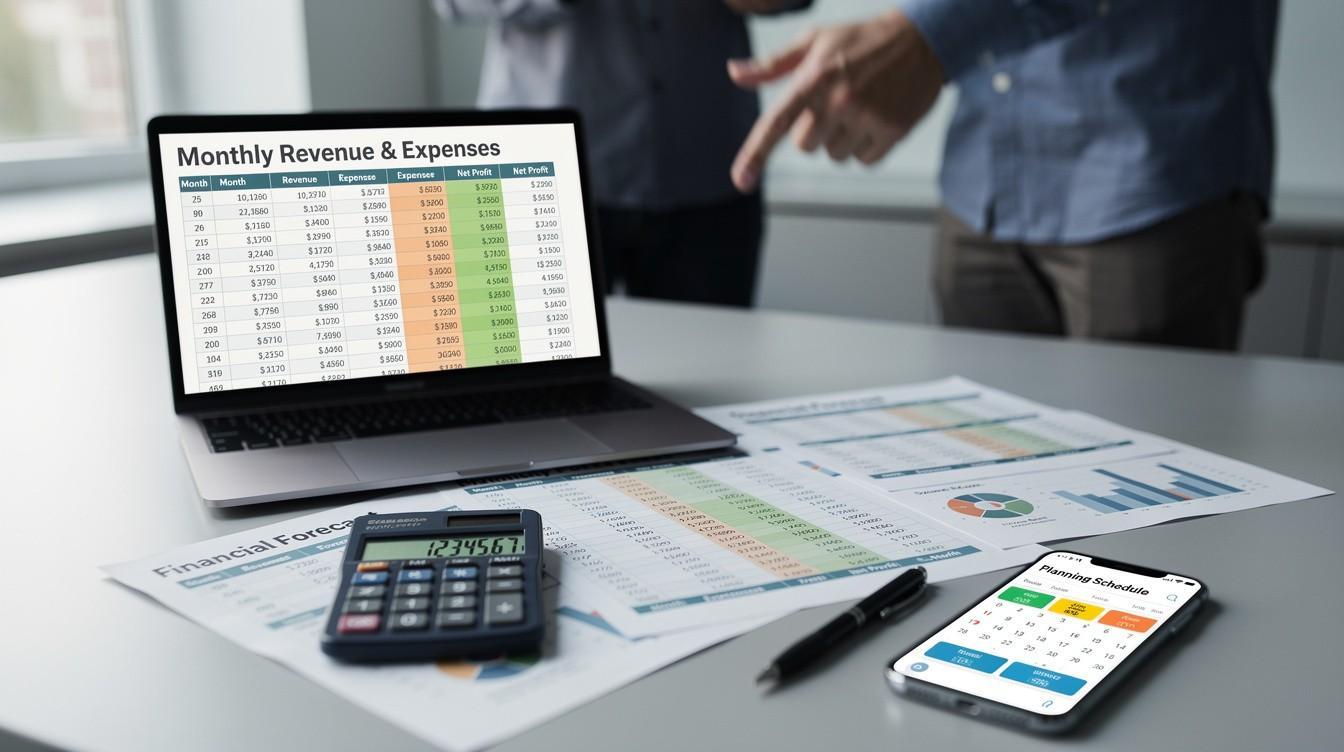
This proactive approach transforms tax planning from a compliance exercise into a strategic tool that actually reduces what you owe. The cost of professional guidance pays for itself many times over when it catches even one major opportunity that a business owner would have missed entirely. A single well-timed equipment purchase decision or retirement contribution adjustment often saves thousands of dollars in tax liability.
The real value emerges when a tax professional understands your complete financial picture (income sources, planned expenses, business structure, and personal goals) and coordinates decisions across all these areas. Most business owners operate without this visibility into their year-end tax position, which means they miss opportunities that existed months earlier. Professional guidance provides that visibility and acts on it before the calendar year closes.
Tax planning efficiency happens throughout the year, not in April when deadlines arrive and options vanish. The business owners who save thousands in taxes act before the calendar closes, while those who wait accept higher bills than necessary. Waiting until year-end to organize expenses costs you deductions, waiting until December to fund retirement accounts locks you out of contributions, and waiting until tax season to reconsider your business structure means paying more than you should.
The strategies that work-maximizing retirement contributions, optimizing your business structure, and timing major expenses strategically-require precision and action before the year ends. Your specific situation determines which approaches deliver the biggest savings, which is why generic tax advice fails for most business owners. A professional tax advisor identifies which strategies apply to you, then coordinates their implementation while you still control the timing.
We at Sager CPA help clients reduce tax liability through proactive strategies built around your actual financial situation. Contact our team to build your personalized tax strategy and identify which decisions will save you the most money this year.



Phone: (208) 939-6029
Email: info@sager.cpa
Privacy Policy | Terms and Conditions | Powered by Cajabra
At Sager CPAs & Advisors, we understand that you want a partner and an advocate who will provide you with proactive solutions and ideas.
The problem is you may feel uncertain, overwhelmed, or disorganized about the future of your business or wealth accumulation.
We believe that even the most successful business owners can benefit from professional financial advice and guidance, and everyone deserves to understand their financial situation.
Understanding finances and running a successful business takes time, education, and sometimes the help of professionals. It’s okay not to know everything from the start.
This is why we are passionate about taking time with our clients year round to listen, work through solutions, and provide proactive guidance so that you feel heard, valued, and understood by a team of experts who are invested in your success.
Here’s how we do it:
Schedule a consultation today. And, in the meantime, download our free guide, “5 Conversations You Should Be Having With Your CPA” to understand how tax planning and business strategy both save and make you money.