
Tax Planning Efficiency: Streamline Your Tax Strategy for Better Outcomes
Streamline your tax strategy with proven planning efficiency methods. Reduce tax liability and optimize deductions for better financial outcomes.
Most startups fail because they run out of cash, not because their product is bad. Forecasting for startup finances gives you the visibility to avoid that trap and make smarter decisions about growth.
At Sager CPA, we’ve seen firsthand how startups that forecast accurately scale faster and raise capital more easily than those flying blind. This guide walks you through the techniques that actually work.
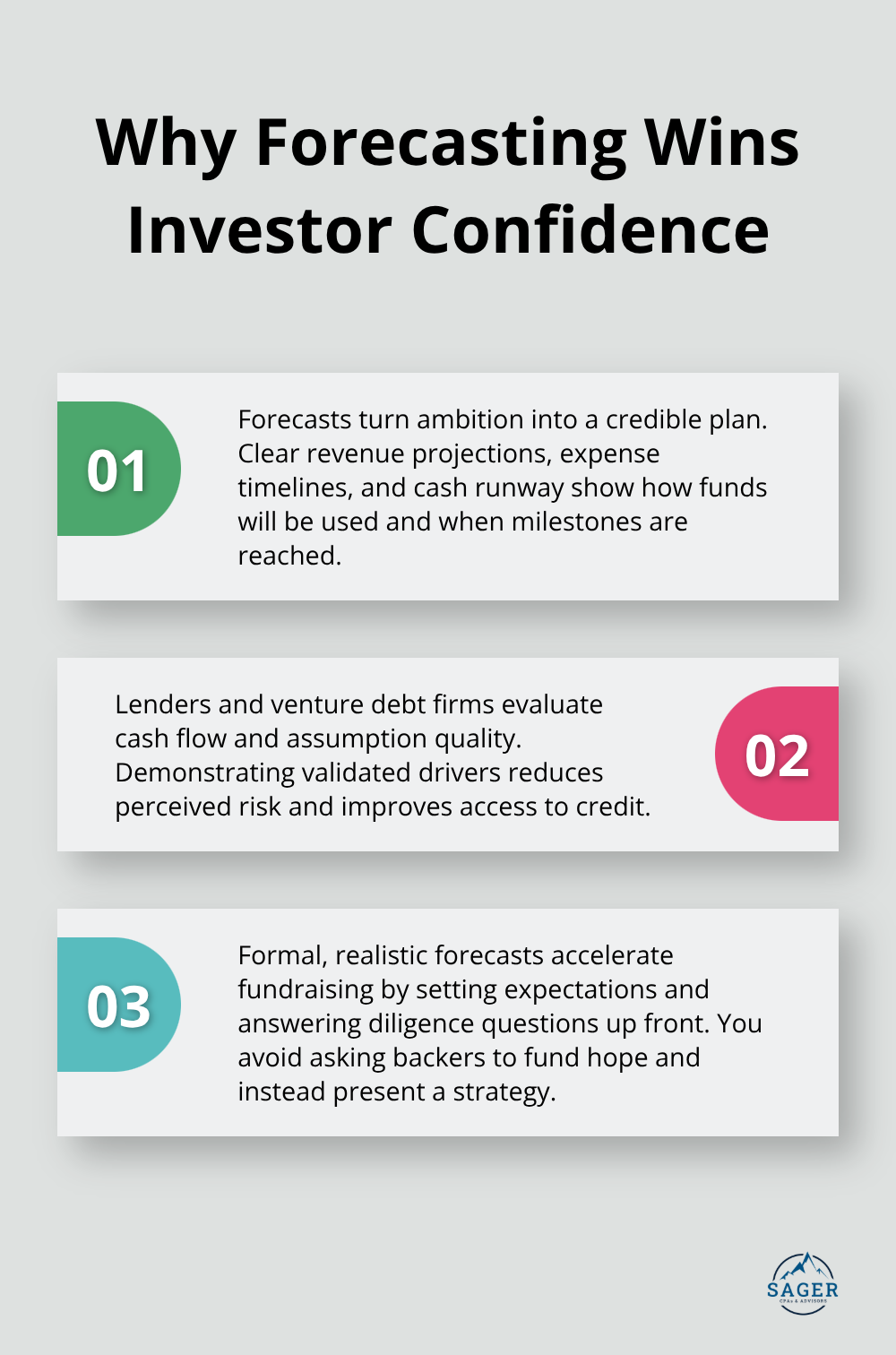
Investors want to see numbers before they write checks. Startups with formal financial forecasts raised capital 3.5 times faster than those without them. When you walk into a pitch meeting with realistic revenue projections, expense timelines, and cash runway calculations, you present a credible path forward instead of asking for faith. Lenders operate the same way. Banks and venture debt firms evaluate your creditworthiness based on cash flow forecasts and how well you’ve validated your assumptions. Without forecasts, you’re asking them to fund hope rather than strategy.
The timing advantage matters significantly. Every month of runway you gain is another month to hit milestones and prove your model works.
Most founders make expansion decisions emotionally. Forecasting removes that guesswork. When you model out hiring costs against revenue growth, you see exactly when payroll becomes unsustainable. When you project customer acquisition costs against lifetime value, you identify whether your growth strategy is actually profitable.
A SaaS founder we worked with projected hiring five engineers immediately. The forecast showed that at their current churn rate of 8 percent monthly, those salaries would consume cash reserves in 14 months with no guarantee of revenue growth. They hired two engineers instead, extended runway to 26 months, and gave themselves time to reduce churn before scaling. That decision came directly from the numbers, not intuition.
Forecasts also reveal which growth levers actually move the needle. You can model scenarios where you increase marketing spend by 40 percent or improve retention by 5 percentage points and see which creates the bigger impact on profitability. This prevents wasting capital on initiatives that look good in theory but don’t move your metrics.
You can have strong revenue and still run out of cash if your customers pay in 60 days while your suppliers demand payment in 30. Cash flow timing gaps between customer payment terms and supplier payment deadlines expose these timing gaps before they become crises. When you project cash inflows and outflows month by month, you spot the exact quarter when you’ll need additional capital or when you can finally turn cash flow positive.
A logistics startup discovered through quarterly forecasting that their peak season required $400,000 in working capital for inventory, even though they were profitable on paper. Without that forecast, they would have faced a cash crunch in month seven with no time to arrange financing. Instead, they secured a line of credit in advance and scaled through their busy season.
Seasonal variations hit different industries differently. Retail startups face inventory buildup before holiday seasons. Fitness apps see signups spike in January then drop 40 percent by March. Forecasting reveals these patterns so you can plan staffing, inventory, and cash reserves accordingly rather than being blindsided.
Founders who update forecasts quarterly or monthly catch problems early. Those who set annual forecasts and ignore them until year-end often find themselves in impossible positions with no time to adjust. Market conditions shift, customer behavior changes, and competitive pressures emerge. Your forecast must reflect reality as it unfolds, not as you hoped it would be.
These forecasting techniques work only when you treat them as living documents. The next section covers the specific methods that startups use to build forecasts that actually guide decisions.
Rolling forecasts provide greater agility and real-time financial visibility than static annual budgets. Instead of locking in numbers for twelve months, you maintain a twelve-month forward view that advances each month. When month one closes, you add month thirteen to your projection. This approach caught a fintech startup mid-course when their customer acquisition cost jumped 35 percent due to increased ad competition. Their rolling forecast made the shift visible immediately, so they adjusted hiring timelines and marketing budgets in week two rather than discovering the problem at year-end review.
Traditional annual forecasts hide these problems until it’s too late to respond. You update rolling forecasts with actual results from the previous month, which means your projections always reflect current market conditions rather than hopes from nine months ago. Tools like Mosaic and Causal automate this rolling mechanism, though a disciplined spreadsheet works fine if you commit to monthly updates.
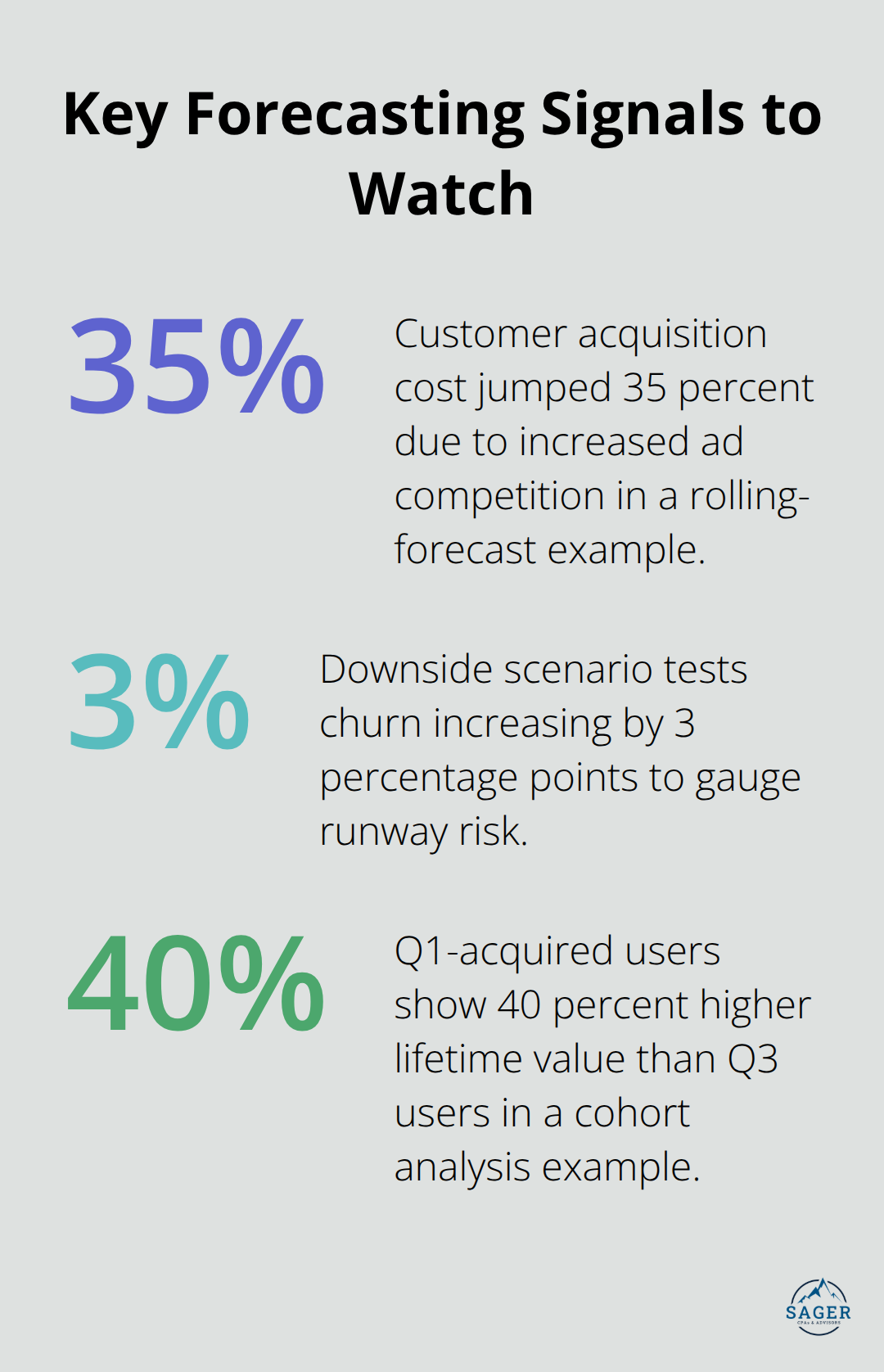
Scenario analysis models what happens if key assumptions break. Most founders forecast a base case that assumes everything goes reasonably well. Scenario analysis adds a downside case where customer churn increases by 3 percentage points, sales cycles extend by 30 days, or market conditions deteriorate. It also includes an upside case where retention improves or product-market fit accelerates faster than expected.
A B2B SaaS company modeled three scenarios and discovered their base case required 40 percent month-over-month growth for eighteen consecutive months to reach profitability. Their downside scenario showed they’d run out of cash in nineteen months if growth slowed to 25 percent monthly. That realization prompted them to either secure additional runway or reduce burn rate immediately, rather than discovering the problem when cash reserves dipped below three months.
Cohort analysis is an analytical framework that provides a granular view of customer churn and retention. Instead of lumping all revenue together, you segment customers by acquisition date and track their lifetime value separately. A mobile app with 50,000 users might look profitable in aggregate, but cohort analysis reveals that users acquired in Q1 have 40 percent higher lifetime value than users acquired in Q3 due to improved onboarding.
That insight tells you exactly where to focus: either improve Q3 onboarding to match Q1 results, or shift marketing spend entirely toward Q1-like channels. Cohort analysis exposes which customer segments actually generate profit rather than vanity metrics that hide unit economics problems beneath topline growth numbers. This method separates real profitability from the illusion of scale, which makes it essential before you commit capital to expansion.
These three techniques work together to transform forecasting from a compliance exercise into a decision-making tool. The next section addresses the mistakes that undermine even well-intentioned forecasting efforts.
The gap between what founders forecast and what actually happens destroys more startups than bad products. Founders project 15 percent monthly growth based on early traction, but that growth came from a single customer or a viral moment that won’t repeat. When reality diverges from the forecast by month three, founders have already committed to hiring and infrastructure that the actual revenue can’t support.
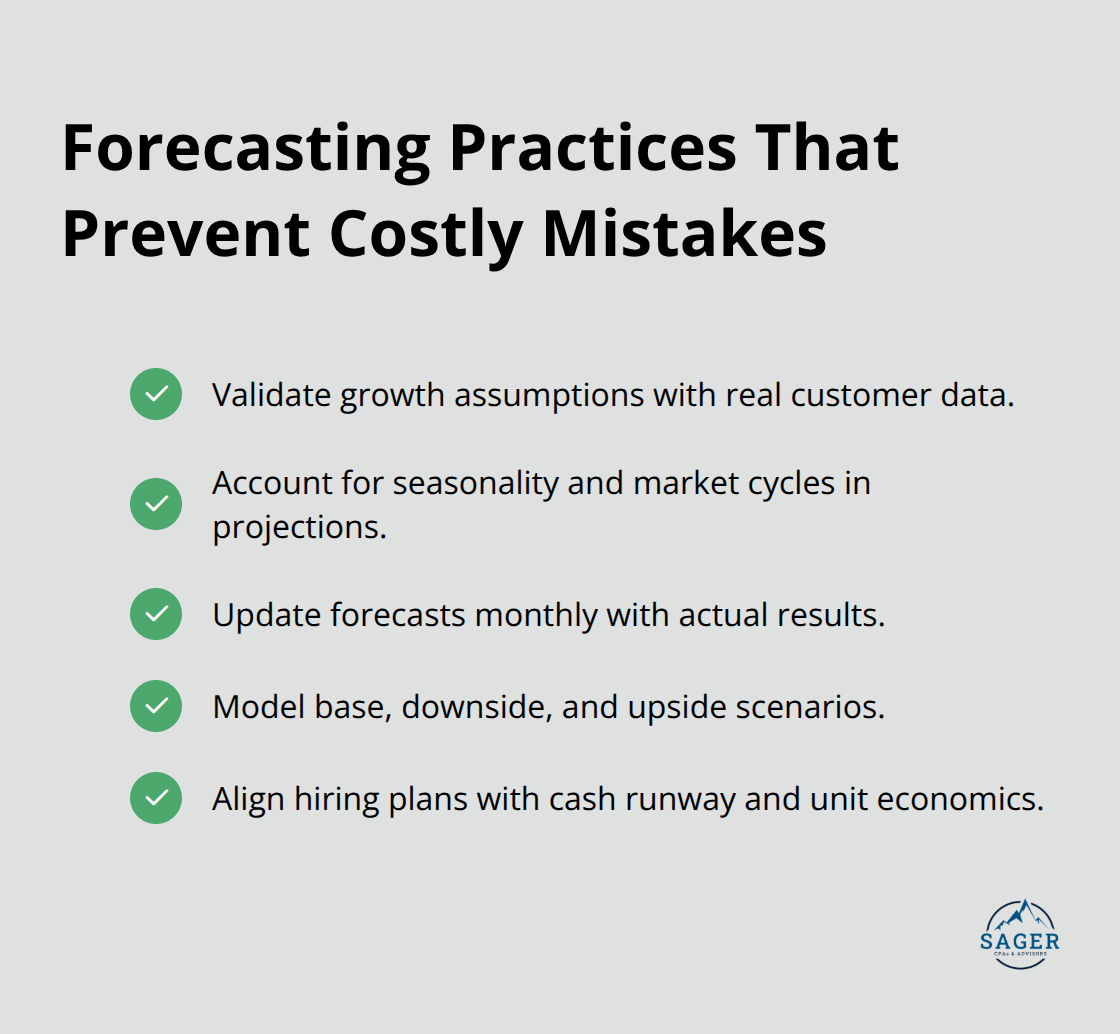
The problem isn’t that forecasting is useless. The problem is that most founders build forecasts on unvalidated assumptions in early growth projections they’ve never validated. You need early customer conversations to justify your growth rate before you lock it into a spreadsheet. If you’re projecting 20 percent monthly growth, ask yourself: which specific channels will drive that growth, and do you have proof they work at scale?
Early adopters who buy because they know you personally don’t validate a repeatable sales motion. Test your customer acquisition assumptions with real market data before you forecast based on them. A fitness app founder projected 8 percent monthly growth from organic app store placement. When they tested paid user acquisition, their actual cost per install ran 40 percent higher than their organic assumption. The forecast assumed organic would scale indefinitely when it actually peaked at 2 percent monthly. They recalculated and discovered they needed either 18 months longer runway or a different growth channel entirely. That recalculation happened in month two because they questioned their assumptions, not in month eight when cash ran dry.
Seasonal patterns and market cycles create another graveyard of failed forecasts. Founders who launched in January saw strong user signups and extrapolated that growth across twelve months without accounting for the fact that January is peak fitness app season. Retail startups fail to account for inventory buildup requirements before peak seasons. SaaS companies ignore the reality that sales cycles extend during summer months and December.
Your forecast must reflect the specific rhythm of your market, not an average month repeated twelve times. A founder who updates forecasts quarterly versus annually catches problems eight weeks earlier on average, giving them time to adjust hiring, marketing spend, or capital raises before small issues become existential.
Update your forecast monthly as actual results arrive, because market conditions shift faster than annual plans anticipate. Tools like Causal or even a disciplined Google Sheet updated every month keep your projections grounded in reality rather than locked into hopes from months ago. The founders who survive treat forecasts as living documents that guide decisions, not as predictions they defend at year-end.
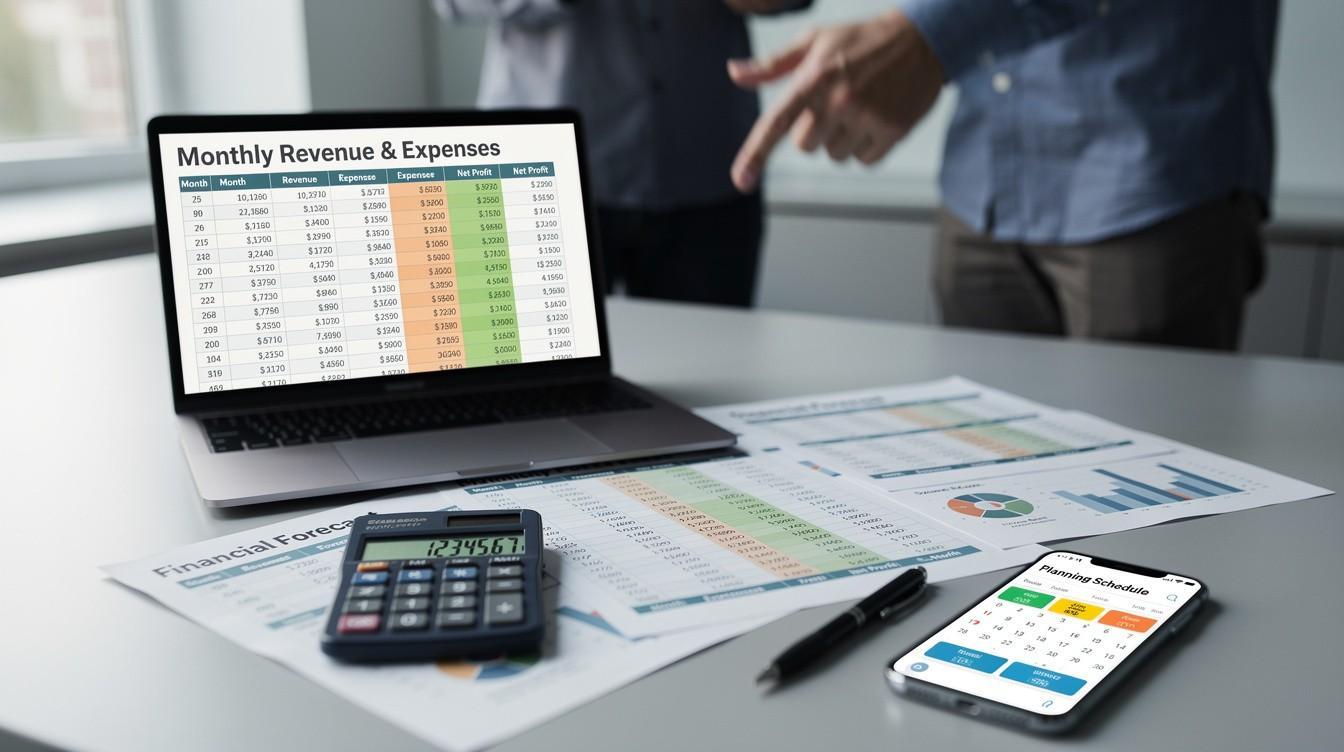
Forecasting for startup finances isn’t about predicting the future perfectly-it’s about building a decision-making framework that keeps you grounded in reality while you scale. The founders who survive aren’t the ones with the most accurate year-one projections; they’re the ones who update their forecasts monthly, question their assumptions, and adjust course when market conditions shift. Start simple with a basic spreadsheet that tracks revenue projections, expense timelines, and cash runway calculations.
You don’t need sophisticated software or complex models to gain clarity on your financial position. What matters is that you build something you’ll actually update and use consistently. Add rolling forecasts and scenario analysis once you understand your core metrics, then layer in cohort analysis when you have enough customer data to segment meaningfully.
The forecasting techniques in this guide work because they force you to articulate assumptions and test them against reality. That discipline separates founders who scale sustainably from those who burn through capital chasing vanity metrics. Schedule a consultation with us to build a forecasting strategy tailored to your business and create the financial clarity that guides confident scaling decisions.



Phone: (208) 939-6029
Email: info@sager.cpa
Privacy Policy | Terms and Conditions | Powered by Cajabra
At Sager CPAs & Advisors, we understand that you want a partner and an advocate who will provide you with proactive solutions and ideas.
The problem is you may feel uncertain, overwhelmed, or disorganized about the future of your business or wealth accumulation.
We believe that even the most successful business owners can benefit from professional financial advice and guidance, and everyone deserves to understand their financial situation.
Understanding finances and running a successful business takes time, education, and sometimes the help of professionals. It’s okay not to know everything from the start.
This is why we are passionate about taking time with our clients year round to listen, work through solutions, and provide proactive guidance so that you feel heard, valued, and understood by a team of experts who are invested in your success.
Here’s how we do it:
Schedule a consultation today. And, in the meantime, download our free guide, “5 Conversations You Should Be Having With Your CPA” to understand how tax planning and business strategy both save and make you money.