
Early Stage Startup Budgeting: Practical Costs for Early Growth
Plan your early stage startup budget with real costs and practical strategies to guide your early growth phase efficiently.
Most early stage startups fail not because of bad ideas, but because they run out of money. We at Sager CPA have seen countless founders caught off guard by costs they never anticipated.
Early stage startup budgeting isn’t about predicting the future perfectly-it’s about being honest about what things actually cost and planning accordingly. This guide walks you through the real expenses you’ll face, the mistakes that drain cash fastest, and how to make every dollar count.
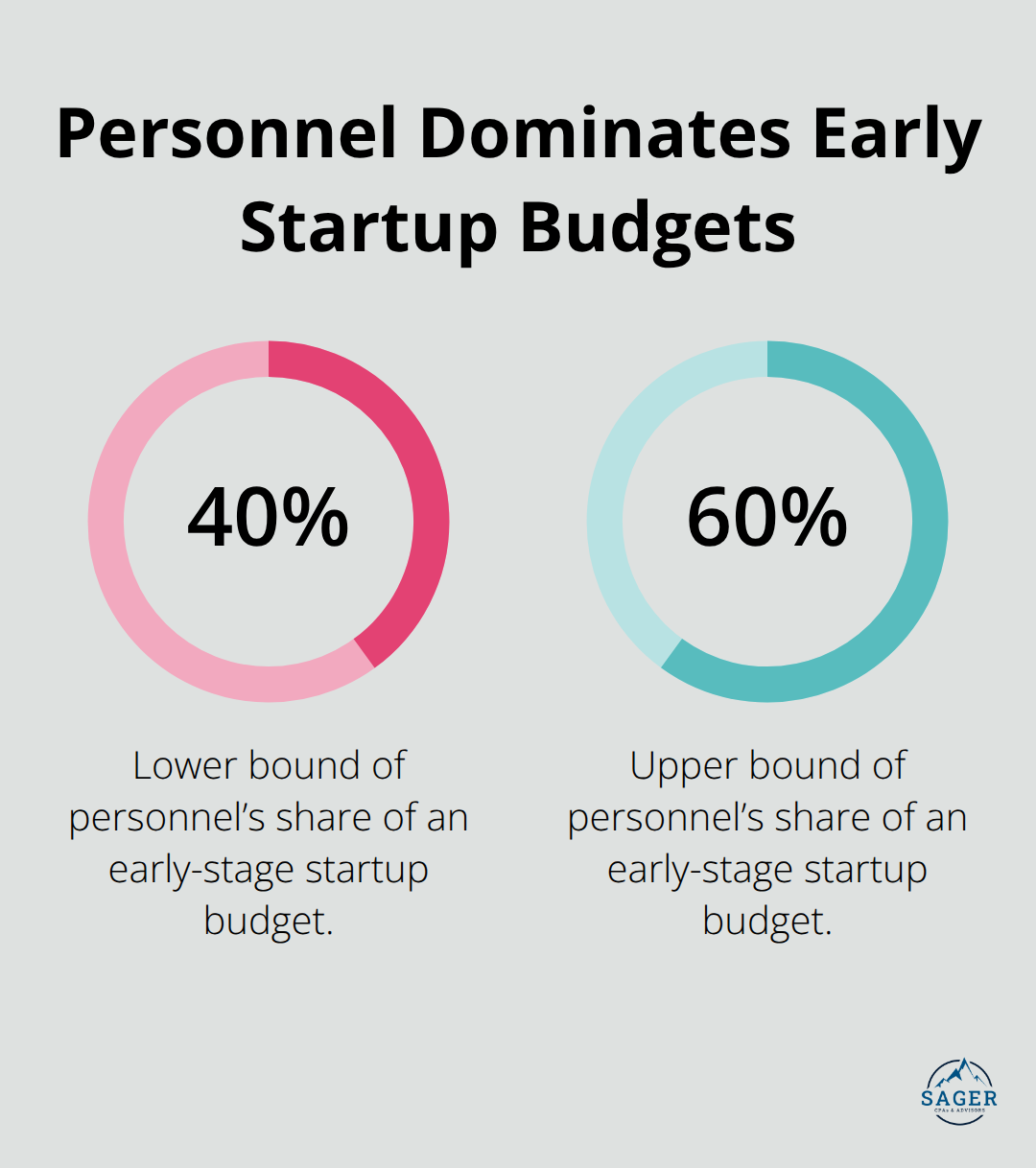
Personnel expenses consume 40 to 60 percent of your startup budget, and this is where founders consistently underestimate. A $40,000 salary actually costs $50,000 to $56,000 when you factor in payroll taxes, workers compensation, and benefits.
Most early stage startups hire too fast and too generically. Instead, hire for roles that directly generate revenue first, then add support functions later.
For your first technical hire, evaluate candidates through GitHub contributions and public code rather than relying solely on resumes. For sales roles, prioritize quota history and track record over credentials. When cash is tight, equity compensation becomes your friend, but structure it carefully so it actually motivates people rather than just diluting founders.
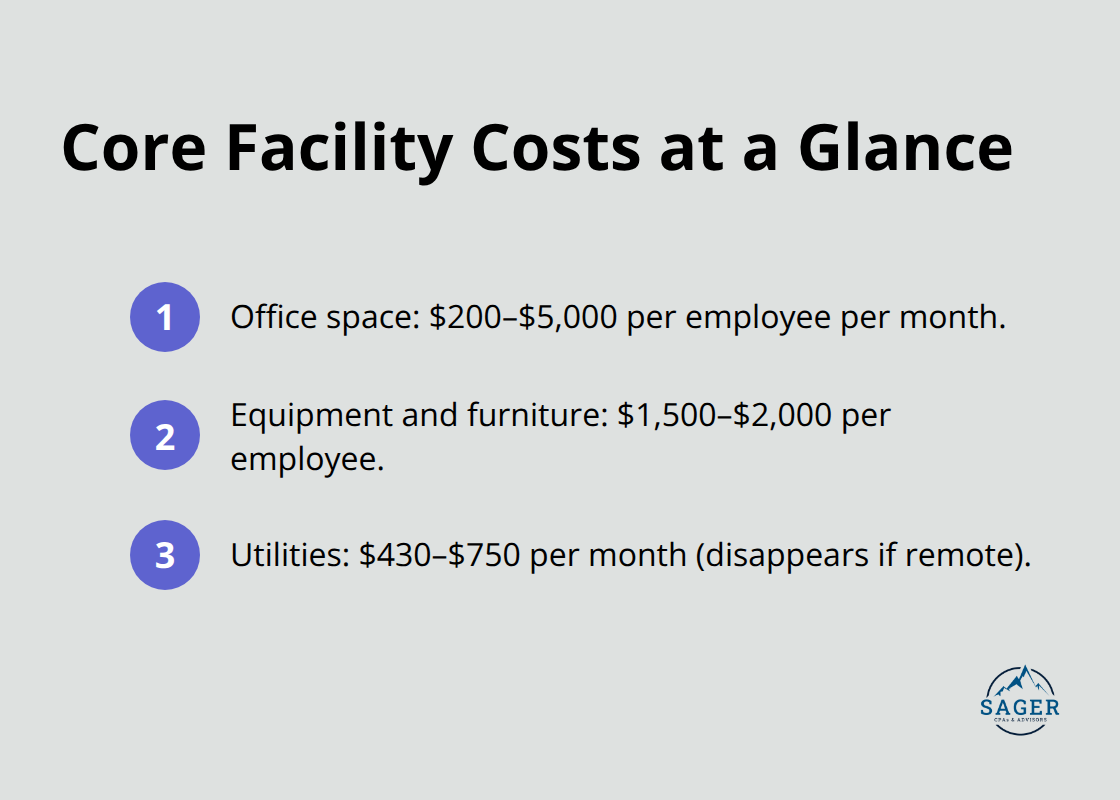
Office space costs $200 to $5,000 per employee per month depending on your location and whether you operate from a traditional office or work remote-first. Many founders waste money here by signing long leases before product-market fit arrives. Start from home or use client sites if your business model allows it. When you do need space, negotiate month-to-month terms or short-term agreements so you can exit quickly.
Equipment and furniture typically run $1,500 to $2,000 per employee for basics like a desk, chair, and computer. Utilities for workspace typically run $430 to $750 monthly, but this disappears entirely if you operate remotely.
Technology infrastructure is cheaper than it’s ever been, but founders still overspend by subscribing to tools they barely use. Your software stack should start lean. QuickBooks or Xero handles accounting and invoicing. Google Sheets manages early-stage budgeting and forecasting without adding monthly fees. HubSpot’s free CRM handles customer management. Zoho One bundles 45 business apps for $37 per month if you need more integration. Add Stripe for payments processing.
That foundation costs roughly $80 to $150 per month total and covers most early needs. As you grow and identify specific gaps in your operations, you can add specialized tools one at a time, but only when the ROI justifies the monthly expense. This approach keeps your burn rate manageable while you validate your core business model.
Founders often build spreadsheets with neat line items, then watch actual spending spiral 30 to 50 percent higher within the first year. The gap between planned and real expenses isn’t random-it follows predictable patterns that repeat across startups. Operational costs hide everywhere once you stop running from your laptop. A $500 monthly marketing budget becomes $2,000 when you add email platforms, design tools, and paid ads. Office supplies that cost $60 to $125 per employee per month add up fast across a team. Cloud hosting, domain registrations, and compliance filing fees appear monthly without generating immediate revenue. These small expenses feel manageable individually, which is exactly why founders ignore them during planning. The solution isn’t cutting these costs to zero-they’re necessary for growth-but accounting for them upfront so cash doesn’t evaporate unexpectedly.
Most founders blow through their cash reserves on customer acquisition before they understand their actual unit economics. You cannot spend your way to product-market fit, and yet this is exactly what early stage startups attempt. Marketing spend allocation for early stage startups requires discipline and clear benchmarks. This discipline forces you to validate your customer acquisition cost against lifetime value before scaling. If your customer acquisition cost exceeds one times your average contract value, you destroy profitability with every new customer you acquire.
The mistake happens because founders confuse visibility with traction. They see competitors advertising heavily and assume they must do the same, but those competitors either already have proven unit economics or they burn through venture funding. Start by acquiring your first 100 customers through direct outreach, partnerships, and organic channels. Track exactly how much you spend and what revenue each customer generates. Only after you understand this math should you consider paid advertising at scale. Geographic expansion changes this equation dramatically-entering new markets typically requires two to three times higher marketing spend than staying domestic, so delay this until your core market turns profitable.
Startups that fail rarely do so because a single large expense bankrupted them. They fail because they assumed perfect execution and zero unexpected costs. A six-month financial runway sounds conservative until your largest customer delays payment by 60 days or a critical team member leaves and requires expensive hiring. Build a safety cushion of 10 to 20 percent above your total estimated startup costs specifically to cover unforeseen expenses. This isn’t optional-it’s the difference between surviving a setback and folding immediately.
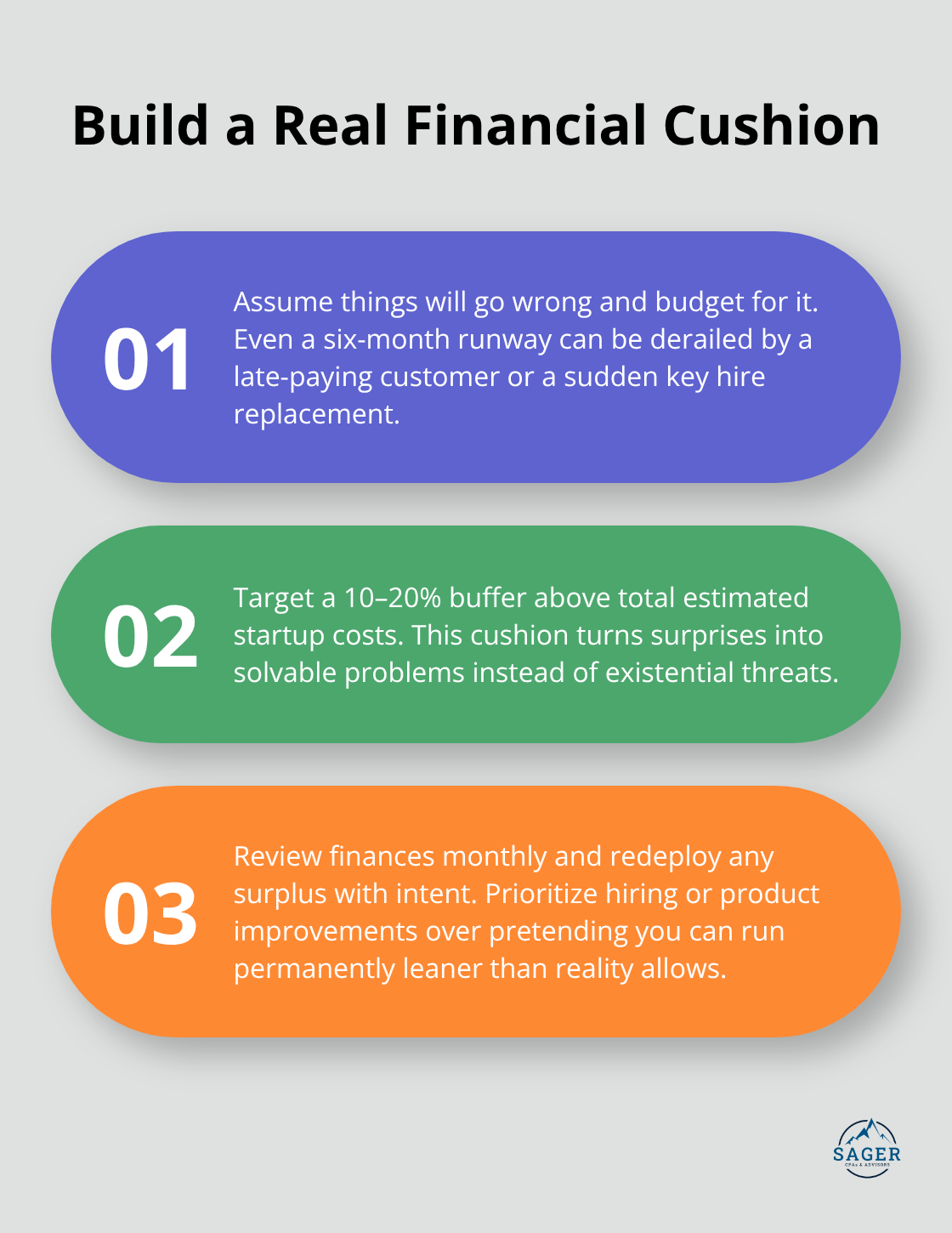
Many founders skip this step because it feels wasteful, but that money typically gets deployed within the first 18 months anyway through unplanned equipment repairs, emergency hiring, or pivots based on customer feedback. Monthly financial reviews help you track actual spending against projections and identify where adjustments are needed. If you consistently run under budget, redeploy that surplus into hiring or product development rather than assuming you can operate leaner than reality allows.
Small expenses compound faster than founders expect. Software subscriptions that start at $20 to $150 per month multiply across your team. A single tool that costs $50 monthly becomes $600 annually, and most startups run 10 to 15 different tools by month six. Payroll taxes and benefits add 25 to 40 percent on top of base salaries. Shipping costs for product-based startups run into thousands when you factor in packing materials and postage. Professional services-accounting, legal, recruiting-typically cost $150 to $500 per hour, and you’ll need these services more often than you anticipate.
The pattern repeats: each individual line item seems reasonable, but the total catches founders off guard. The fix requires regular reviews where you examine actual spending against projections and identify which categories are growing fastest. This practice reveals where your money actually goes versus where you thought it would go, and that gap is where your next cost-cutting opportunity lives.
Vendor negotiation is where most founders leave money on the table. Software companies quote annual pricing, but they negotiate monthly rates for startups all the time if you ask. Contact your top three tools and request a discount for early stage companies or longer commitments. Many will say yes immediately because acquiring a customer who might scale is worth the margin reduction. Hosting providers like AWS and DigitalOcean compete aggressively on price for startups, and mentioning you have other quotes usually triggers a counter-offer. Office suppliers and equipment vendors expect negotiation as standard practice, especially when you purchase in bulk. The real leverage comes from consolidating your spending with fewer vendors rather than spreading purchases across many suppliers. One vendor who gets all your business will negotiate harder than one who gets a small slice.
Paid tools should never be your starting point. Every major software company offers free tiers or 30-day trials specifically because they know early stage startups cannot afford full pricing. Google Workspace provides free email and collaboration tools for your first six users. Stripe processes payments with zero upfront fees and charges only per transaction. Beehiiv offers a free tier for newsletters up to 10,000 subscribers. HubSpot’s free CRM handles unlimited contacts and basic automation. The strategy here is running your entire operation on free and trial tiers for the first three to six months while you validate whether customers actually want what you build. Only migrate to paid plans once you prove unit economics and can justify the monthly expense. This approach reduces monthly burn by $500 to $1,500 (depending on your industry) while you’re still learning whether your business works at all.
Track which activities directly generate revenue and which do not. Product development, sales, and customer acquisition drive revenue. Fancy office furniture, premium subscriptions you rarely use, and attending conferences do not. This distinction matters because it forces hard conversations about where money actually goes. If you spend $2,000 monthly on marketing but only acquire two customers, that marketing spend destroys profitability. Redirect that $2,000 into hiring a sales person who can close deals through direct outreach, or into product improvements that make existing customers upgrade. The opposite applies too: if paid advertising generates customers at a lower cost than expected, increase that spend immediately. Most startups fail because they spread limited resources across too many activities instead of concentrating firepower on what actually moves the needle. Review spending monthly and ask one question about every expense: does this directly generate revenue or reduce costs that would otherwise slow growth? If the answer is no, cut it. Understanding your financial fundamentals ensures you make decisions based on data rather than intuition.
Early stage startup budgeting works when you treat it as an ongoing process rather than a one-time spreadsheet exercise. The founders who survive the first 18 months share one habit: they review their finances monthly and adjust spending based on what actually happened versus what they predicted. This discipline catches problems early, before they become existential threats to your business.
Your budget should reflect three core principles that separate surviving startups from those that fail. Personnel costs will dominate your spending, so hire deliberately for roles that generate revenue before adding support functions. Operational expenses compound faster than intuition suggests, which is why that 10 to 20 percent financial cushion matters more than it feels like it should. Marketing spend only makes sense after you understand your unit economics, not before.
Start by calculating your actual startup costs across personnel, office space, and technology, then separate one-time expenses from ongoing costs. Build that financial cushion and commit to monthly reviews where you compare actual spending against projections. We at Sager CPA recommend working with a financial advisor to create a personalized early stage startup budgeting strategy that aligns with your specific business model and growth timeline.




Privacy Policy | Terms and Conditions | Powered by Cajabra
At Sager CPAs & Advisors, we understand that you want a partner and an advocate who will provide you with proactive solutions and ideas.
The problem is you may feel uncertain, overwhelmed, or disorganized about the future of your business or wealth accumulation.
We believe that even the most successful business owners can benefit from professional financial advice and guidance, and everyone deserves to understand their financial situation.
Understanding finances and running a successful business takes time, education, and sometimes the help of professionals. It’s okay not to know everything from the start.
This is why we are passionate about taking time with our clients year round to listen, work through solutions, and provide proactive guidance so that you feel heard, valued, and understood by a team of experts who are invested in your success.
Here’s how we do it:
Schedule a consultation today. And, in the meantime, download our free guide, “5 Conversations You Should Be Having With Your CPA” to understand how tax planning and business strategy both save and make you money.