
Tax Planning Efficiency: Streamline Your Tax Strategy for Better Outcomes
Streamline your tax strategy with proven planning efficiency methods. Reduce tax liability and optimize deductions for better financial outcomes.
Small business owners pay an average of 19.8% in federal taxes, but many miss opportunities to reduce this burden legally. The right small business tax avoidance strategies can save thousands annually.
We at Sager CPA see businesses overpay taxes simply because they don’t know which deductions and structures work best. Smart tax planning isn’t about cutting corners-it’s about using every legal advantage available.
The IRS allows businesses to deduct ordinary and necessary expenses, but most owners miss thousands in legitimate deductions each year. Standard business expenses like office supplies, software subscriptions, and professional services are straightforward, yet proper documentation and compliance remain critical for maximizing deductions.
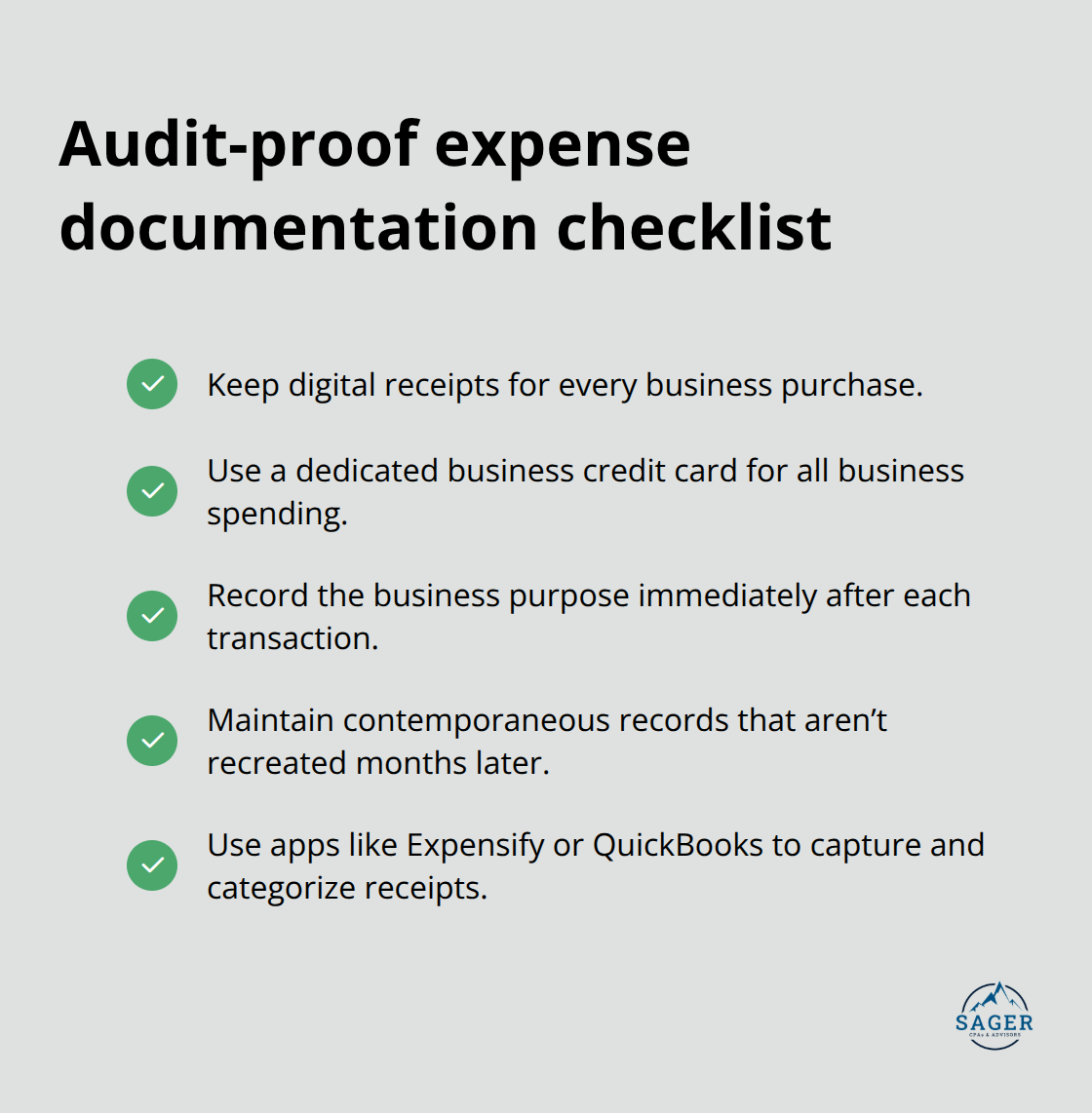
Keep digital receipts for every business purchase and maintain separate business credit cards. Record the business purpose immediately after each transaction. The IRS requires contemporaneous records, which means you cannot recreate documentation months later during an audit. Use apps like Expensify or QuickBooks to capture receipts instantly and categorize expenses properly.
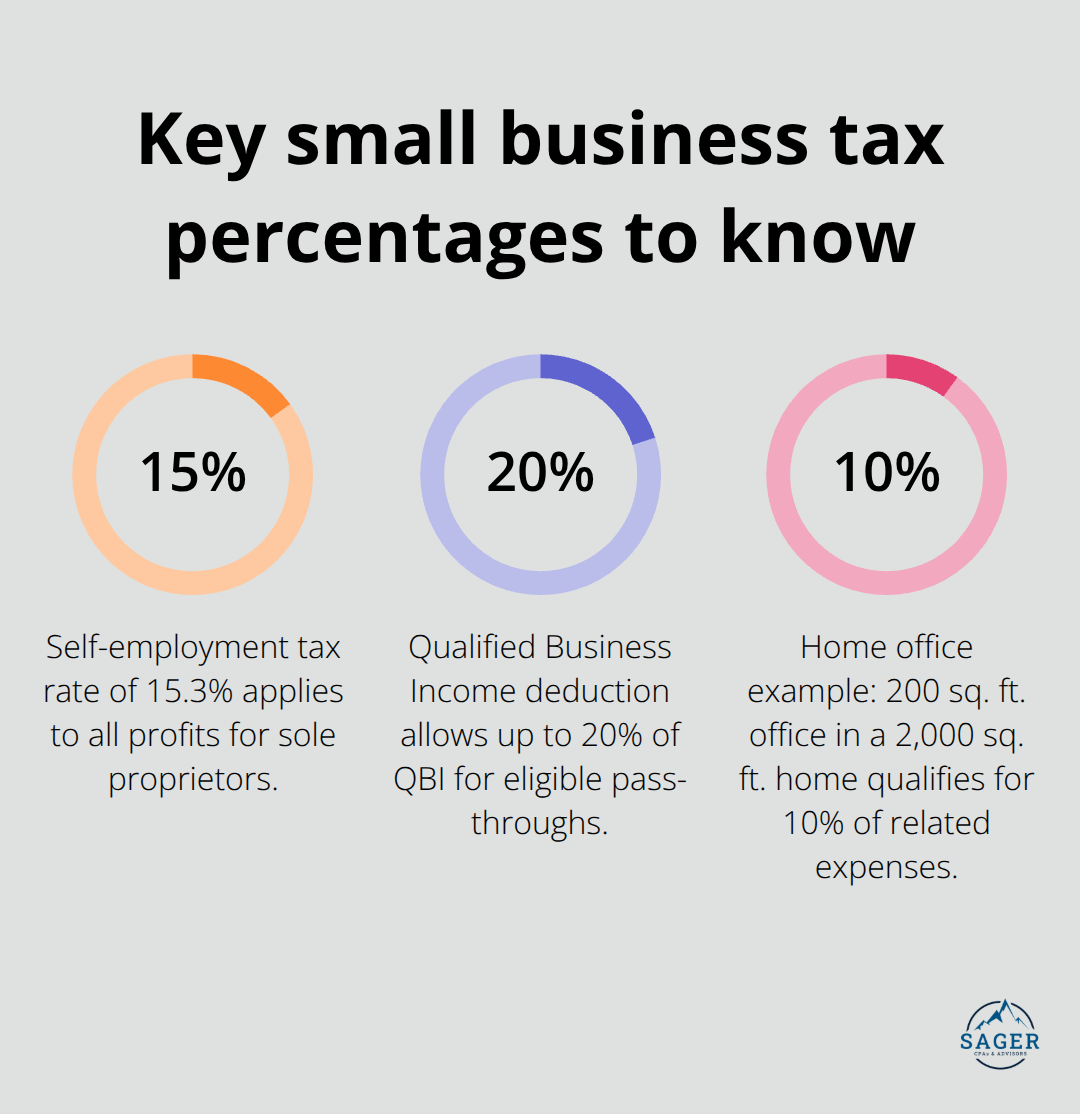
The simplified home office deduction allows $5 per square foot for up to 300 square feet (maximum $1,500 deduction) without expense tracking. However, the actual expense method often yields larger deductions for dedicated home offices. Calculate your office percentage of total home square footage, then apply this percentage to mortgage interest, property taxes, utilities, and repairs. A 200-square-foot office in a 2,000-square-foot home qualifies for 10% of these expenses as deductions.
Business vehicle expenses offer two deduction methods, and the wrong choice costs money. The standard mileage rate of 70 cents per mile for 2025 works best for high-mileage, lower-cost vehicles. Track every business mile with apps like MileIQ or maintain a written log with dates, destinations, and business purposes.
The actual expense method suits expensive vehicles or those with high maintenance costs. Calculate depreciation, gas, insurance, repairs, and registration fees, then multiply by business use percentage. Most small businesses benefit more from mileage rates due to simplicity and higher deduction amounts.
These expense deductions form just one part of tax reduction strategies. The structure you choose for your business creates even more significant tax advantages.
Your business structure determines how much tax you pay, and most small business owners choose poorly. Sole proprietorships face self-employment taxes of 15.3% on all profits, while LLCs with S-Corp elections can reduce this burden significantly. Pass-through entities like partnerships and S-Corps avoid double taxation entirely, which makes them superior choices for profitable businesses.
An LLC that elects S-Corp status transforms business profits into two components: reasonable salary subject to payroll taxes and distributions exempt from self-employment tax. A business owner who earns $100,000 annually saves approximately $7,650 in self-employment taxes when they pay themselves a $60,000 salary and take $40,000 as distributions.
The IRS requires reasonable compensation for shareholder-employees in return for services. File Form 2553 within 75 days of formation or by March 15 for current-year elections.
LLCs provide three tax election options: default partnership taxation, S-Corp election, or C-Corp election. Single-member LLCs default to disregarded entity status and report income on Schedule C. Multi-member LLCs default to partnership taxation, which avoids entity-level taxes while it allows flexible profit and loss allocations among members.
Unlike corporations, LLCs require no board meetings, corporate resolutions, or formal shareholder structures while they maintain the same tax benefits.
The qualified business income deduction allows eligible taxpayers to deduct up to 20 percent of their qualified business income, which reduces effective tax rates substantially for eligible businesses that earn under $394,600 for married couples who file jointly in 2025. This deduction applies to most pass-through entities and creates significant tax savings for profitable small businesses.
Smart business structure choices work hand-in-hand with strategic retirement contributions and equipment purchases to maximize your tax savings potential.
Self-employed individuals can contribute up to $70,000 to a Solo 401(k) in 2025, which creates massive tax deductions that most business owners completely ignore. Traditional and Roth IRA contributions max out at $7,000 annually, but SEP-IRAs allow contributions up to 25% of compensation or $70,000 (whichever is less). Business owners who earn $200,000 can deduct $50,000 through SEP-IRA contributions alone.
The key advantage lies in the deadline flexibility: retirement contributions can be made until the tax return due date, which includes extensions. This means you have until October 15 to reduce your prior year tax liability.
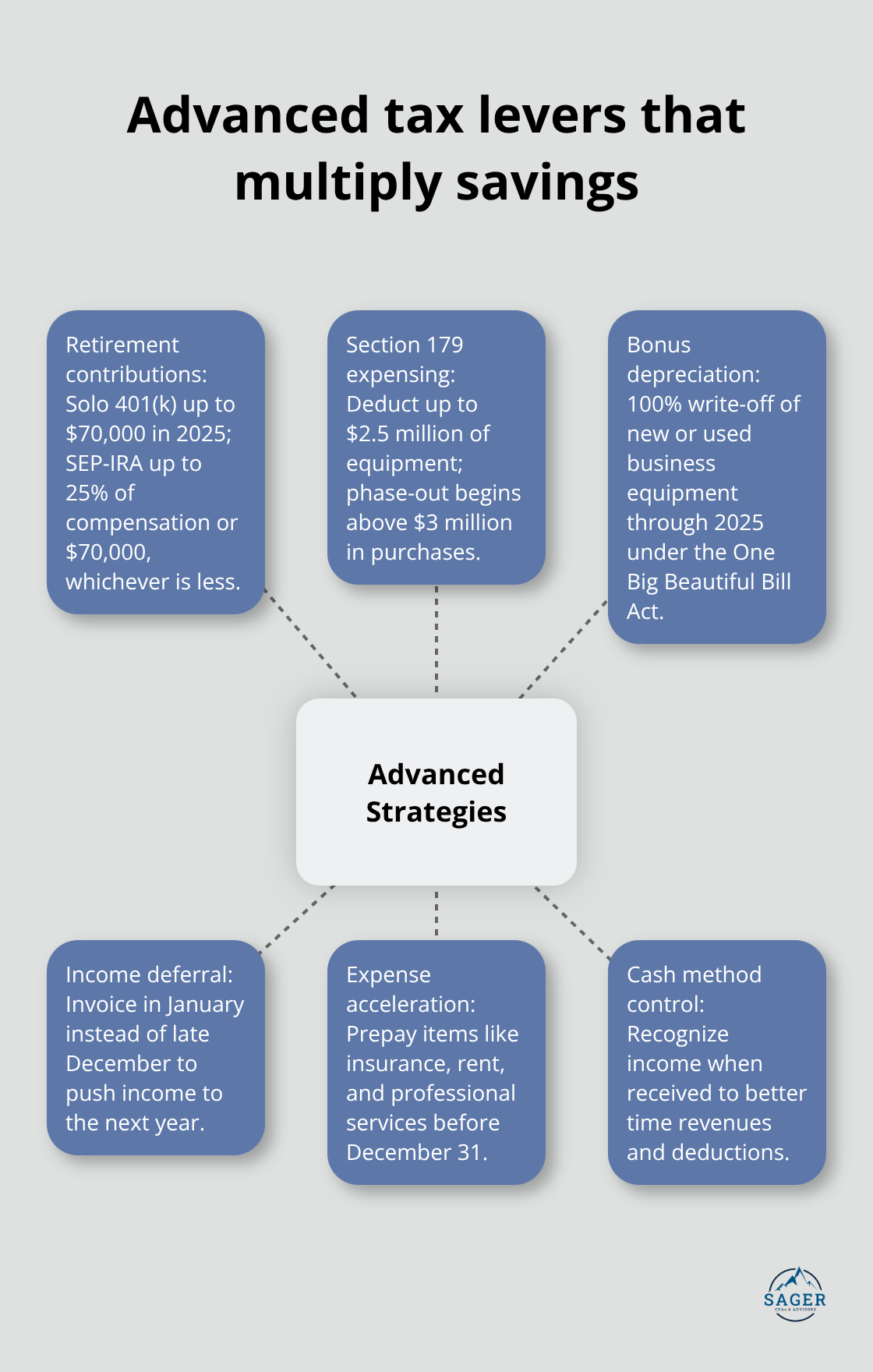
Section 179 allows businesses to deduct up to $2.5 million in equipment purchases for 2025, but the phase-out begins when total purchases exceed $3 million. Smart business owners buy equipment in December rather than January to accelerate deductions by an entire year.
Bonus depreciation adds another layer and permits 100% deduction of new or used business equipment through 2025 under the One Big Beautiful Bill Act. A $50,000 equipment purchase creates an immediate $50,000 deduction rather than spread over several years. The combination of Section 179 and bonus depreciation can eliminate taxes on substantial equipment investments entirely.
Businesses with strong years should defer income to January and accelerate expenses into December to smooth out tax liabilities across years. Invoice clients in early January rather than late December, and prepay next year’s business expenses like insurance, rent, and professional services before December 31.
The cash method of account provides small businesses complete control over this process, unlike accrual method businesses that must recognize income when earned. A consultant who typically invoices $100,000 in December can defer this income to January, which potentially drops them from the 24% tax bracket to 12% if other income decreases simultaneously. Proactive tax planning helps optimize these timing strategies for maximum benefit.
Small business tax avoidance strategies can reduce your tax burden from 19.8% to single digits when you implement them correctly. The combination of proper expense documentation, strategic business structure selection, and advanced planning techniques creates compound savings that grow year after year. S-Corp elections alone save thousands in self-employment taxes, while Section 179 deductions and retirement contributions can eliminate tax liability entirely on substantial business investments.
The qualified business income deduction adds another 20% reduction for eligible businesses. However, tax laws change frequently, and mistakes trigger costly audits. Professional guidance transforms these opportunities into actual savings (often exceeding $10,000 annually for profitable small businesses).
We at Sager CPA help businesses navigate complex regulations while they maximize every available deduction. Our tax planning services help you implement these strategies safely and effectively. Schedule a consultation with Sager CPA to create your personalized tax optimization plan and start to reduce your tax burden immediately.



Phone: (208) 939-6029
Email: info@sager.cpa
Privacy Policy | Terms and Conditions | Powered by Cajabra
At Sager CPAs & Advisors, we understand that you want a partner and an advocate who will provide you with proactive solutions and ideas.
The problem is you may feel uncertain, overwhelmed, or disorganized about the future of your business or wealth accumulation.
We believe that even the most successful business owners can benefit from professional financial advice and guidance, and everyone deserves to understand their financial situation.
Understanding finances and running a successful business takes time, education, and sometimes the help of professionals. It’s okay not to know everything from the start.
This is why we are passionate about taking time with our clients year round to listen, work through solutions, and provide proactive guidance so that you feel heard, valued, and understood by a team of experts who are invested in your success.
Here’s how we do it:
Schedule a consultation today. And, in the meantime, download our free guide, “5 Conversations You Should Be Having With Your CPA” to understand how tax planning and business strategy both save and make you money.