
Tax Planning Efficiency: Streamline Your Tax Strategy for Better Outcomes
Streamline your tax strategy with proven planning efficiency methods. Reduce tax liability and optimize deductions for better financial outcomes.
Most businesses fail because they operate without a clear roadmap. At Sager CPA, we’ve seen firsthand how a solid business strategy template separates thriving companies from those that struggle.
This guide walks you through the essential components you need to build a strategy that actually works. You’ll learn how to set goals, allocate resources, and adapt when markets shift.
Your mission and vision statements function as working documents that guide every decision your company makes, not as motivational posters for office walls. A mission statement describes what you do and why you do it, while a vision statement outlines where you want to be in five to ten years. The distinction matters because your team needs both the present-day purpose and the future destination to stay aligned.
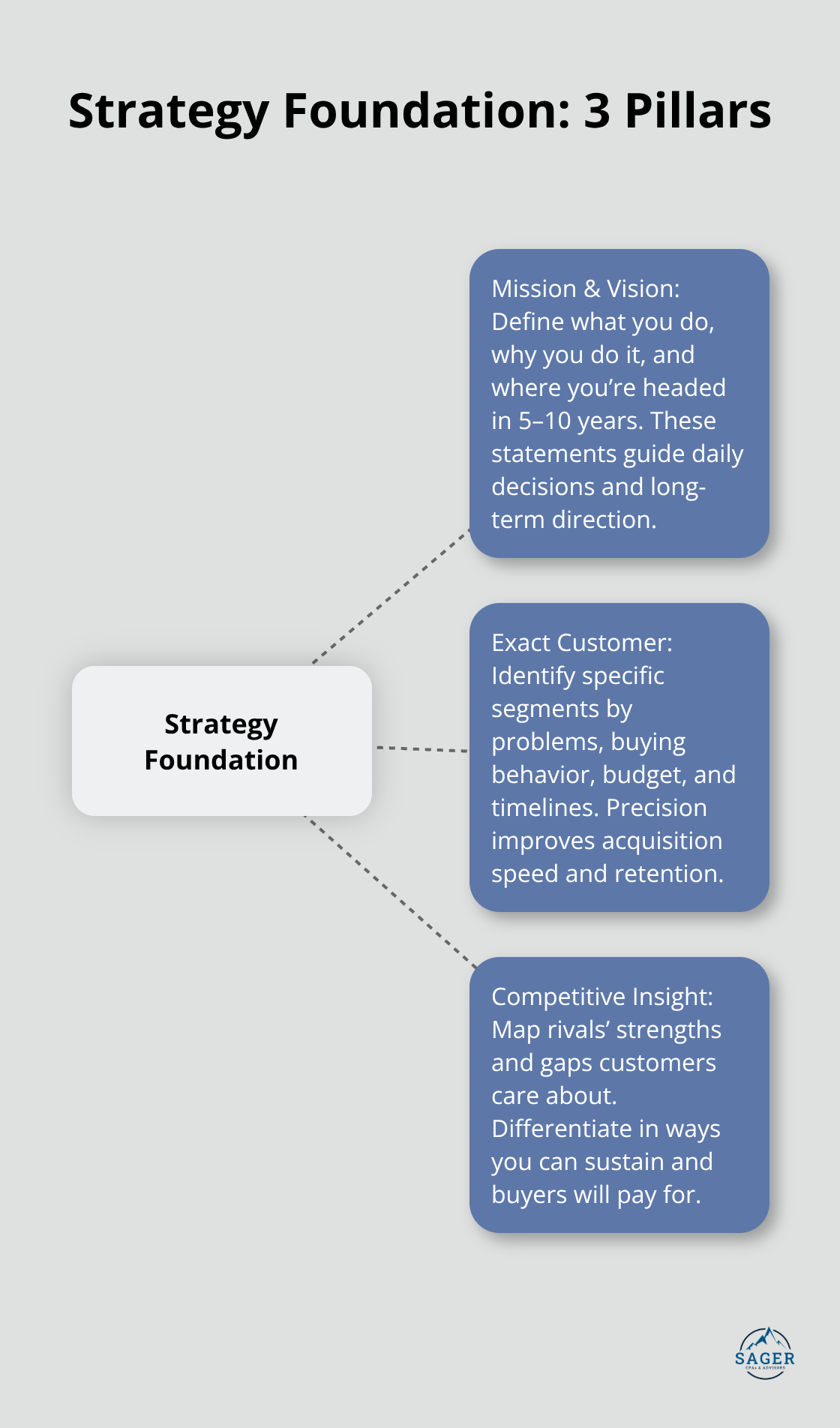
When these statements lack specificity, employees waste time guessing priorities.
Vague language undermines strategy from the start. Saying you want to be a leader in your industry tells nobody anything actionable. Instead, state exactly what you’ll deliver, to whom, and what makes you different. This clarity prevents strategic drift and keeps resource allocation focused on what actually matters.
The vague concept of a target market costs businesses millions in wasted marketing spend. Instead of assuming your product works for everyone, identify specific customer segments with precision. Start by listing the problems your product solves, then match those problems to distinct groups of people or businesses willing to pay for solutions.
Demographics alone won’t suffice. You need to understand purchasing behavior, budget capacity, and decision-making timelines. If you sell accounting software, your target isn’t simply small business owners-it’s small business owners with annual revenue between 500K and 5M who currently manage finances through spreadsheets and spend more than five hours weekly on bookkeeping. That specificity changes everything about how you market and sell.
Clearly defined target markets experience faster customer acquisition and higher retention rates than those with broad positioning. This precision eliminates wasted effort and concentrates your resources where they produce results.
Analyzing your competitive landscape means understanding what rivals do better than you and where you have genuine advantages. Visit competitor websites, read customer reviews on independent platforms, and study their pricing models. Don’t just list what competitors offer-identify the gaps they leave unfilled and the customer frustrations they ignore.
If three competitors in your space charge between 50 and 75 dollars per unit but none offer month-to-month contracts, that’s a positioning opportunity. Look at their marketing claims and match them against reality through customer feedback on review sites. This reveals where they overpromise.
Your competitive advantage isn’t about being better at everything. It’s about being meaningfully different in ways customers actually value and will pay for (and that your team can sustain). Companies that conduct this analysis systematically outpace those relying on intuition about their market position.
With your foundation in place-mission clarity, customer precision, and competitive insight-you’re ready to translate these insights into concrete action.
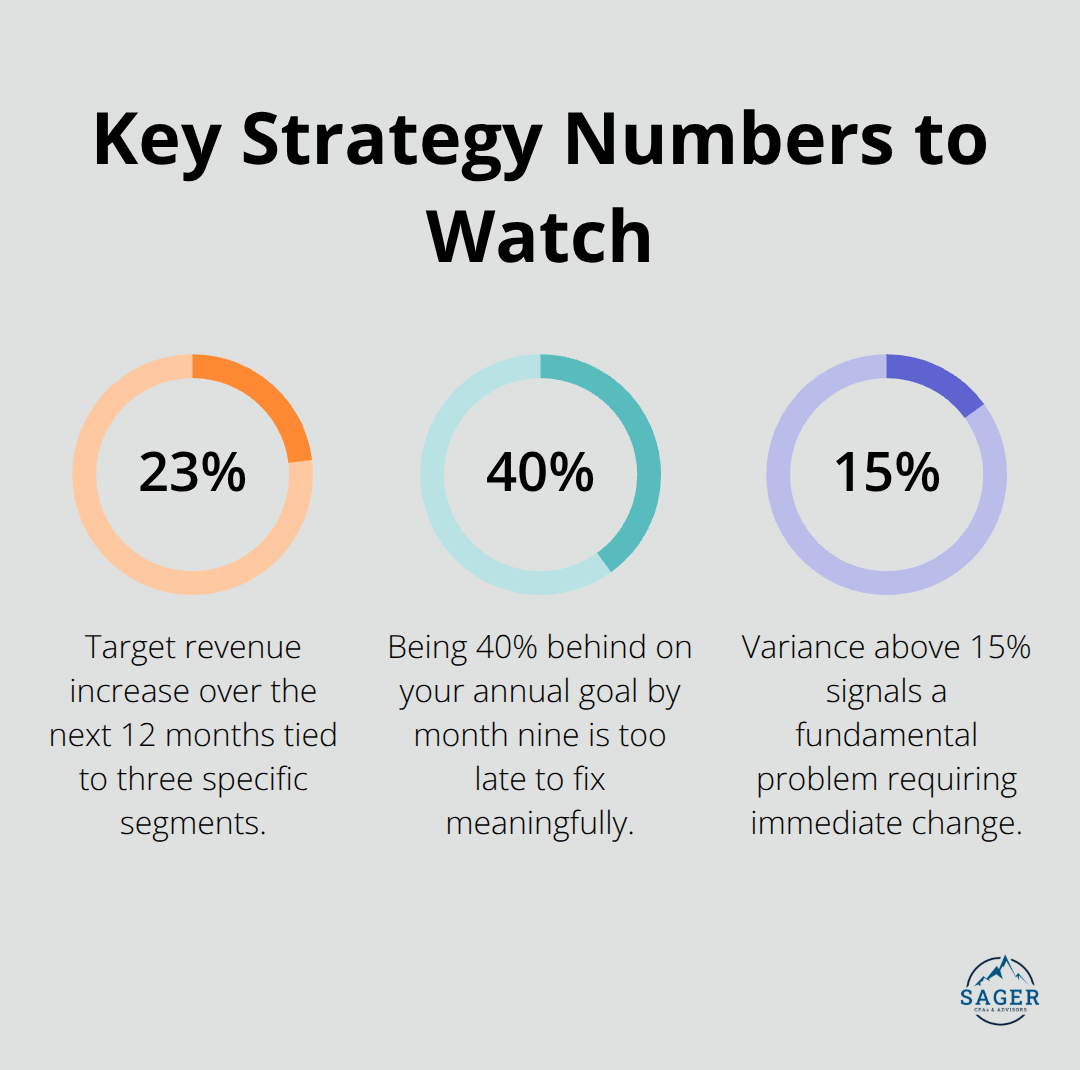
The gap between strategy and execution widens because most companies set vague goals then wonder why nothing happens. You need measurable targets tied to specific numbers, not aspirational statements. Instead of saying you want to grow revenue, commit to increasing revenue by 23 percent in the next twelve months through three specific customer segments. This forces you to calculate what that actually requires: new hires, marketing spend, sales activity levels, and operational capacity. Without this translation from strategy to numbers, your team operates in the dark.
SMART goals-Specific, Measurable, Assignable, Realistic, and Time-bound-separate plans that get executed from plans that gather dust. A concrete SMART goal looks like this: enter two new markets in Q3 and achieve $1M in revenue by year-end. Notice it names the markets, specifies the revenue target, includes a timeline, and assigns clear ownership. Vague goals like improve market presence accomplish nothing because nobody knows what success looks like or who owns the result.
When you assign specific revenue targets to sales teams, specific customer acquisition numbers to marketing, and specific process improvements to operations, accountability becomes real. Each department knows exactly what their contribution must be and when they must deliver it. This clarity transforms strategy from abstract concept into concrete work.
Resource allocation fails when leaders guess at what they need instead of calculating backwards from goals. If you committed to acquiring 50 new customers in the next quarter and your sales team closes 8 customers per rep per quarter, you need at least six sales reps working that goal. If you only have three reps, you cannot hit that target without hiring.
Many companies set ambitious goals then allocate resources that make those goals mathematically impossible. This creates burnout and failure. Calculate the specific headcount, budget, tools, and infrastructure required to hit your targets. If the resources required exceed what you can reasonably invest, adjust your goals downward to match reality. Honest resource planning beats optimistic fantasy every time.
Timelines without checkpoints create the illusion of progress. Monthly or quarterly milestone reviews force conversations about whether you’re actually on track or falling behind. When you discover in month nine that you’re 40 percent behind on your annual goal, it’s too late to course-correct meaningfully.
Establish checkpoints every thirty days minimum. At each checkpoint, compare actual results against your target, identify what’s working and what’s not, and adjust tactics immediately. Assign a specific person to own each major milestone and hold them accountable for reporting status. This person doesn’t need to do all the work-they need to ensure work happens and gets reported honestly.
With measurable goals, realistic resources, and regular checkpoints in place, you’ve built the infrastructure for execution. The next step involves monitoring how your strategy performs in the real world and adapting when conditions change.
The metrics you track determine what your team optimizes for, so selecting the wrong KPIs guarantees wasted effort. Most businesses measure vanity metrics that feel good but don’t predict success. Website traffic climbs, social media followers grow, and email lists expand, yet revenue stagnates. The KPIs that matter connect directly to your strategic goals. If your goal is to increase revenue by 23 percent through three customer segments, then your primary KPIs must be revenue per segment, customer acquisition cost by segment, and customer lifetime value.
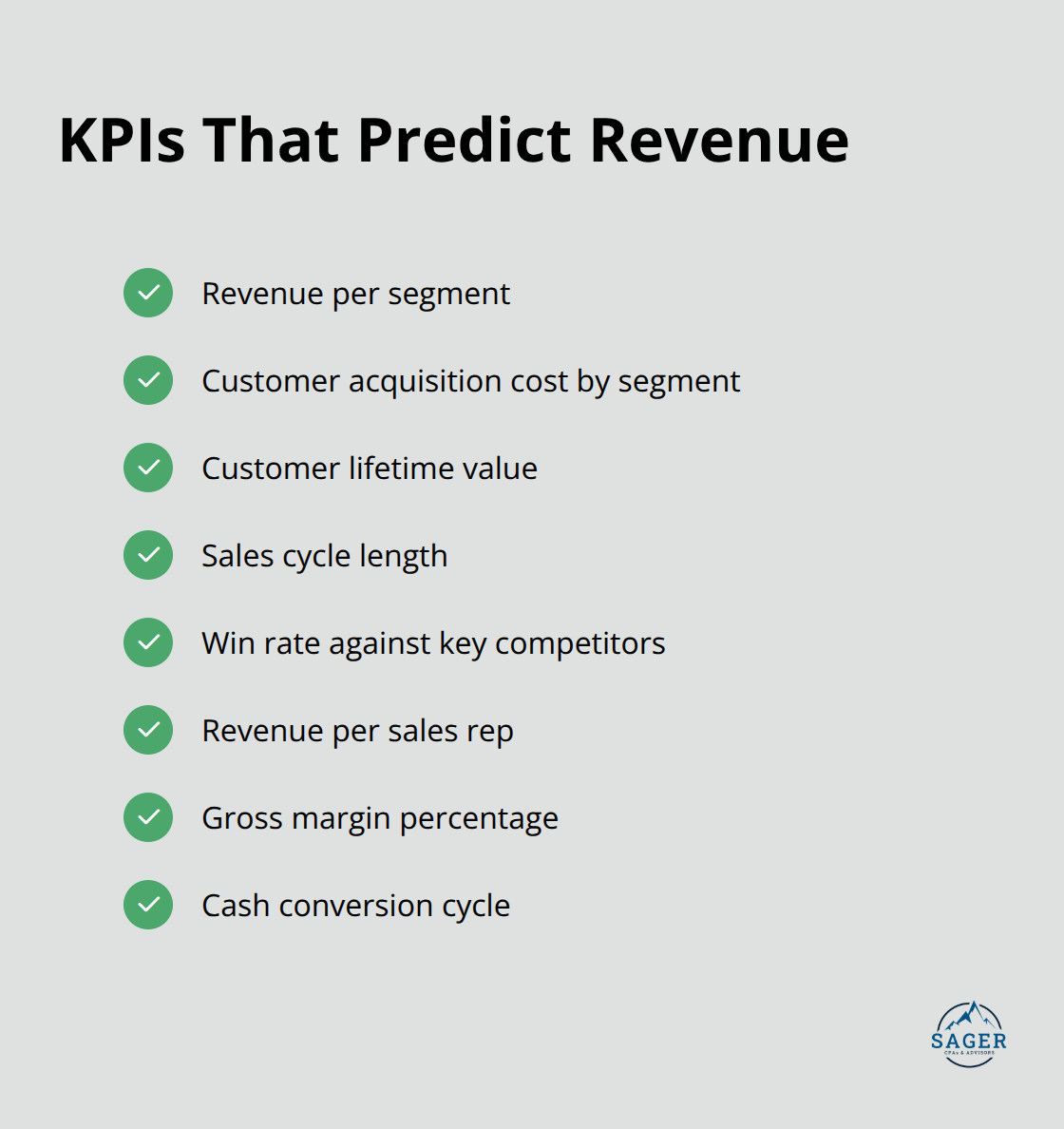
Secondary metrics might include sales cycle length and win rate against specific competitors, but these support the primary metrics rather than replace them. Revenue per sales rep, gross margin percentage, and cash conversion cycle reveal operational health that vanity metrics hide. Pick 5-7 KPIs maximum that tie directly to your revenue and profitability goals, then measure them weekly or monthly depending on how fast your business moves. Too many metrics create noise and confusion about what actually matters.
Monthly reviews of actual results against targets expose problems while you still have time to fix them. Schedule these reviews on the same day each month and require attendance from leaders responsible for each major goal. Spend the first half comparing actual results to target, then spend the second half diagnosing why variance occurred. If you targeted 12 new customers and landed only 8, determine whether the sales team needs more leads, whether the pipeline is weak, or whether your sales process is broken.
Variance of 5 to 10 percent is normal and requires minor adjustments. Variance above 15 percent signals a fundamental problem that demands immediate attention and tactical change. When your quarterly goal is at risk after month one or two, you have enough runway to test new approaches, reallocate resources, or adjust targets downward. Waiting until month nine guarantees failure.
Document what’s working and what isn’t at each review, then communicate these findings to your team within 48 hours. Transparency about performance problems builds credibility and prevents surprise failures. This discipline transforms strategy from a static document into a living system that responds to market conditions and internal performance.
A business strategy template only works when you treat it as a living system, not a document you write once and shelve. The foundation you’ve built-clear mission and vision, precise customer targeting, and honest competitive analysis-means nothing without consistent execution and adaptation. Your action plan with measurable goals, realistic resources, and monthly checkpoints transforms strategy from theory into results.
Most businesses abandon their strategy within six months because they stop reviewing it. The companies that win treat strategy review as non-negotiable and compare actual results against targets monthly, adjusting tactics when variance exceeds 15 percent. This discipline prevents strategic drift and keeps your team focused on what matters as markets shift, competitors move, and your business grows.
If you’re managing finances alongside strategy execution, the complexity multiplies. We at Sager CPA help businesses align their financial strategy with their operational goals through strategic business advisory services, creating customized action plans that connect your strategy to your numbers and ensure informed decision-making at every checkpoint.




Phone: (208) 939-6029
Email: info@sager.cpa
Privacy Policy | Terms and Conditions | Powered by Cajabra
At Sager CPAs & Advisors, we understand that you want a partner and an advocate who will provide you with proactive solutions and ideas.
The problem is you may feel uncertain, overwhelmed, or disorganized about the future of your business or wealth accumulation.
We believe that even the most successful business owners can benefit from professional financial advice and guidance, and everyone deserves to understand their financial situation.
Understanding finances and running a successful business takes time, education, and sometimes the help of professionals. It’s okay not to know everything from the start.
This is why we are passionate about taking time with our clients year round to listen, work through solutions, and provide proactive guidance so that you feel heard, valued, and understood by a team of experts who are invested in your success.
Here’s how we do it:
Schedule a consultation today. And, in the meantime, download our free guide, “5 Conversations You Should Be Having With Your CPA” to understand how tax planning and business strategy both save and make you money.