
Navigating with Personalized tax planning guides for Smarter Filings
Discover personalized tax planning guides to file smarter, reduce errors, and keep more of your income with proven strategies.
Most people overpay their taxes simply because they don’t have a strategy tailored to their specific situation. At Sager CPA, we’ve seen countless clients discover thousands in savings once they moved beyond generic approaches.
Personalized tax planning guides aren’t luxuries-they’re practical tools that match your unique income, deductions, and life circumstances. This post shows you how to build a strategy that actually works for you.
The IRS reports that the average taxpayer misses approximately 2-3 deductions or credits they actually qualify for each year. This isn’t because people are careless-it’s because tax laws are complex and most people approach filing reactively rather than strategically. Without a personalized plan, you leave money on the table. The difference between a generic tax return and a strategically planned one often amounts to hundreds or even thousands of dollars annually.
One-size-fits-all tax software or basic tax preparation doesn’t account for your unique circumstances. Someone who is self-employed faces completely different opportunities than a W-2 employee. A person going through a major life change (marriage, home purchase, job loss, inheritance) needs strategies tailored to those specific events. Software programs can’t recognize these nuances. They follow basic rules and generate a return, but they miss strategic opportunities.
If you had significant medical expenses, charitable contributions, or business losses, generic approaches often fail to structure these items in ways that maximize your benefit. The cost of this oversight compounds year after year.
A personalized tax strategy starts with understanding your complete financial picture-all income sources, major expenses, upcoming life events, and long-term goals. From there, legitimate strategies emerge. You might time certain business expenses strategically. Perhaps you qualify for less-known credits related to education, energy efficiency, or dependent care. You could benefit from adjusting your withholdings to improve cash flow throughout the year rather than receiving a large refund.
Some people save substantially through restructuring how they hold investments or through strategic charitable contributions. These aren’t loopholes-they’re legal strategies that exist specifically for people who plan ahead rather than react after the year ends. The key difference is that personalized planning identifies these opportunities before December 31st, when you can actually act on them.
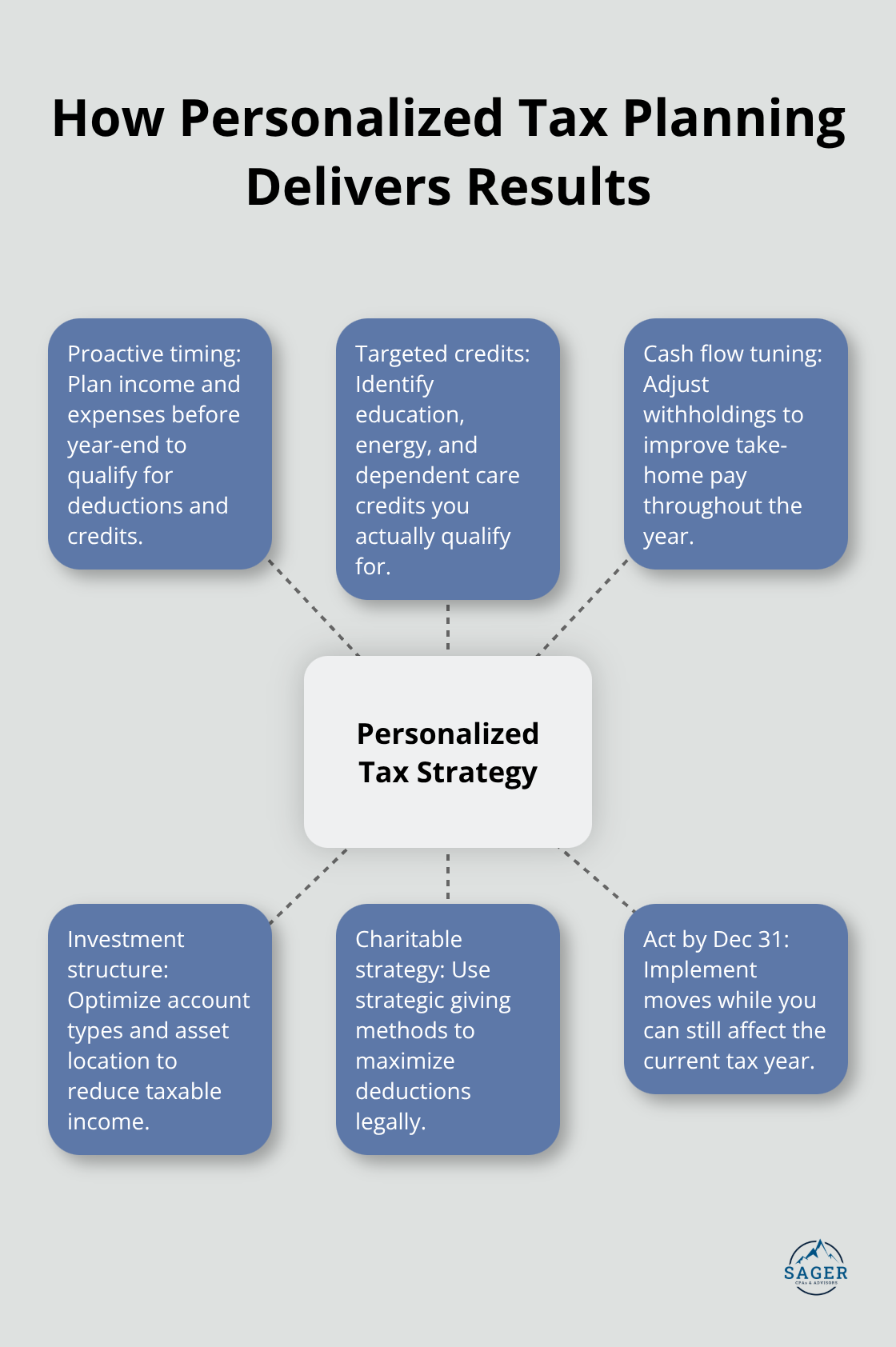
The moment you wait until April to think about taxes, you’ve already lost most of your strategic options. Income timing, expense recognition, and credit qualification all depend on actions you take throughout the year (not decisions made during tax season). A business owner who structures quarterly estimated payments differently could reduce their overall tax burden significantly. Someone anticipating a major life event next year can implement strategies now that won’t be available later.
This is where the real advantage of personalized planning shows itself-it transforms tax filing from a reactive scramble into a proactive strategy that works with your actual financial life.
Most people fail at tax planning not because they lack discipline, but because they don’t know what to track or when to act. The first mistake is treating deductions as an afterthought. You finish the year, scramble through receipts in March, and hope you remember that home office expense or professional development course you paid for in February. The National Society of Accountants reports that approximately 60% of self-employed individuals miss at least one significant deduction annually simply because they didn’t maintain organized records throughout the year.
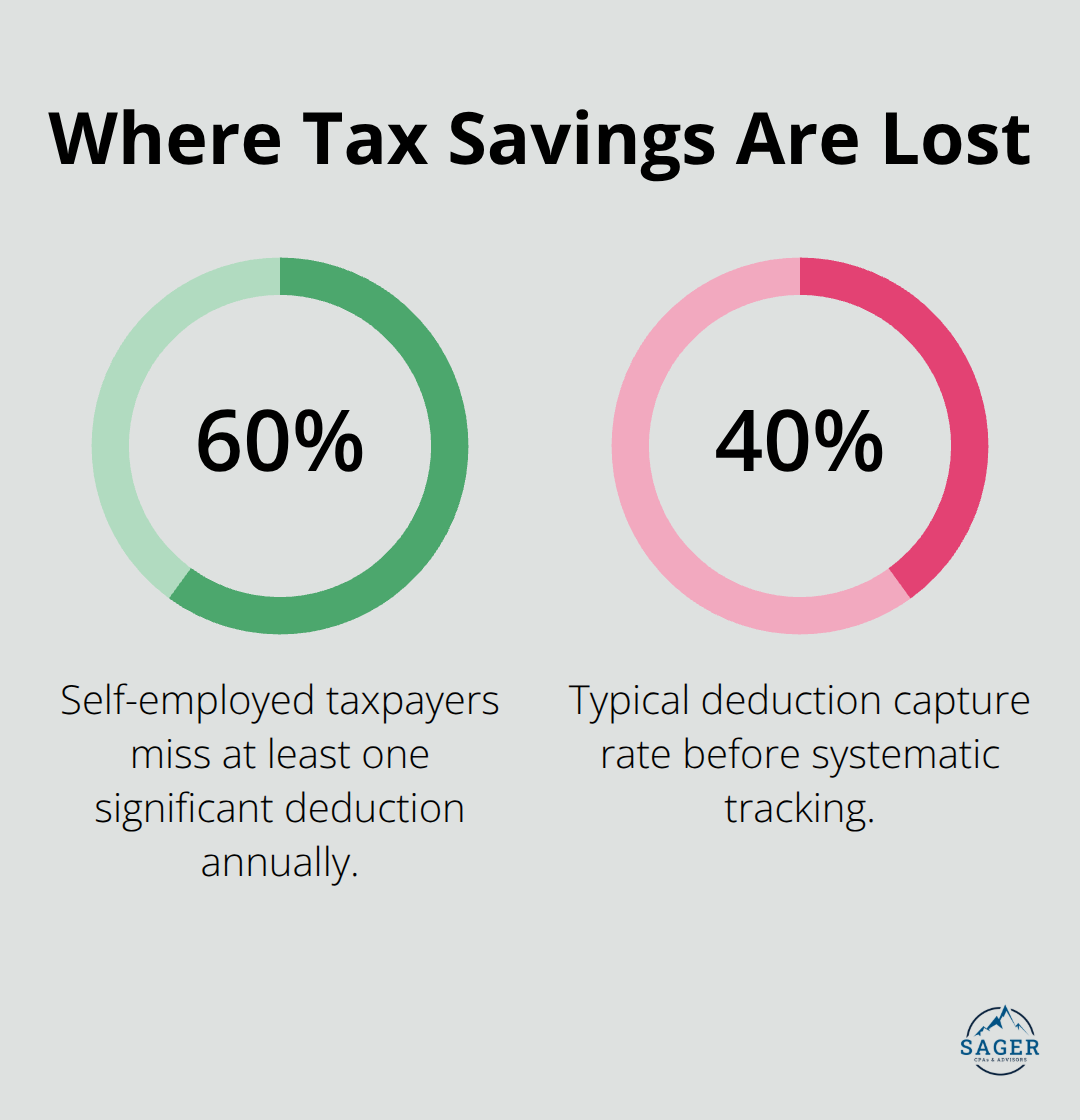
A freelancer might spend $3,000 on equipment, $1,500 on software subscriptions, and $2,000 on professional conferences, but if these aren’t tracked systematically as they happen, they vanish from memory by tax time. The solution is brutally simple: create a dedicated folder (digital or physical) the moment you incur a business expense. Photograph receipts immediately. Use accounting software like QuickBooks or Wave to log expenses weekly, not monthly. This takes 10 minutes per week and transforms your deduction capture rate from 40% to nearly 100%.
The second critical error is ignoring income and expense timing, which directly impacts your tax bracket and overall liability. Someone who closes a major client contract in late December versus early January faces completely different tax consequences, yet most people never consider this. A business owner could reduce their current-year tax burden by deferring an invoice by two weeks or accelerating a planned equipment purchase into the current year.
Missing out on available credits represents thousands in unnecessary taxes. The Child Tax Credit provides up to $2,000 per child, the Earned Income Tax Credit reaches $3,733 for eligible filers, and education-related credits like the American Opportunity Credit offer up to $2,500 annually. Yet the IRS estimates that roughly 20% of eligible taxpayers never claim credits they qualify for because they don’t know these credits exist or don’t understand their eligibility.
The fix requires action before November: sit down with a tax professional or use the IRS Interactive Tax Assistant tool to identify which credits apply to your situation. Then structure your remaining months accordingly. If you’re self-employed, calculate your estimated tax payments based on actual income projections rather than last year’s figures. If you’re expecting a major life event next year, discuss it now so strategies can be implemented this year when they’re most effective.
These three mistakes share one common thread: they all stem from reactive rather than proactive decision-making. The good news is that your next step doesn’t require waiting until next year to fix them. What matters now is understanding how to build a personalized strategy that actually fits your financial life.
Start by gathering every financial document from the past year: W-2s, 1099s, bank statements, investment records, and receipts. This isn’t busywork-it’s the foundation for identifying what actually applies to your situation. Next, categorize your income sources. Are you a W-2 employee, self-employed, an investor, or some combination? The IRS tax code treats each differently, and your strategy must match your actual income structure. If you experienced major life changes this year-marriage, divorce, home purchase, job change, inheritance-these create entirely different deduction and credit opportunities than someone whose circumstances remained stable. A person who bought a home in March qualifies for mortgage interest deductions starting immediately. Someone who got married mid-year needs to reconsider their withholding strategy for next year. These events aren’t just personal milestones; they’re tax planning triggers that most people completely ignore.
This is where most people fail because they don’t understand what qualifies. If you’re self-employed, home office expenses require calculations based on square footage, not guesses. The IRS allows either the simplified method at $5 per square foot (up to 300 square feet) or the actual expense method. If your home office is 150 square feet, that’s $750 in deductions under the simplified approach, but actual expenses might yield $1,200 or more depending on your mortgage interest, utilities, and depreciation. Vehicle expenses follow similar logic-you can deduct actual mileage at the IRS mileage rate, but only if you track every trip with dates and purposes. Professional services, software subscriptions, equipment, and education all count, but only if they directly relate to generating income. Meals and entertainment are now mostly non-deductible for most people, yet accountants still see clients trying to claim these. The tax code contains deductions regardless of whether you know about them. Your job is finding which ones apply to your specific income and expenses.
With two months left in the year, you can still take meaningful action. If you’re self-employed and projected to owe taxes, make estimated payments now to prevent penalties and interest. Calculate what you actually owe based on year-to-date income, not last year’s estimate. If you’re anticipating a major charitable contribution, accelerate it into this year if it makes sense for your tax bracket.
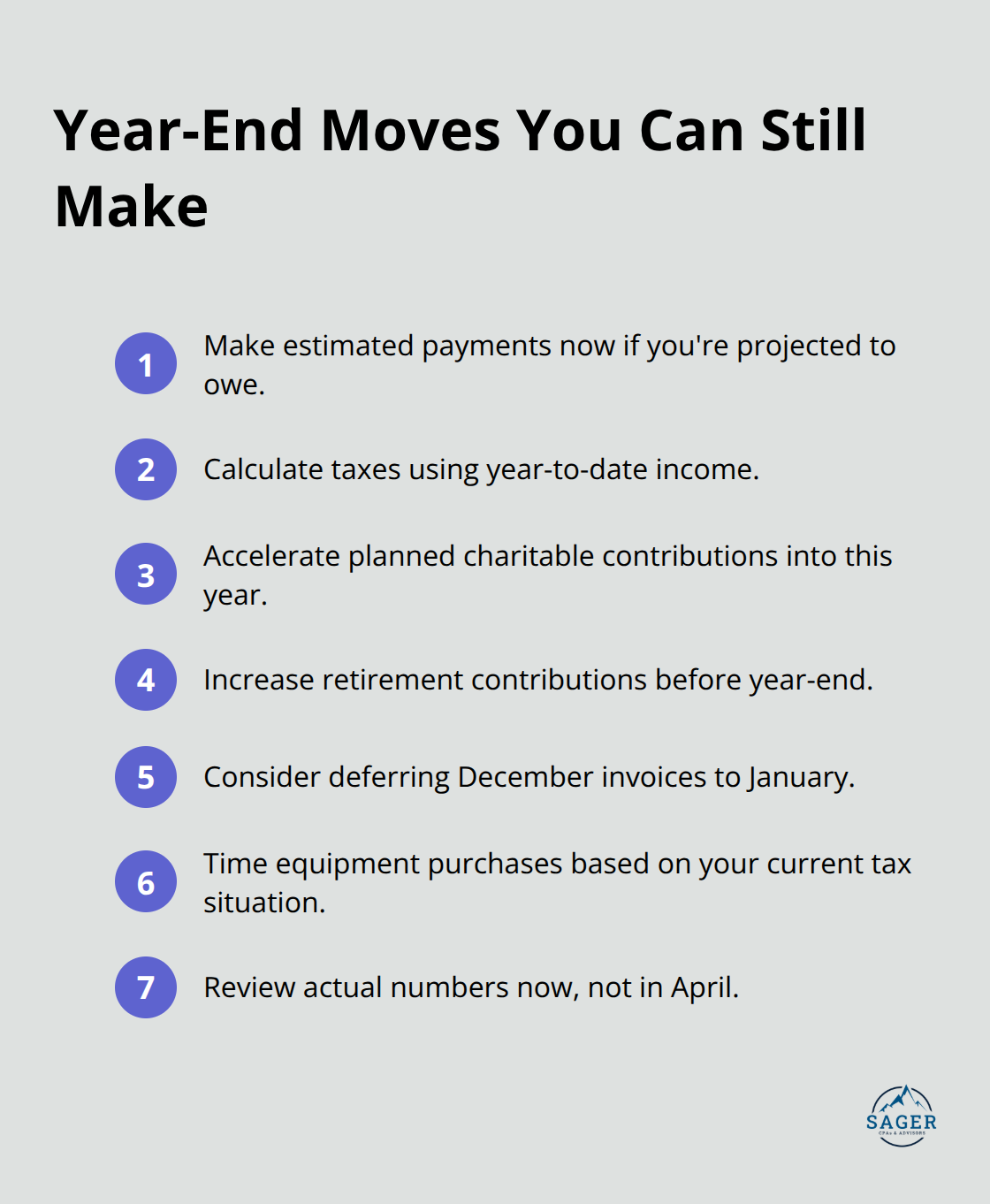
If you’ve maxed out retirement contributions, good-if not, you still have time to increase contributions before year-end. For those expecting significant income in December, consider whether deferring an invoice into January makes strategic sense. For business owners, planned equipment purchases can shift between years depending on your current tax situation. These decisions require knowing your actual numbers now, not guessing in April. Most people wait until they’re filing taxes to discover they could have done something different. That’s precisely backward.
Personalized tax planning guides transform tax filing from a stressful scramble into a manageable process because they match your actual financial situation rather than some generic template. You know what to track because you’ve identified it in advance, and you understand your tax position because you’ve reviewed it before year-end rather than discovering surprises in April. We at Sager CPA have worked with countless clients who thought they were doing fine with generic tax software or basic preparation, then implemented personalized strategies and discovered they were overpaying by thousands annually.
The strategies covered throughout this post aren’t theoretical-they produce measurable results. Someone who tracks deductions systematically saves hundreds annually, a business owner who times income strategically reduces their tax burden significantly, and a person who identifies available credits captures thousands they would otherwise leave unclaimed. The real advantage of personalized planning is that it lets you take action when action still matters, not when your options have already closed.
Gather your financial documents, identify your income sources and major life changes, and determine which deductions and credits actually apply to you. If you want professional guidance to confirm you’re not missing opportunities, schedule a consultation with Sager CPA to create a personalized financial strategy tailored to your circumstances.




Phone: (208) 939-6029
Email: info@sager.cpa
Privacy Policy | Terms and Conditions | Powered by Cajabra
At Sager CPAs & Advisors, we understand that you want a partner and an advocate who will provide you with proactive solutions and ideas.
The problem is you may feel uncertain, overwhelmed, or disorganized about the future of your business or wealth accumulation.
We believe that even the most successful business owners can benefit from professional financial advice and guidance, and everyone deserves to understand their financial situation.
Understanding finances and running a successful business takes time, education, and sometimes the help of professionals. It’s okay not to know everything from the start.
This is why we are passionate about taking time with our clients year round to listen, work through solutions, and provide proactive guidance so that you feel heard, valued, and understood by a team of experts who are invested in your success.
Here’s how we do it:
Schedule a consultation today. And, in the meantime, download our free guide, “5 Conversations You Should Be Having With Your CPA” to understand how tax planning and business strategy both save and make you money.