
How to Reduce Your Tax Liability Legally
Reduce your tax liability legally with proven strategies. Discover deductions, credits, and planning techniques to lower your tax bill.
Starting a tax preparation business offers numerous opportunities for financial success and professional growth. At Sager CPA, we’ve seen firsthand how this industry can be both rewarding and lucrative.
With the ever-changing tax landscape, there’s a constant demand for skilled professionals who can navigate complex regulations and help clients maximize their returns. This guide will walk you through the essential steps to launch your own thriving tax preparation business.
To launch your tax preparation career, you must obtain a Preparer Tax Identification Number (PTIN). This is the minimum requirement to legally prepare federal tax returns for compensation. While not mandatory, an Enrolled Agent (EA) certification can significantly enhance your credibility. The IRS awards this certification, which showcases your taxation expertise and allows you to represent clients before the IRS.
Tax laws change frequently. The Internal Revenue Code updates often, and you need to stay informed. Subscribe to IRS newsletters, join professional associations (such as the National Association of Tax Professionals), and attend tax seminars regularly. These resources provide valuable insights into new regulations and interpretations that can affect your clients’ tax situations.
Theory alone won’t suffice in tax preparation. Practical experience is essential. Consider internships at established firms during tax season or part-time work for a tax preparation company. These opportunities allow you to handle real tax scenarios, learn from experienced professionals, and build a network within the industry.
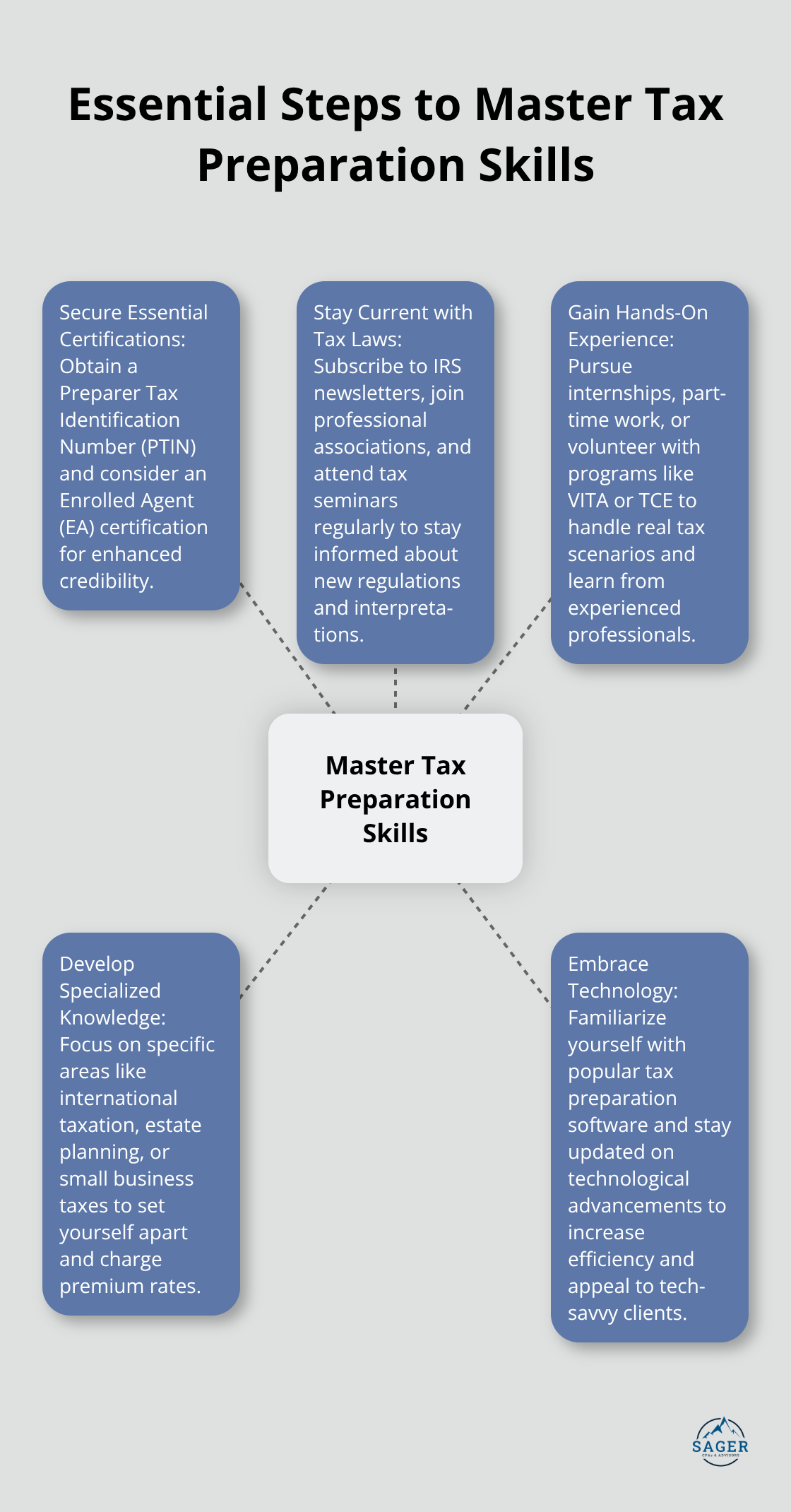
Many successful tax preparers start by volunteering with programs like the Volunteer Income Tax Assistance (VITA) or Tax Counseling for the Elderly (TCE). These programs offer free tax help to qualifying individuals and provide an excellent platform to sharpen your skills while contributing to the community.
As you progress in your tax preparation career, try to develop expertise in specific areas. This could include international taxation, estate planning, or small business taxes. Specialized knowledge can set you apart from competitors and allow you to charge premium rates for your services.
Modern tax preparation relies heavily on software and digital tools. Familiarize yourself with popular tax preparation software (like TurboTax or H&R Block) and stay updated on technological advancements in the field. This knowledge will increase your efficiency and appeal to tech-savvy clients.
As you build your skills, you’ll be better equipped to handle complex tax situations and provide valuable advice to clients. The investment in your education and experience will translate into client trust and business growth. Now, let’s explore how to set up your tax preparation business structure and create a solid foundation for your new venture.
Your business structure affects your legal and financial responsibilities. Most new tax preparers opt for a sole proprietorship due to its simplicity and low startup costs. As your business expands, you might consider transitioning to a Limited Liability Company (LLC) for personal asset protection and tax flexibility. Corporations offer the highest level of protection but involve more complex regulations and potentially higher taxes.
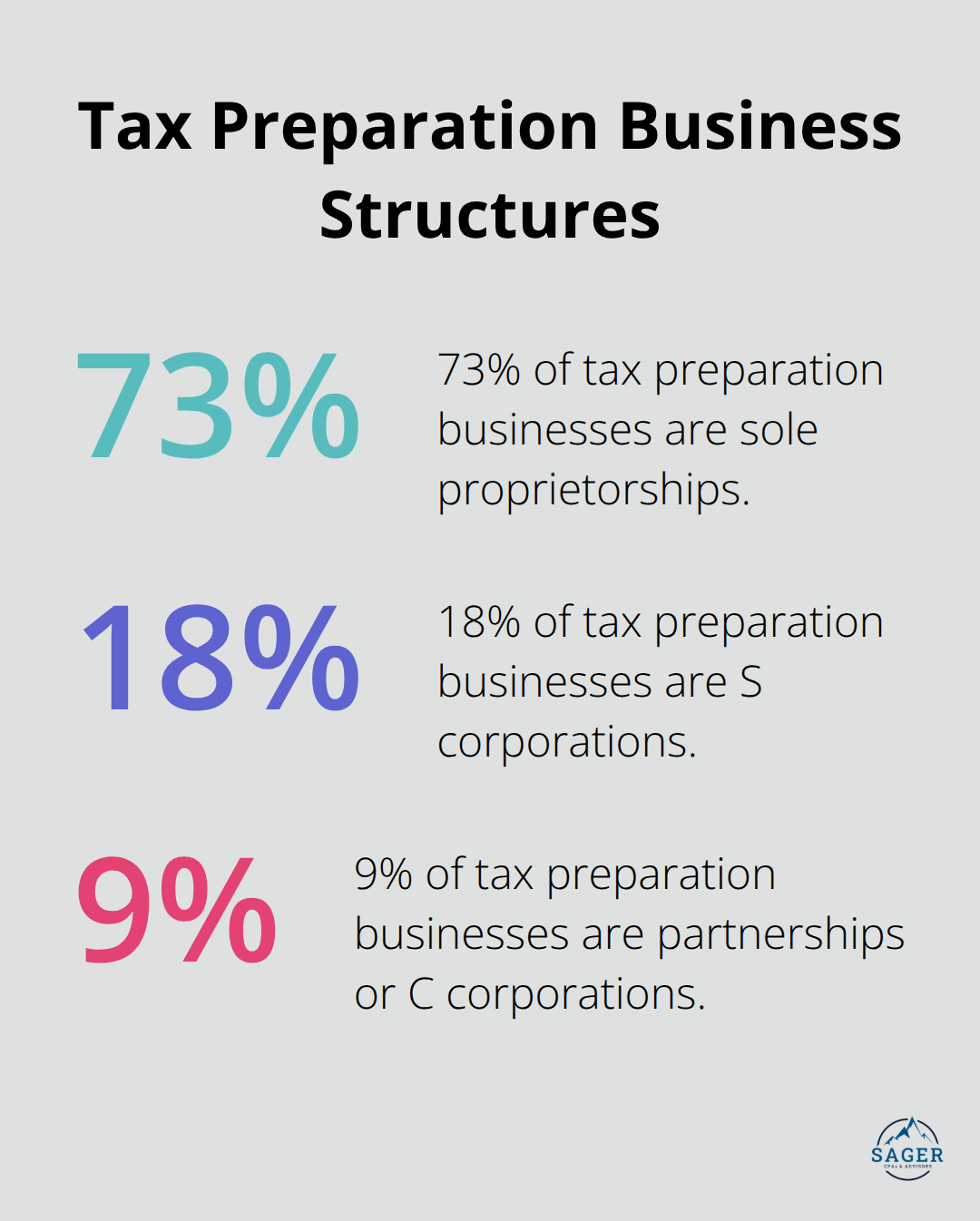
IRS data shows that 73% of tax preparation businesses are sole proprietorships, 18% are S corporations, and 9% are partnerships or C corporations. Select a structure that aligns with your long-term goals and risk tolerance.
A well-structured business plan serves as your roadmap to success. Include detailed financial projections for at least the first three years. The average fee for a basic Form 1040 without itemized deductions is around $220; with itemized deductions, it rises to about $323. Use these figures to estimate your potential revenue.
Your plan should outline your target market, pricing strategy, and marketing approach. Be realistic about your expenses, including software costs, office space (if applicable), and professional development. Successful tax preparers often allocate 10-15% of their revenue to marketing efforts.
The right software can significantly increase your efficiency and accuracy. Popular options include Drake Tax Software, ProSeries, and UltraTax CS. Prices range from $1,000 to $5,000 per year, depending on features and the number of returns you plan to file.
Beyond tax software, invest in a reliable computer, high-speed internet, and secure cloud storage for client data. The IRS requires tax preparers to implement safeguards to protect taxpayer information, so prioritize cybersecurity measures. This includes activating anti-virus software, using a firewall, opting for two-factor authentication when offered, and using backup software.
Consider using practice management software to streamline client communications and workflow. Tools like TaxDome or Canopy can help you manage deadlines, store documents securely, and automate routine tasks.
While many tax preparers start from home, a dedicated workspace is essential. If you plan to meet clients in person, consider renting a small office or using co-working spaces during tax season. This professional setting can enhance client trust and provide a distraction-free environment for complex tax work.
Your business setup forms the foundation of your future success. Take the time to research and consult with professionals to make informed choices that align with your vision and goals. With a solid foundation in place, you can now focus on attracting clients and growing your business through effective marketing strategies.
Define your target market to focus your marketing efforts effectively. You can concentrate on individuals with simple returns, small businesses, or specific industries like real estate or e-commerce. According to the Bureau of Labor Statistics, tax preparers earn a median hourly wage of $17.15, with the potential to earn up to $36.55 per hour. Tax preparers who focus on small business returns may have the opportunity to earn more than those who prepare only individual returns.
After you identify your target market, customize your services and marketing messages to address their specific needs and pain points. For example, if you target small business owners, highlight your expertise in maximizing deductions and navigating complex business tax laws.
A professional website is essential in today’s digital age. Your website should clearly communicate your services, expertise, and value proposition. Include client testimonials, a blog with tax tips, and easy-to-use contact forms to capture leads.
Improve your visibility in local search results through search engine optimization (SEO). Use location-specific keywords like “tax preparation services in [your city]” to attract local clients. According to a recent study, consumers frequently search online for local businesses.
Social media platforms can serve as powerful marketing tools. LinkedIn proves particularly effective for B2B tax services. Share valuable content, engage with your audience, and showcase your expertise to build trust and credibility.
Don’t overlook the power of local connections. Join your local chamber of commerce or business associations. These organizations often host networking events where you can meet potential clients and referral partners.
Consider partnerships with complementary businesses such as real estate agents, financial advisors, or small business attorneys. These partnerships can lead to mutual referrals and expand your client base.
Offer free tax seminars or workshops in your community. This strategy positions you as an expert and gives potential clients a chance to meet you in person. Topics like “Top 10 Tax Deductions for Small Businesses” or “Tax Planning Strategies for Retirees” can attract your target audience and showcase your expertise.
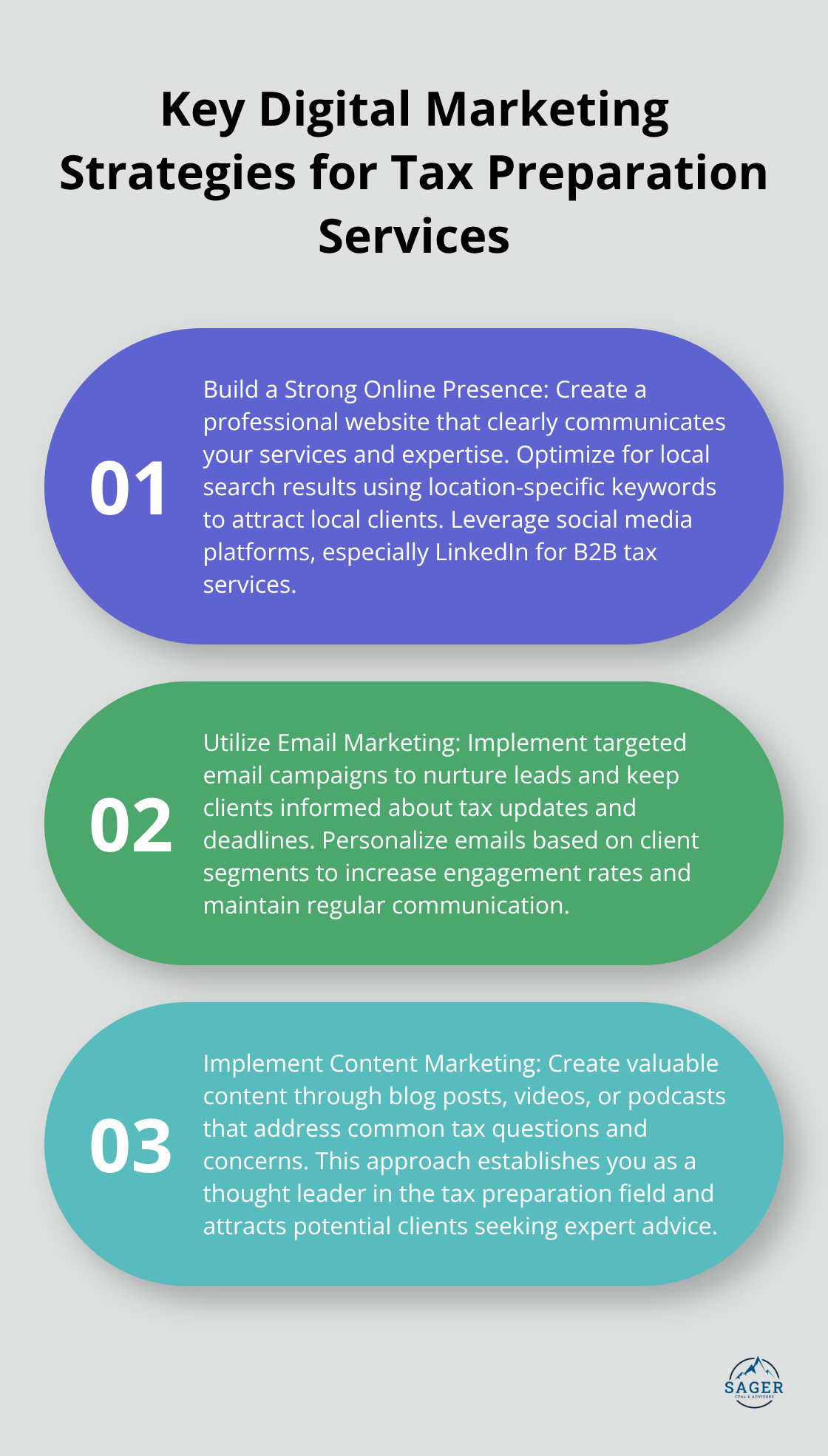
Implement email marketing campaigns to nurture leads and keep your clients informed about tax updates and deadlines. Personalize your emails based on client segments to increase engagement rates.
Create valuable content through blog posts, videos, or podcasts that address common tax questions and concerns. This content marketing approach establishes you as a thought leader in the tax preparation field.
Consider pay-per-click (PPC) advertising during tax season to capture high-intent searches. Google Ads can help you appear at the top of search results for relevant keywords, driving traffic to your website.
Use analytics tools to measure the success of your marketing campaigns. Track metrics such as website traffic, lead generation, and conversion rates. This data will help you refine your marketing strategy and allocate your budget more effectively.
Consistent and targeted marketing efforts play a key role in building a successful tax preparation business. A clear definition of your niche, establishment of a strong online presence, and leveraging of local connections will position you to attract and retain clients in this competitive industry.
Starting a tax preparation business offers numerous opportunities for financial success and professional growth. The tax industry continues to evolve, creating a constant demand for skilled professionals who can navigate complex regulations. We at Sager CPA understand the challenges and rewards of building a successful tax practice.
Our experience shows that dedication to continuous learning, investment in the right tools, and a client-focused approach lead to long-term success. The potential for profitability in this field is significant, with opportunities to specialize and expand services as you gain experience. Success in tax preparation requires more than technical knowledge; it demands strong client relationships and adaptability to industry trends.
We encourage you to act now and take the next step in your tax preparation career. The sooner you start, the more time you’ll have to build your skills and client base before the next tax season. For additional support or expert advice on financial management and tax planning, Sager CPA offers tailored services to help you navigate your business and personal financial landscape.




Phone: (208) 939-6029
Email: info@sager.cpa
Privacy Policy | Terms and Conditions | Powered by Cajabra
At Sager CPAs & Advisors, we understand that you want a partner and an advocate who will provide you with proactive solutions and ideas.
The problem is you may feel uncertain, overwhelmed, or disorganized about the future of your business or wealth accumulation.
We believe that even the most successful business owners can benefit from professional financial advice and guidance, and everyone deserves to understand their financial situation.
Understanding finances and running a successful business takes time, education, and sometimes the help of professionals. It’s okay not to know everything from the start.
This is why we are passionate about taking time with our clients year round to listen, work through solutions, and provide proactive guidance so that you feel heard, valued, and understood by a team of experts who are invested in your success.
Here’s how we do it:
Schedule a consultation today. And, in the meantime, download our free guide, “5 Conversations You Should Be Having With Your CPA” to understand how tax planning and business strategy both save and make you money.