
Startup Financial Risk Planning: Anticipate and Mitigate for Growth
Anticipate financial risks in your startup with practical strategies to protect cash flow, manage debt, and build sustainable growth.
Most business owners can’t answer a simple question: where is your money actually going?
At Sager CPA, we’ve found that financial clarity services reveal thousands in hidden costs and missed opportunities that most companies overlook. When you understand your real numbers, you make better decisions and grow faster.
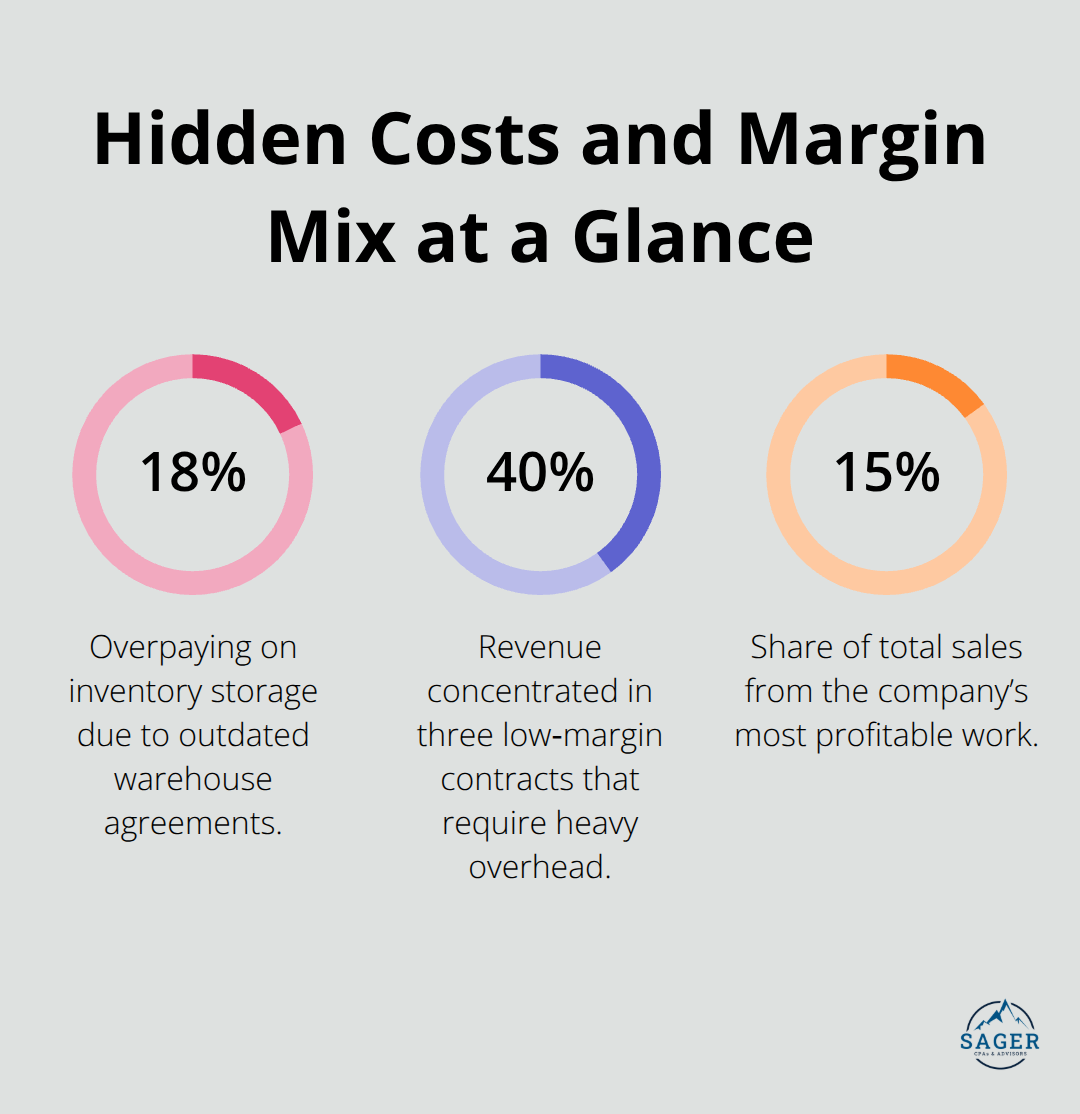
Most business owners discover the hard way that financial blind spots cost real money. We at Sager CPA regularly uncover situations where companies waste thousands annually on redundant subscriptions, inefficient vendor contracts, or poor tax planning. A manufacturing business found they were overpaying on inventory storage by 18 percent simply because no one had reviewed their warehouse agreements in three years. Another client discovered they were missing legitimate deductions worth over 40 thousand dollars because their previous bookkeeper hadn’t categorized expenses correctly.
These aren’t rare cases-when you can’t see your numbers clearly, waste multiplies quietly.
Bad financial visibility leads directly to worse decisions. Without accurate data, you might cut costs in the wrong places, overhire in slow seasons, or miss opportunities to negotiate better terms with suppliers. One restaurant owner cut labor costs aggressively only to discover later that understaffing had driven away repeat customers and damaged revenue far more than the savings helped. The numbers told a story his gut feeling missed entirely.
Cash flow management separates thriving businesses from struggling ones. Many owners confuse profit with cash, thinking a profitable year means they have money in the bank. That misunderstanding leads to poor hiring decisions, delayed vendor payments, or missed investment opportunities. When you track cash flow weekly instead of monthly, you spot problems before they become crises. The difference between weekly and monthly reviews often reveals patterns that monthly snapshots hide entirely.
Clear finances enable the decisions that actually move your business forward. Should you expand into a new location? Which products generate the most margin? Can you afford that equipment investment? These questions demand accurate numbers, not assumptions. Pull your financial data from the last 12 months and compare resource allocation to your stated strategy-most business owners find gaps that explain where money leaks away. Companies with strong financial clarity grow faster because they allocate resources where they matter most. The path to confident action starts with understanding exactly where your money flows and why.
We start where most accountants stop. Instead of just filing returns or reconciling accounts, we analyze your entire financial picture to spot where money actually leaks away. Our approach begins with a thorough review of your last 12 to 24 months of transactions, categorized by department, product line, or service to reveal which areas generate profit and which drain resources.
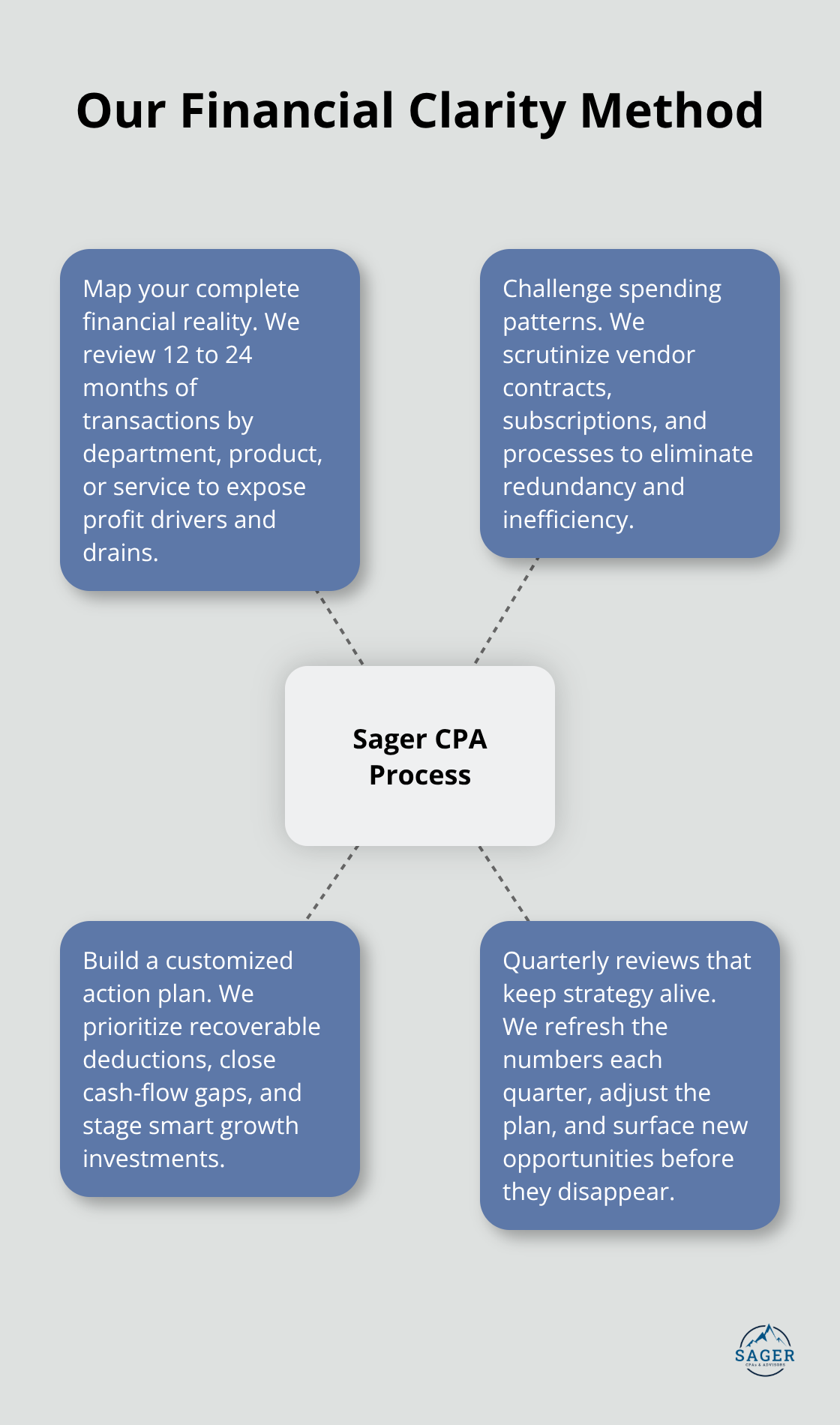
We examine your tax position across quarterly filings, deductions claimed, and estimated payments to identify recovery opportunities. For a construction company, this means analyzing project profitability by job to see which contracts underperform. For an e-commerce business, it means breaking down revenue by product and comparing it against inventory costs and fulfillment expenses.
We review your vendor contracts, subscription services, and operational spending patterns because waste hides in plain sight when no one systematically challenges existing arrangements. Most businesses accumulate redundant software subscriptions, outdated service agreements, or inefficient processes that persist simply because nobody questioned them. We identify these inefficiencies and quantify their impact on your bottom line. This systematic examination reveals opportunities that internal teams often miss because they operate within existing assumptions about how things have always been done.
Once we map your financial reality, we create a customized action plan that addresses your specific situation, not generic advice. This plan prioritizes which deductions to recover first, which cash flow gaps to close immediately, and which growth investments make sense given your actual numbers. We set clear milestones and timelines so you know exactly what happens next and when to expect results. Your plan reflects your business model, industry dynamics, and financial goals rather than a one-size-fits-all template.
Ongoing communication separates real financial guidance from one-time tax preparation. We schedule quarterly reviews to track progress against your plan, adjust for business changes, and catch new opportunities before they vanish. During these reviews, we pull fresh numbers and walk through what changed since the last quarter, what’s working, and what needs adjustment. This regular cadence means you’re not guessing about your financial position when major decisions arrive. When you ask whether you can afford to hire three new employees or invest in equipment, current data sits ready to inform that choice. We also proactively flag tax deadlines, estimated payment dates, and compliance requirements so penalties and missed opportunities don’t surprise you. This level of involvement transforms financial clarity from a report you file away into a living strategy that guides your decisions every quarter, positioning you to move forward with confidence when the next chapter of growth opportunities arrives.
Most business owners operate in a perpetual state of partial blindness when it comes to tax liabilities and deductions. The IRS allows you to claim legitimate business expenses that directly reduce your taxable income, yet many small businesses miss available deductions simply because expenses never receive proper categorization or documentation. A landscaping company had claimed basic office supplies as a deduction while completely overlooking vehicle maintenance, equipment depreciation, and home office expenses that would have reduced their tax bill significantly. The problem wasn’t that the deductions didn’t exist-it was that nobody had systematically reviewed their spending against the tax code.
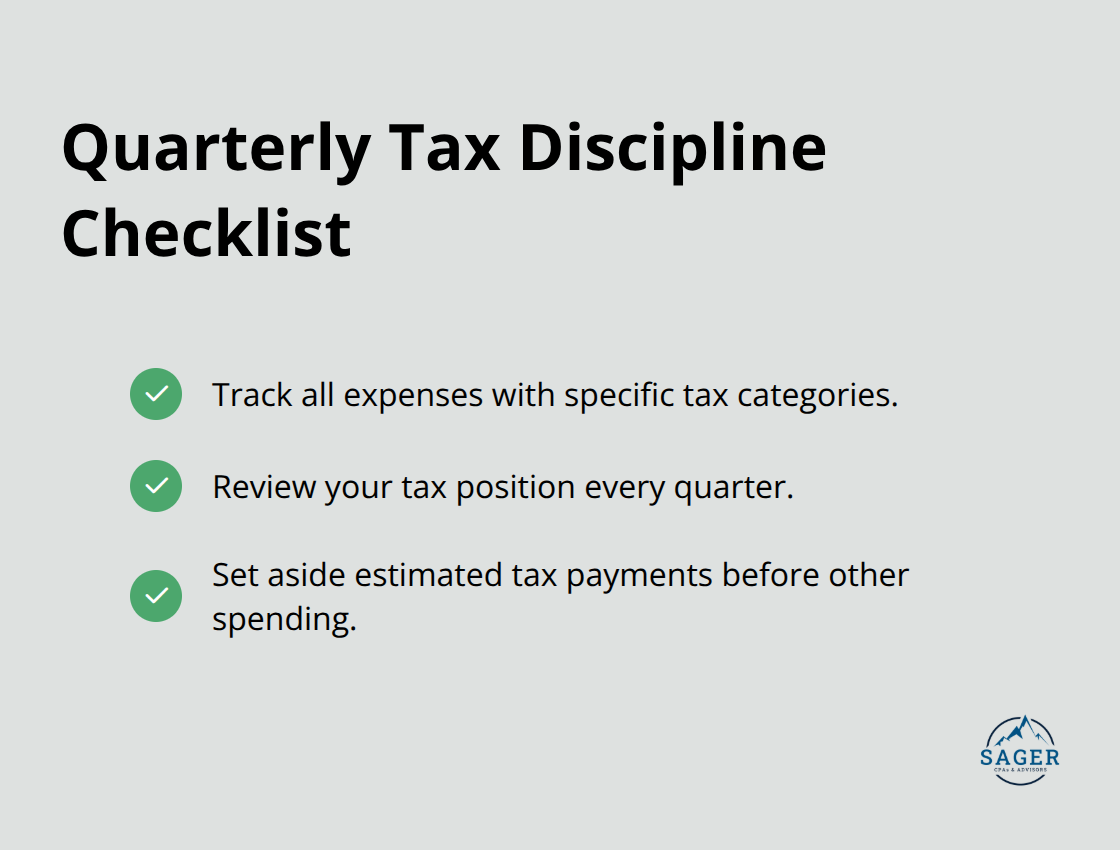
Unchecked tax liabilities accumulate when estimated quarterly payments fall short of actual tax obligations, leaving you facing a massive bill in April with no time to adjust. Cash flow management compounds this problem because most owners treat tax payments as an afterthought rather than a planned expense. When you don’t reserve funds quarterly for taxes, you either underpay and face penalties, or you scramble to find cash when the bill arrives. The solution demands a deliberate approach: track all business expenses with specific tax categories, review your tax position each quarter rather than once yearly, and set aside estimated tax payments before allocating remaining cash to operations or growth.
Inefficient cash flow management destroys growth potential because it forces reactive decisions instead of strategic ones. Many businesses fail to distinguish between profit and available cash, which leads owners to make hiring or investment decisions based on the wrong number. A retail owner with a profitable year might still face cash shortages if inventory sits unsold or customers pay invoices slowly. The practical fix involves monitoring your cash conversion cycle-the time between paying suppliers and collecting customer payments-because gaps in this cycle can tie up thousands of dollars that could fuel expansion.
Most businesses leave money on the table by not analyzing which products, services, or customer segments actually produce profit versus which ones consume resources while barely breaking even. A manufacturing business discovered that 40 percent of their revenue came from three low-margin contracts that required disproportionate operational overhead, while their most profitable work represented only 15 percent of total sales. Once they reallocated resources toward high-margin work and renegotiated or exited unprofitable contracts, cash flow improved dramatically without increasing overall revenue. This kind of clarity emerges only when you systematically examine your financial data by product line, customer segment, or service category rather than treating revenue as one undifferentiated number. The businesses that grow fastest don’t necessarily earn more revenue than their competitors-they ruthlessly identify which activities produce real profit and concentrate resources there.
Financial clarity transforms how you operate and positions your business to move forward with confidence. When you understand where money flows and why, you stop reacting to surprises and start making decisions backed by actual data. The businesses that grow fastest allocate resources to what actually works, and that shift from guessing to knowing changes everything.
We at Sager CPA help you map your complete financial reality, identify where money leaks away, and build customized action plans that address your specific situation. Through quarterly reviews and ongoing communication, financial clarity services transform from a one-time report into a living strategy that guides your decisions every quarter as your business changes. Schedule a consultation with Sager CPA to create a personalized financial strategy tailored to your business and turn your numbers into the foundation for confident action.




Phone: (208) 939-6029
Email: info@sager.cpa
Privacy Policy | Terms and Conditions | Powered by Cajabra
At Sager CPAs & Advisors, we understand that you want a partner and an advocate who will provide you with proactive solutions and ideas.
The problem is you may feel uncertain, overwhelmed, or disorganized about the future of your business or wealth accumulation.
We believe that even the most successful business owners can benefit from professional financial advice and guidance, and everyone deserves to understand their financial situation.
Understanding finances and running a successful business takes time, education, and sometimes the help of professionals. It’s okay not to know everything from the start.
This is why we are passionate about taking time with our clients year round to listen, work through solutions, and provide proactive guidance so that you feel heard, valued, and understood by a team of experts who are invested in your success.
Here’s how we do it:
Schedule a consultation today. And, in the meantime, download our free guide, “5 Conversations You Should Be Having With Your CPA” to understand how tax planning and business strategy both save and make you money.