
How to Align Strategy and Business Operations for Success
Align your strategy and business operations to drive growth and eliminate inefficiencies with proven tactics.
Strategy and business operations often pull in different directions. Leadership sets ambitious goals while teams struggle to translate them into daily work. At Sager CPA, we’ve seen this disconnect drain resources and frustrate employees.
This guide shows you how to bridge that gap with practical frameworks and systems that actually work.
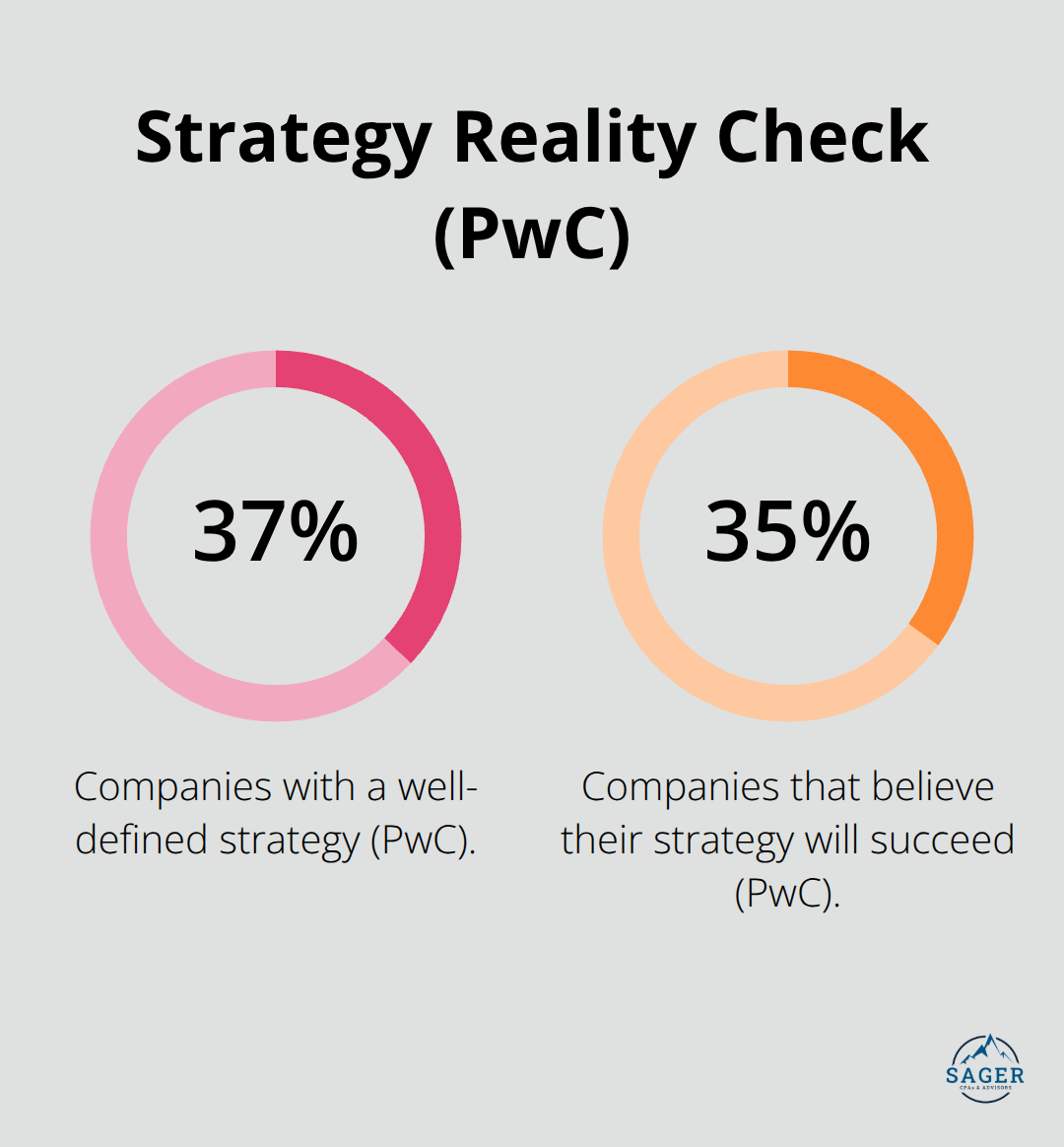
The disconnect between strategy and operations costs organizations real money. PwC research found that only 37% of companies have a well-defined strategy, and just 35% believe their strategy will actually succeed. That gap isn’t theoretical-it translates to wasted budgets, missed revenue targets, and projects that stall halfway through execution. When leadership commits to a three-year growth plan but teams lack clear direction on how to execute it, resources scatter across competing priorities.
Clients lose hundreds of thousands of dollars because their accounting department operates on different metrics than their sales team, or their expansion initiative fails because regional managers don’t understand how their P&L connects to corporate objectives.
Strategy fails during execution because the path from vision to action remains fuzzy. Leadership announces a goal to increase market share by 15% over two years, but frontline teams don’t know what that means for their weekly tasks. A company might adopt a new customer-focused strategy while their compensation system still rewards individual sales volume over customer retention. The mismatch creates friction. Employees follow the incentive structure they understand, not the strategy they heard about once in an all-hands meeting. Research from PwC’s Enterprise Strategy findings shows that companies struggle to execute their strategy effectively. The problem isn’t ambition-it’s the absence of a structured system that cascades goals downward, assigns clear ownership, and monitors progress with real metrics.
When strategy and operations misalign, employee morale suffers immediately. Staff becomes frustrated because they work hard on tasks that don’t feel connected to company success. Turnover increases because talented people leave organizations where their effort feels pointless. They sense the disconnect between what leadership says matters and what the actual work priorities are. A marketing team might spend six months building a campaign aligned with the stated strategy, only to watch it shelved when budget constraints hit and nobody had a clear decision-making framework in place. Employees who understand how their role supports the broader strategy stay longer and perform better. Without that clarity, organizations lose institutional knowledge, face higher recruitment costs, and struggle to build momentum on any long-term initiative.
The organizations that thrive are the ones where a frontline accountant, project manager, or customer service representative can explain how their daily responsibilities drive the company’s strategic objectives. This clarity doesn’t happen by accident-it requires intentional communication and structured systems that connect individual work to organizational goals. When teams understand the “why” behind their assignments, they make better decisions and adapt faster to changing conditions. The next section shows you how to build those systems and establish the frameworks that transform strategy from a leadership document into actionable work that teams execute with confidence.
Building a unified strategic framework means translating abstract goals into actions that teams execute every week. The first step is establishing how information flows between leadership and frontline staff. One-way announcements fail. Leadership needs regular channels to explain the strategy and answer questions, while teams need ways to report back on execution challenges. Origin Bank abandoned its old planning approach and created three quarterly strategy meetings paired with a formal decision-tree process for vetting changes before board approval. This structure gave employees a predictable cadence to understand what changed and why. The bank centralized strategy execution with formal reporting processes so leadership could monitor performance and adjust plans. Without this two-way dialogue, teams operate on outdated information and leadership makes decisions without understanding ground-level constraints.
Goals must be specific enough that a frontline employee can measure progress weekly, not quarterly. Vague targets like “increase efficiency” or “improve customer satisfaction” create confusion about what actually matters. Instead, define measurable outcomes tied to business drivers. If the strategy is to expand into three new regions, the sales team needs to know the revenue target per region, the customer acquisition cost threshold, and the timeline for reaching profitability in each market. A customer service team needs to understand how their response time targets connect to customer retention rates and revenue. Set key performance indicators that reflect both financial and operational progress. Use dashboards that show real-time data so teams see how their work affects the numbers. Cobb EMC realigned its strategy in 2014 using SWOT analyses and data consolidation to create a three-year plan, then moved to project-based operations by 2018. The result was $8 million in cost savings and reduced customer rates by about $5 million because teams understood exactly what drove profitability and efficiency.
Accountability without blame creates momentum. Assign clear ownership for each strategic objective and establish regular review cycles where teams report progress against their assigned metrics. Weekly check-ins prevent small misalignments from becoming major problems. If a project falls behind, the team flags it immediately and leadership can reallocate resources or adjust the timeline rather than discovering the problem three months later. Performance reviews and compensation should tie directly to goal achievement so employees understand that strategy execution directly affects their compensation and career progression.
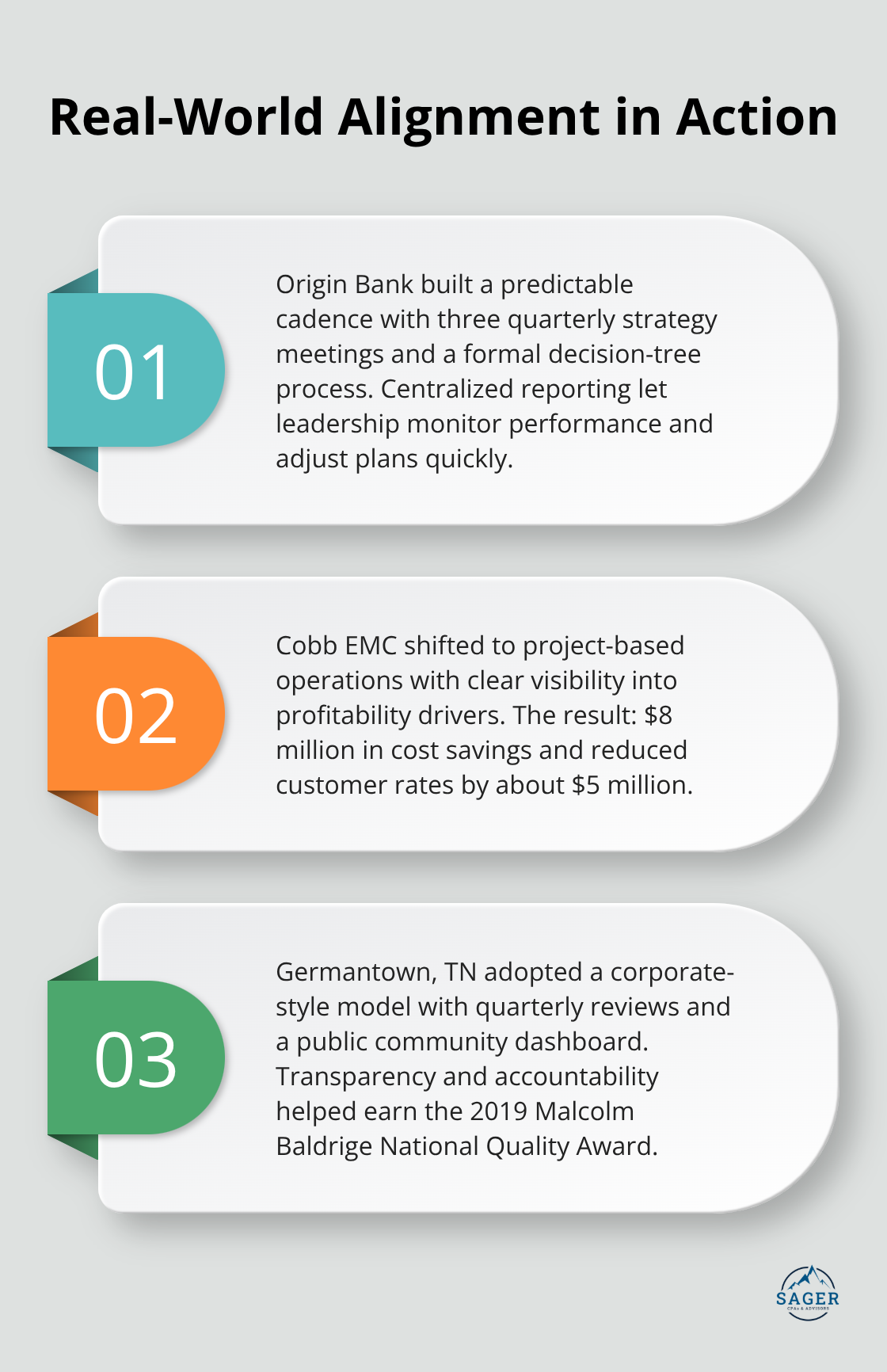
Germantown, Tennessee shifted to a corporate-style model and conducted quarterly progress reviews with department directors while publicly sharing progress via a community dashboard to enhance transparency and accountability. The city earned the Malcolm Baldrige National Quality Award in 2019 for performance excellence. Transparency about who is responsible for what removes the ambiguity that causes misalignment. When employees know they will report on their contributions to the strategy, they pay closer attention to whether their daily work actually drives the stated objectives.
The systems you put in place determine whether strategy remains a document on a shelf or becomes the operating rhythm of your organization. The next section shows you which tools and processes transform these frameworks into sustained execution.
The gap between strategy and operations closes fastest when you stop relying on email chains and spreadsheets to track execution. Project management software specifically designed to connect strategic objectives to daily tasks transforms execution speed dramatically. Tools like Asana, Monday.com, or Microsoft Project map strategic goals to projects, assign ownership, and track progress in real time. The key is structure: each major strategic initiative becomes a project with defined milestones, assigned owners, and linked tasks that frontline teams complete weekly. Origin Bank’s waterfall strategy approach works because every objective cascades into projects and action items that teams can actually see and manage. When a regional expansion goal becomes a specific project with a timeline, budget, and assigned leader, accountability shifts from abstract to concrete. The tool itself matters less than how you configure it. Teams need to see how their individual tasks roll up to department objectives, which roll up to company strategy. Without that visual connection, employees still don’t understand why their work matters.
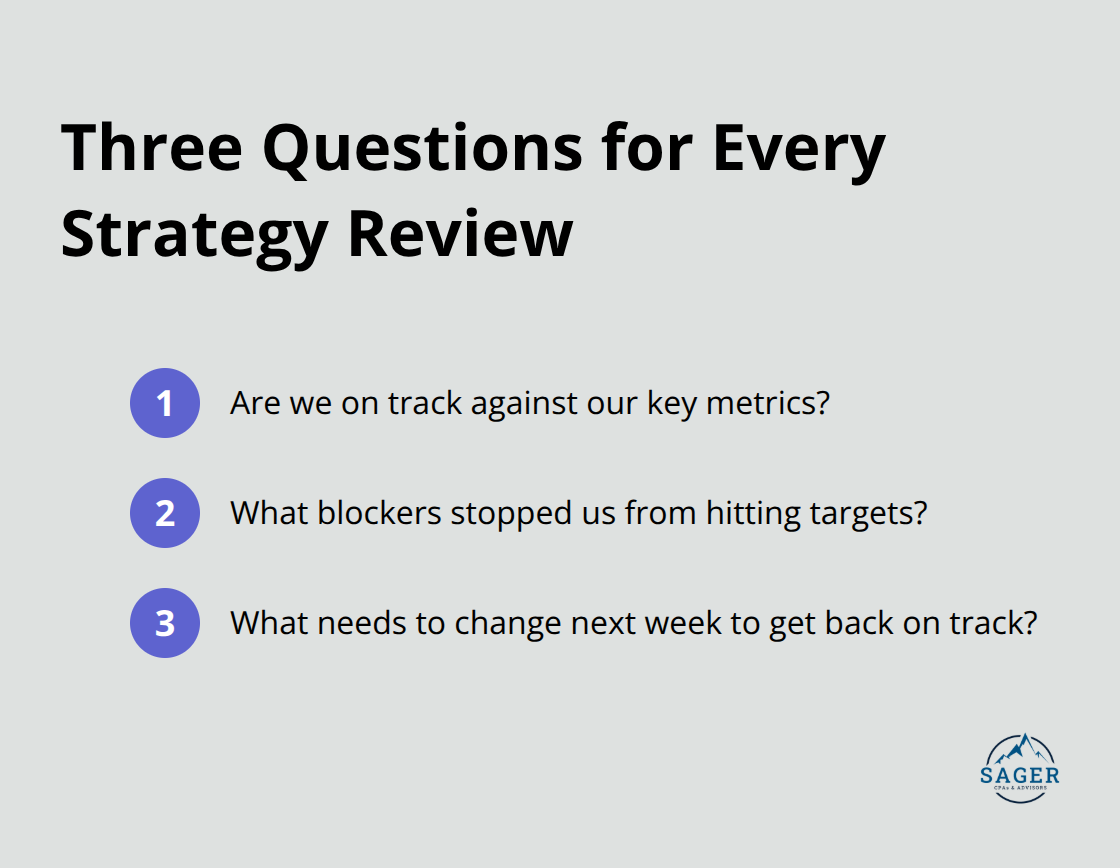
Quarterly strategy reviews fail when they become rubber-stamp meetings where leaders report numbers without examining why execution stalled. Effective reviews happen monthly or every six weeks, last exactly 60 minutes, and focus on three questions: Are we on track against our key metrics? What blockers stopped us from hitting targets? What needs to change next week to get back on track?
Origin Bank established three quarterly meetings with a formal decision-tree process for vetting changes before board approval, which gave the organization a predictable rhythm for adjusting strategy without constant chaos. The agenda must include frontline representatives who understand ground-level constraints, not just executives reporting summaries. A monthly 90-minute review with your sales director, operations manager, and finance lead will reveal misalignments that quarterly meetings miss entirely. Document decisions in writing and assign someone to track whether those decisions actually happened. Too many organizations hold strategy reviews, make decisions, and then revert to old behaviors because nobody owned the follow-through.
Dashboards fail when they display every metric your company tracks instead of the five to seven metrics that actually predict success. Your dashboard should show leading indicators that teams influence weekly, not lagging indicators that appear three months after the quarter ends. If your strategy is customer retention, show weekly churn rate, average customer lifetime value by segment, and support ticket resolution time, not just quarterly revenue numbers that everyone sees anyway. Cobb EMC achieved $8 million in cost savings after moving to project-based operations and establishing clear visibility into the metrics that drove profitability and efficiency. Design your dashboard so a frontline accountant or sales representative can check it Monday morning and understand whether their team is winning or losing that week against the strategy. Real-time data matters because teams adjust faster when they see problems immediately. Set thresholds that trigger conversations when metrics dip below acceptable ranges. If customer acquisition cost rises 10% above target, that’s not a problem to discuss in three weeks during the monthly review. That’s a problem to address today because something changed in your market or execution. Dashboards that connect daily work to strategic outcomes force alignment because they make misalignment visible and impossible to ignore.
Aligning strategy and business operations transforms how organizations execute. The frameworks and systems we’ve covered-clear communication channels, measurable goals, accountability structures, and real-time dashboards-work because they eliminate the gap between what leadership intends and what teams actually do. Organizations that implement these practices see immediate results: faster execution, lower employee turnover, and better financial outcomes. Origin Bank’s waterfall approach and Cobb EMC’s project-based operations both delivered millions in cost savings because teams understood exactly how their work connected to company objectives.
The path forward requires three concrete steps. First, audit your current state by asking whether frontline employees can explain how their daily tasks drive your strategic goals. If they can’t, misalignment exists. Second, pick one strategic initiative and build a complete execution system around it: assign an owner, define weekly metrics, schedule monthly reviews, and create a dashboard that shows progress. Third, expand that system to your other priorities once the first initiative proves the approach works.
The sustained benefits of alignment compound over time as employees stay longer because their work feels purposeful, decision-making accelerates because teams understand priorities and constraints, and resources flow toward initiatives that actually matter. At Sager CPA, we work with businesses that struggle with financial clarity and strategic execution. If your organization needs help translating strategy and business operations into financial and operational reality, schedule a consultation with our team to create a personalized financial strategy that aligns with your business objectives.




Phone: (208) 939-6029
Email: info@sager.cpa
Privacy Policy | Terms and Conditions | Powered by Cajabra
At Sager CPAs & Advisors, we understand that you want a partner and an advocate who will provide you with proactive solutions and ideas.
The problem is you may feel uncertain, overwhelmed, or disorganized about the future of your business or wealth accumulation.
We believe that even the most successful business owners can benefit from professional financial advice and guidance, and everyone deserves to understand their financial situation.
Understanding finances and running a successful business takes time, education, and sometimes the help of professionals. It’s okay not to know everything from the start.
This is why we are passionate about taking time with our clients year round to listen, work through solutions, and provide proactive guidance so that you feel heard, valued, and understood by a team of experts who are invested in your success.
Here’s how we do it:
Schedule a consultation today. And, in the meantime, download our free guide, “5 Conversations You Should Be Having With Your CPA” to understand how tax planning and business strategy both save and make you money.